Maintenance Weekly Menu: 5 Days at TDEE
A practical 5-day weekly menu at maintenance calories (TDEE) with no deficit. Swedish staples, supermarket promotion substitutions, and NNR 2023-aligned nutrition.
Download Smaklig – now on the App Store and Google Play The Smaklig app is now on the App Store (iPhone) and Google Play (Android). Download it free.
Download SmakligQuick answer: A maintenance weekly menu is not a "relaxed weight-loss plan" — it is a distinct approach without a calorie deficit. The structure remains: 3–4 meals per day, a protein and fibre focus, and consistent portions. Swedish supermarket staples — quark, herring, crispbread, salmon, legumes — fit perfectly, and store promotions offer natural substitution opportunities without derailing your balance.
Maintaining your weight requires a different mindset than losing it. During a cut, you had a clear goal and a planned deficit. Now you're supposed to eat more — exactly the right amount — and hold that steady week after week. That calls for structure, but not rigid rules.
This menu is calibrated for a TDEE of approximately 2,000–2,200 kcal/day. Adjust portions up or down based on your individual calculation. Read how to calculate your TDEE before you start.
The Principles Behind the Menu#
NNR 2023-aligned macros: NNR 2023 recommends 45–60% of energy from carbohydrates, 25–40% from fat, and 10–20% from protein. For maintenance with an active lifestyle, the upper half of the protein range (1.3–1.6 g/kg body weight) is a sensible target — it supports lean mass and provides strong satiety.
Consistency over perfection: Helms et al. (2014) observed that consistent eating habits — the same portion pattern and similar ingredients week to week — were stronger predictors of weight stability than training programmes in natural athletes during a maintenance phase (Helms et al., 2014).
Protein-rich breakfast: Leidy et al. (2015) showed that 25–35 g of protein at breakfast improved appetite regulation throughout the entire day (Leidy et al., 2015). Swedish quark (18 g/100 g) and eggs (6 g each) are cost-effective ways to hit that target.
The Weekly Menu: Monday–Friday#
All meals are calibrated for 2,000–2,200 kcal/day with approximately 130–150 g of protein, 55–65% carbohydrates, and 25–30% fat.
Monday#
Breakfast (420 kcal): 200 g quark, 150 g frozen berries (microwaved), 2 rye crispbreads
Lunch (680 kcal): Salmon fillet (150 g) with mashed potato (200 g), steamed broccoli, a spoonful of crème fraîche
Dinner (620 kcal): Chicken stir-fry with bell pepper, pak choi, noodles, and soy sauce
Snack (300 kcal): 1 apple + 30 g unsalted cashews
Tuesday#
Breakfast (430 kcal): Porridge (80 g dry oats) with 100 ml milk, banana, 15 g peanut butter
Lunch (660 kcal): Red lentil stew with crushed tomatoes, carrot, onion, and chickpeas — with 2 slices wholegrain bread
Dinner (640 kcal): Oven-baked cod with olive oil and herbs, quinoa (180 g cooked), roasted celeriac
Snack (280 kcal): 200 g low-fat yoghurt + 2 rye crispbreads with a thin spread of butter
Wednesday#
Breakfast (410 kcal): 2 scrambled eggs, 2 slices toasted wholegrain bread, 1 tomato, black coffee
Lunch (670 kcal): Sliced pork tenderloin with boiled egg, marinated cucumber, and boiled potatoes — a classic Swedish husmanskost plate
Dinner (650 kcal): Pasta bolognese with lean ground beef (15% fat), chopped tomatoes, thyme, 20 g Parmesan
Snack (290 kcal): Cottage cheese (200 g) with 100 ml blueberries
Thursday#
Breakfast (440 kcal): Smoothie with 200 ml filmjölk (Swedish cultured milk), 100 g frozen mango, 1 banana, 1 tbsp chia seeds
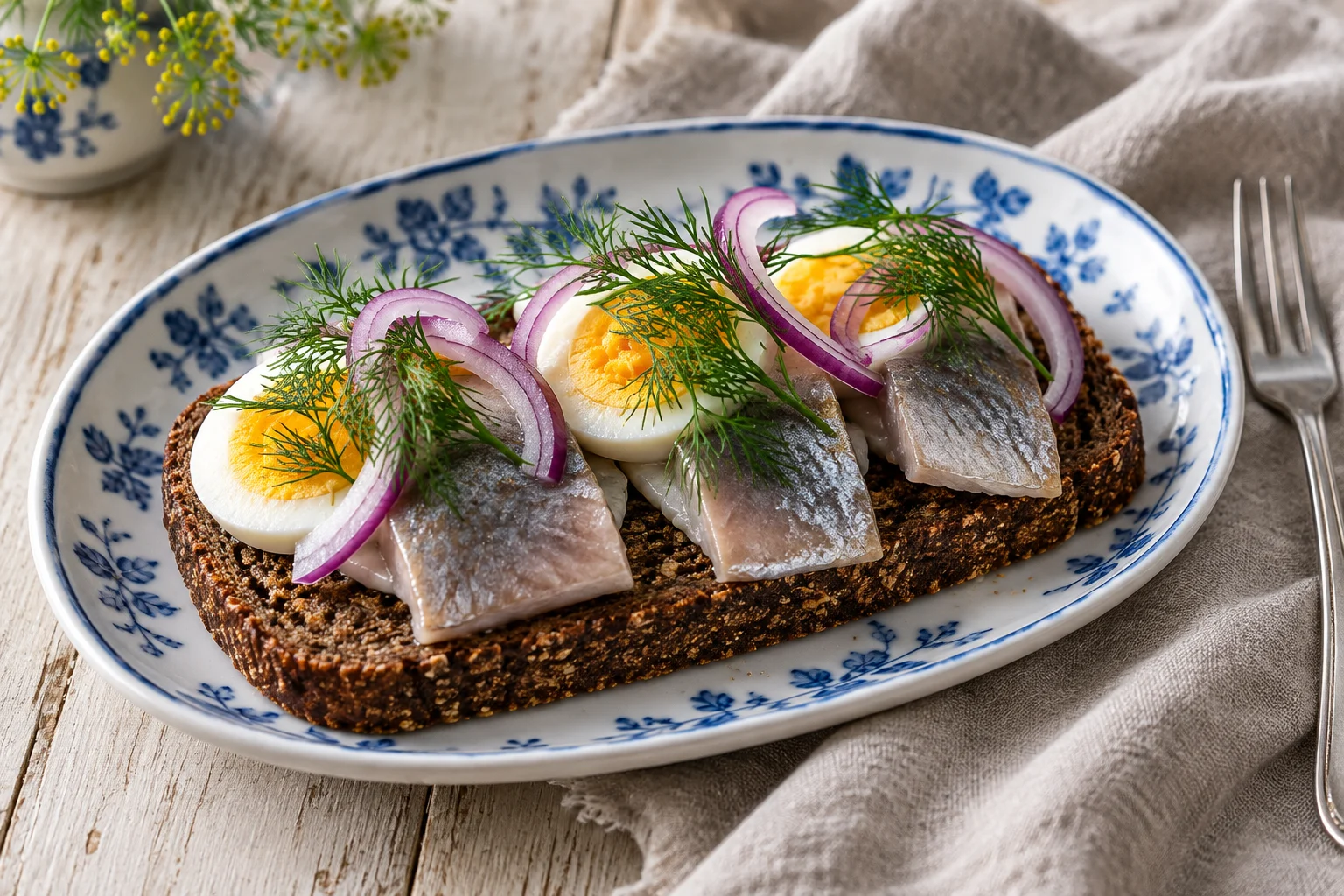
Lunch (660 kcal): Marinated herring open sandwich (3 pieces matjes herring on rye), boiled egg, red onion, dill — a true Swedish classic
Dinner (600 kcal): Oven-baked chicken breast (150 g) with bulgur (180 g cooked), tzatziki, and cucumber salad
Snack (310 kcal): 200 g quark with 2 tsp honey + 100 ml low-sugar granola
Friday#
Breakfast (420 kcal): 2 rye crispbreads with smoked salmon (60 g), cream cheese, and capers
Lunch (680 kcal): Chickpea curry with coconut milk, sweet potato, ginger, and spinach — served with rice
Dinner (620 kcal): Cod in lemon-butter sauce with steamed broccoli and boiled potatoes
Snack (280 kcal): 1 pear + 30 g almonds
Weekly total: Average 2,050–2,150 kcal/day, 130–145 g protein/day.
Using Supermarket Promotions Without Losing Balance#
One of the practical advantages of planning through Smaklig is that ICA, Coop, and Willys promotions are pulled in automatically. The core principle for substitutions in a maintenance menu:
| Original ingredient | Promotion substitution | Calorie effect |
|---|---|---|
| Salmon fillet | Cod or pollock | −40–60 kcal/portion (adjust sauce) |
| Quark 3% | Quark 0.2% | −20 kcal/100 g (increase volume) |
| Ground beef 20% fat | Ground beef 15% fat | −30 kcal/100 g |
| Cashews | Almonds | Similar calorie density |
| White pasta | Wholegrain pasta | +3–5 g fibre (recommended) |
One rule: never swap a protein source for one with substantially lower protein per 100 g without adjusting the portion. It undermines satiety and can cause a slow calorie creep that's hard to spot.
Smaklig flags automatically if a promotional substitution materially changes the macronutrient profile. That is what distinguishes smart meal planning from manual discount hunting. Learn more in the supermarket promotions guide.
Swedish Staples That Carry the Maintenance Phase#
The Swedish food tradition contains several ingredients that are exceptionally well-suited to maintenance eating:
Herring: One of the most affordable protein sources in Sweden (14 g protein/100 g, rich in omega-3). Marinated, seasoned, and pan-fried herring are all NNR 2023-compatible choices.
Quark: Exceptional protein-per-calorie value. 100 g delivers 11 g protein for roughly 70 kcal. Available in every Swedish supermarket, frequently on promotion.
Legumes: Lentils, chickpeas, and white beans are cost-effective and dense in both fibre and protein. Livsmedelsverket, Sweden's national food agency, highlights legumes as a cornerstone of a healthy diet, and they are central to the NNR 2023 dietary pattern.
Rye crispbread (knäckebröd): High fibre, low energy density, long shelf life. An excellent base for breakfast and snacks that helps stabilise energy intake without blood sugar spikes.
Weekends: Flexibility Without Chaos#
Weekends deserve their own strategy. A practical approach:
- Keep your breakfast routine on weekends too — it anchors the rest of the day
- Allow one looser meal per weekend day (Saturday and Sunday dinner), with some awareness of portion
- Avoid obsessive calorie-counting of alcohol: a glass of wine adds 100–130 kcal, but it's the weekly total that matters, not single occasions
- Plan weekend shopping in the Smaklig app to avoid impulse-buying calorie-dense foods that then "need to be consumed"
Helms et al. (2014) noted that occasional surpluses — a richer dinner on Saturday — did not produce measurable weight gain in athletes who maintained their Monday-through-Friday calorie target.
The same principle applies on vacation, just over a longer stretch. See how to keep your weight stable on vacation for navigating buffets, barbecues and ice cream without losing the maintenance phase.
Getting Started With Smaklig#
You don't need to plan this menu manually. Smaklig generates a personalised weekly menu based on your TDEE, your preferred store, and current promotions — and updates it automatically when you log your weight or change your preferences.
Get started free at Smaklig and let the AI sous-chef handle the calculations while you focus on eating well.
Frequently Asked Questions#
How many calories should I eat per day to maintain my weight?#
It depends on your TDEE. A moderately active woman at 68 kg lands around 2,050 kcal; a moderately active man at 82 kg around 2,600 kcal. Smaklig calculates your individual TDEE and adjusts the weekly menu to your exact energy balance, updated each time you log your weight.
Can I use supermarket promotions without throwing off my calorie balance?#
Yes, as long as you substitute within the same macronutrient profile. Swap salmon for cod (similar protein, fewer calories per 100 g) but keep the same portion size. Smaklig automatically adjusts the calorie target when you apply a promotional substitution.
What is the difference between a weight-loss menu and a maintenance menu?#
A maintenance menu has no planned calorie deficit — you eat at TDEE, not 300–500 kcal below it. The focus shifts from restriction to consistency: the same portion sizes, varied ingredients, and regular mealtimes.
How do I handle weekends without losing balance?#
A practical approach: maintain structure Monday through Friday and allow 10–15% flexibility on weekends. Research (Helms et al., 2014) indicates that occasional surpluses do not produce lasting weight gain when the week's total calorie intake is balanced.
Sources
- Nordic Council of Ministers (2023). Nordic Nutrition Recommendations 2023
- Livsmedelsverket (2024). Livsmedelsverket — Nutrients and dietary guidelines
- Journal of the International Society of Sports Nutrition (2014). Helms et al., 2014 — Evidence-based recommendations for natural bodybuilding
- American Journal of Clinical Nutrition (2015). Leidy et al., 2015 — The role of protein in weight loss and maintenance
Frequently asked questions
How many calories should I eat per day to maintain my weight?
It depends on your TDEE. A moderately active woman at 68 kg lands around 2,050 kcal; a moderately active man at 82 kg around 2,600 kcal. Smaklig calculates your individual TDEE and adjusts the weekly menu to your exact energy balance, updated each time you log your weight.
Can I use supermarket promotions without throwing off my calorie balance?
Yes, as long as you substitute within the same macronutrient profile. Swap salmon for cod (similar protein, fewer calories per 100 g) but keep the same portion size. Smaklig automatically adjusts the calorie target when you apply a promotional substitution.
What is the difference between a weight-loss menu and a maintenance menu?
A maintenance menu has no planned calorie deficit — you eat at TDEE, not 300–500 kcal below it. The focus shifts from restriction to consistency: the same portion sizes, varied ingredients, and regular mealtimes.
How do I handle weekends without losing balance?
A practical approach: maintain structure Monday through Friday and allow 10–15% flexibility on weekends. Research (Helms et al., 2014) indicates that occasional surpluses do not produce lasting weight gain when the week's total calorie intake is balanced.
Want more meal planning tips?
More guides on food, health and saving money — and a sous-chef that plans your week for you.
Get started
Founder, Smaklig
Writer at Smaklig. We write about food, health, and how to eat better without breaking the bank.
Related articles
May 8, 2026 · 7 min
Maintenance Calories: Calculate Your TDEE
How to calculate your maintenance calories after weight loss. Learn TDEE, Mifflin-St Jeor, and why manual calculations carry a 5–10% margin of error.
Read moreJuly 2, 2026 · 9 min
How to Keep Your Weight Stable on Vacation (2026)
Keep your weight stable on vacation? Studies show +0.32 kg per trip — weight that rarely disappears on its own. Protein-first, smart grilling, flexible control.
Read moreJuly 2, 2026 · 9 min
What to Eat When It's Hot: No-Oven Dinners (2026)
What should you eat when it's hot? Water-rich, cool food with no stove: protein salads, cold soups, and the everyday foods that hold the most water.
Read moreReady to plan smarter?
Smaklig creates your weekly menu with AI based on store campaigns. Tailored to your goals and allergies.
Get started free