Weekly Meal Plan Weight Loss: 7-Day Guide (2026)
How to plan a weekly menu for weight loss. TDEE calculator, calorie budget, macros, 7-day sample meal plan, and how to save both kilos and kronor.
Download Smaklig – now on the App Store and Google Play The Smaklig app is now on the App Store (iPhone) and Google Play (Android). Download it free.
Download SmakligQuick answer#
How a weekly menu for weight loss works:
- Cut 500 kcal from your TDEE for about 0.5 kg of loss per week
- 1.6–2.2 g protein per kg target weight preserves muscle in a deficit
- 3–4 meals per day — frequency matters less than total calories
- Promotion-optimized planning saves 150–250 SEK/week and cuts food waste 30%
- 7-day example menu below — 1600–1800 kcal/day, 130 g protein
For a current personal example, you can follow the documented weight-loss challenge, where five parts change at once and the method is published without promising an outcome.
Why a weekly menu is the most underrated weight-loss tool#
If you search "why am I not losing weight", the answer is rarely willpower. It's structure.
Research from the International Journal of Behavioral Nutrition and Physical Activity (Ducrot et al., 2017) tracked 40,554 adults and found that those who planned meals in advance had 11% lower BMI and significantly lower risk of obesity. Not because they ate less on any single day — but because decision fatigue was eliminated.
When you're in the supermarket queue at 5:30 PM, tired from work, with no plan — you buy what's easy. Ready meals. Pizza dough. Something "quick". The average impulse meal contains 400–600 kcal more than a planned dinner, based on Swedish Food Agency shopping basket studies.
A weekly menu removes that decision. It turns weight loss into a logistics problem — not a moral one.
This guide shows exactly how to calculate your calorie needs, structure the week, plan around store promotions, and follow a 7-day sample menu that both fills you up and works.
How to calculate your calorie needs (TDEE)#
TDEE (Total Daily Energy Expenditure) is the foundation of all weight loss. Without knowing your maintenance level, you're flying blind — you might as well throw darts.
- TDEE — Total Daily Energy Expenditure
- Your total daily caloric burn: BMR × activity factor (1.2–1.9). For a 70 kg adult: ~2,200–2,800 kcal/day depending on activity level. See the glossary for a deeper explanation.
Step 1: Calculate BMR (Basal Metabolic Rate)#
BMR is what your body burns at complete rest. We use the Mifflin-St Jeor formula — the most validated for healthy adults (Frankenfield et al., Journal of the American Dietetic Association, 2005, 82% accuracy).
- BMR — Basal Metabolic Rate
- Calories your body burns at complete rest (organ function, cell repair). Calculated via the Mifflin-St Jeor formula below. Roughly 60–70% of TDEE for sedentary people.
Formula:
- Men: BMR = (10 × weight in kg) + (6.25 × height in cm) − (5 × age) + 5
- Women: BMR = (10 × weight in kg) + (6.25 × height in cm) − (5 × age) − 161
Example — Anna, 30 years, 70 kg, 170 cm:
BMR = (10 × 70) + (6.25 × 170) − (5 × 30) − 161 BMR = 700 + 1062.5 − 150 − 161 BMR = 1451 kcal/day
Step 2: Multiply by activity factor#
| Activity level | Factor | Description |
|---|---|---|
| Sedentary | 1.2 | Desk job, no training |
| Lightly active | 1.375 | Light training 1–3 days/week |
| Moderately active | 1.55 | Training 3–5 days/week |
| Very active | 1.725 | Hard training 6–7 days/week |
| Extremely active | 1.9 | Physical job + daily training |
Anna trains 3× per week → 1.55
TDEE = 1451 × 1.55 = 2249 kcal/day
Step 3: Create your deficit#
| Goal | Deficit | Calories (Anna) | Pace |
|---|---|---|---|
| Slow (sustainable) | −250 kcal | 1999 kcal | ~0.25 kg/week |
| Moderate (recommended) | −500 kcal | 1749 kcal | ~0.5 kg/week |
| Aggressive (max 8 weeks) | −750 kcal | 1499 kcal | ~0.75 kg/week |
| Maintenance | 0 | 2249 kcal | Stable |
Safety floor: Never go below 1200 kcal (women) or 1400 kcal (men) without medical supervision. Below that level you risk muscle loss, nutrient deficiencies, and metabolic adaptation.
Smaklig tip: Better a small deficit you hold for 6 months than an extreme one you quit after 3 weeks. The math is the same — but only if you stick to it.
Macro distribution during weight loss#
Calories decide if you lose weight. Macros decide what you lose — muscle or fat.
Protein — most important in a deficit#
When you undereat, your body uses muscle as fuel if protein is insufficient. A meta-analysis in American Journal of Clinical Nutrition (Helms et al., 2014) shows that 1.6–2.2 g protein/kg target weight preserves muscle in a deficit.
Calculation (Anna, target 65 kg):
- Low: 65 × 1.6 = 104 g protein/day
- High: 65 × 2.2 = 143 g protein/day
- Calories from protein: 104–143 × 4 = 416–572 kcal
Fat — essential, not the enemy#
Fat is needed for hormone production (particularly testosterone and estrogen). At least 0.8 g/kg body weight, never below 50 g/day.
Calculation (Anna, 70 kg):
- Minimum: 70 × 0.8 = 56 g fat/day
- Calories from fat: 56 × 9 = 504 kcal
Carbohydrates — the remainder#
Once protein and fat are set, the rest goes to carbs.
Calculation (Anna, 1749 kcal total):
- Protein: 130 g × 4 = 520 kcal
- Fat: 60 g × 9 = 540 kcal
- Carbs: (1749 − 520 − 540) / 4 = 172 g carbs/day
Macro table (for 1749 kcal / ~65 kg target)#
| Macro | Grams | Kcal | % of total |
|---|---|---|---|
| Protein | 130 g | 520 | 30% |
| Fat | 60 g | 540 | 31% |
| Carbs | 172 g | 688 | 39% |
| Total | — | 1748 | 100% |
Important: Carbs are not the enemy. Studies (Hall et al., NIH, 2015) show that isocaloric low-carb and low-fat diets yield identical weight loss over 4 weeks. Pick the macro split you can sustain.
Weekly menu principles — 5 steps that work#
Good planning isn't about perfection. It's about making good enough choices automatic.
1. Protein at every meal#
Aim for 25–40 g protein per meal. It's the most satiating macro (gut hormone PYY rises 28% more after protein than carbs — Leidy et al., 2015).
| Protein | Per 100 g | Kcal/100 g |
|---|---|---|
| Chicken breast | 23 g | 107 |
| Egg (1, 60 g) | 7 g | 78 |
| Quark 0.2% | 12 g | 59 |
| Cod | 18 g | 82 |
| Chickpeas (cooked) | 8 g | 139 |
| Tofu | 12 g | 76 |
2. Volume from vegetables#
Vegetables add weight, fiber, and micronutrients for few calories. Aim for 400 g vegetables/day (WHO recommendation). Cabbage, zucchini, mushrooms, broccoli, and peppers have the lowest calorie density (<30 kcal/100 g).
Readers who want to go deeper on volume eating can read about cabbage — nature's Ozempic — cruciferous vegetables trigger satiety hormones in a similar way to GLP-1 agonists.
3. Plan around store promotions#
A Swedish ICA Maxi has ~200 weekly promo items. Chicken breast drops from 119 SEK/kg to 69 SEK/kg, salmon fillet from 249 SEK/kg to 149 SEK/kg. If you always plan around the week's protein promo, you save 40–50 SEK per meal.
See also cheap food that fills you up for a deeper dive into cost-effective protein sources.
4. Variation prevents boredom#
The brain tires of flavors (sensory-specific satiety — Rolls, 1986). 3–4 different dinners per week is enough, but rotate protein sources:
- Mon–Tue: Chicken
- Wed–Thu: Fish
- Fri: Vegetarian
- Sat–Sun: Beef / pork
5. Simplicity beats perfection#
A weekly menu you follow 80% beats a "perfect" one you follow 50%. Pick recipes with ≤8 ingredients and ≤30 minutes prep on weekdays. Save project cooking for the weekend.
7-day sample menu for weight loss#
Target: 1700 kcal, 130 g protein, 60 g fat, 175 g carbs Portions: 1 person Total cost: ~450 SEK/week with promo optimization
Monday#
| Meal | Dish | Kcal | Protein |
|---|---|---|---|
| Breakfast | Quark 250 g + blueberries 100 g + oats 30 g | 320 | 32 g |
| Lunch | Chicken salad: chicken 150 g, quinoa 60 g, spinach, tomato, feta 30 g | 520 | 45 g |
| Dinner | Baked salmon 150 g, broccoli 200 g, celeriac mash 200 g | 580 | 38 g |
| Snack | Apple + 20 g almonds | 230 | 5 g |
| Total | 1650 | 120 g |
Tuesday#
| Meal | Dish | Kcal | Protein |
|---|---|---|---|
| Breakfast | 3-egg omelette + spinach + 1 slice whole-grain bread | 380 | 25 g |
| Lunch | Monday leftover: salmon bowl with quinoa | 540 | 35 g |
| Dinner | Chicken stew with chickpeas, tomato, zucchini (300 g portion) | 550 | 42 g |
| Snack | Quark 200 g + raspberries | 160 | 22 g |
| Total | 1630 | 124 g |
Wednesday#
| Meal | Dish | Kcal | Protein |
|---|---|---|---|
| Breakfast | Overnight oats: oats 50 g + milk 250 ml + 1 scoop whey | 420 | 32 g |
| Lunch | Leftover chicken stew + quinoa | 550 | 40 g |
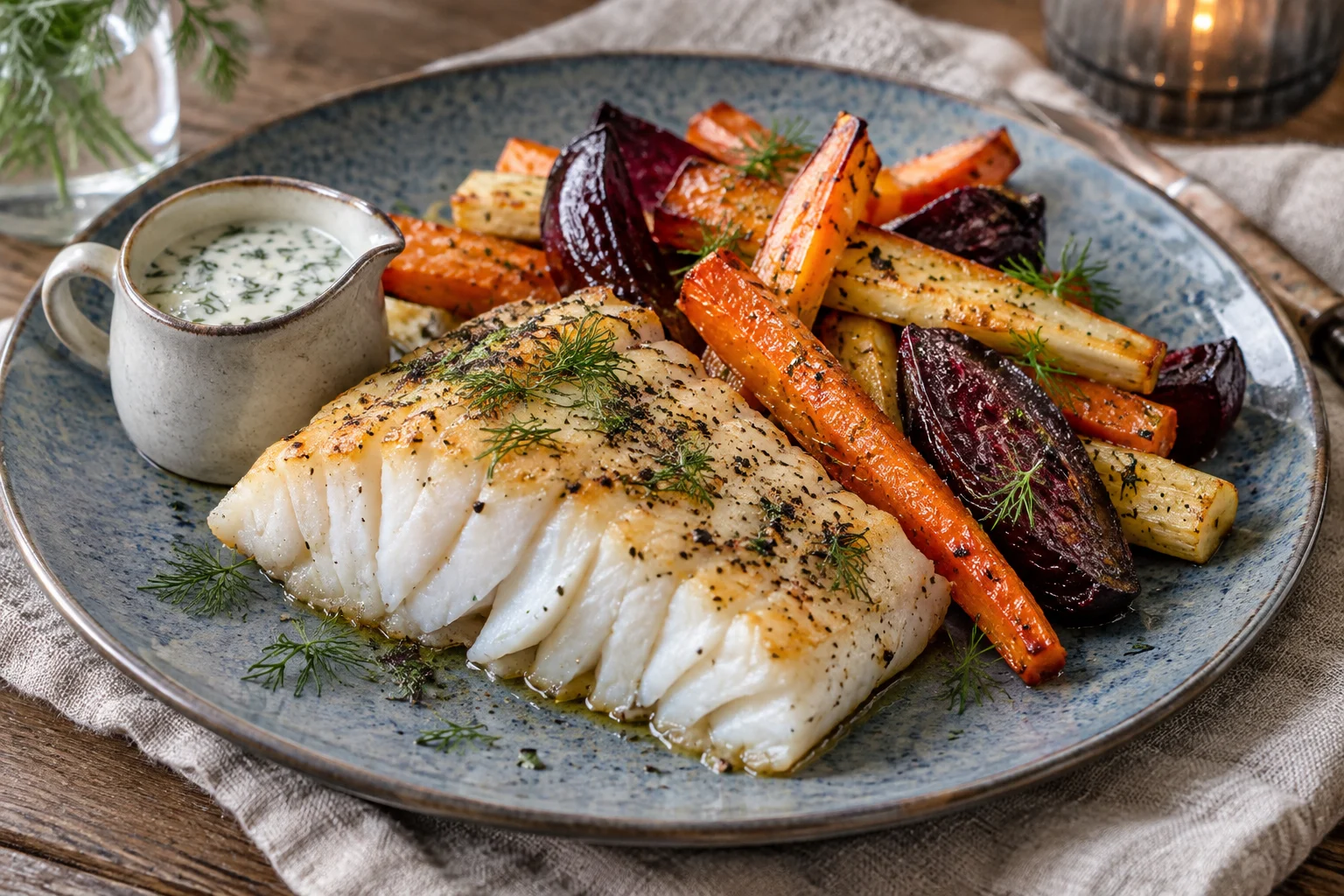
| Dinner | Cod loin 180 g, roasted root veg 250 g, dill sauce 2 tbsp | 490 | 38 g |
| Snack | Carrots + 2 tbsp hummus | 160 | 5 g |
| Total | 1620 | 115 g |
Thursday#
| Meal | Dish | Kcal | Protein |
|---|---|---|---|
| Breakfast | Quark 250 g + banana + oats 30 g | 340 | 30 g |
| Lunch | Tuna salad: tuna 1 can (110 g), 2 eggs, beans 100 g, mayo 1 tbsp | 480 | 40 g |
| Dinner | Pasta bolognese: whole-grain pasta 70 g, lean mince 150 g, tomato sauce, veg | 630 | 40 g |
| Snack | Boiled egg + cucumber | 90 | 7 g |
| Total | 1540 | 117 g |
Friday#
| Meal | Dish | Kcal | Protein |
|---|---|---|---|
| Breakfast | Greek yogurt 200 g + nuts 15 g + honey 1 tsp | 310 | 20 g |
| Lunch | Leftover bolognese in iceberg-wrap salad | 540 | 35 g |
| Dinner | Vegetarian lentil stew: red lentils 100 g (dry), light coconut milk, spinach, curry | 550 | 28 g |
| Snack | Quark 200 g + 20 g pistachios | 260 | 24 g |
| Total | 1660 | 107 g |
Saturday#
| Meal | Dish | Kcal | Protein |
|---|---|---|---|
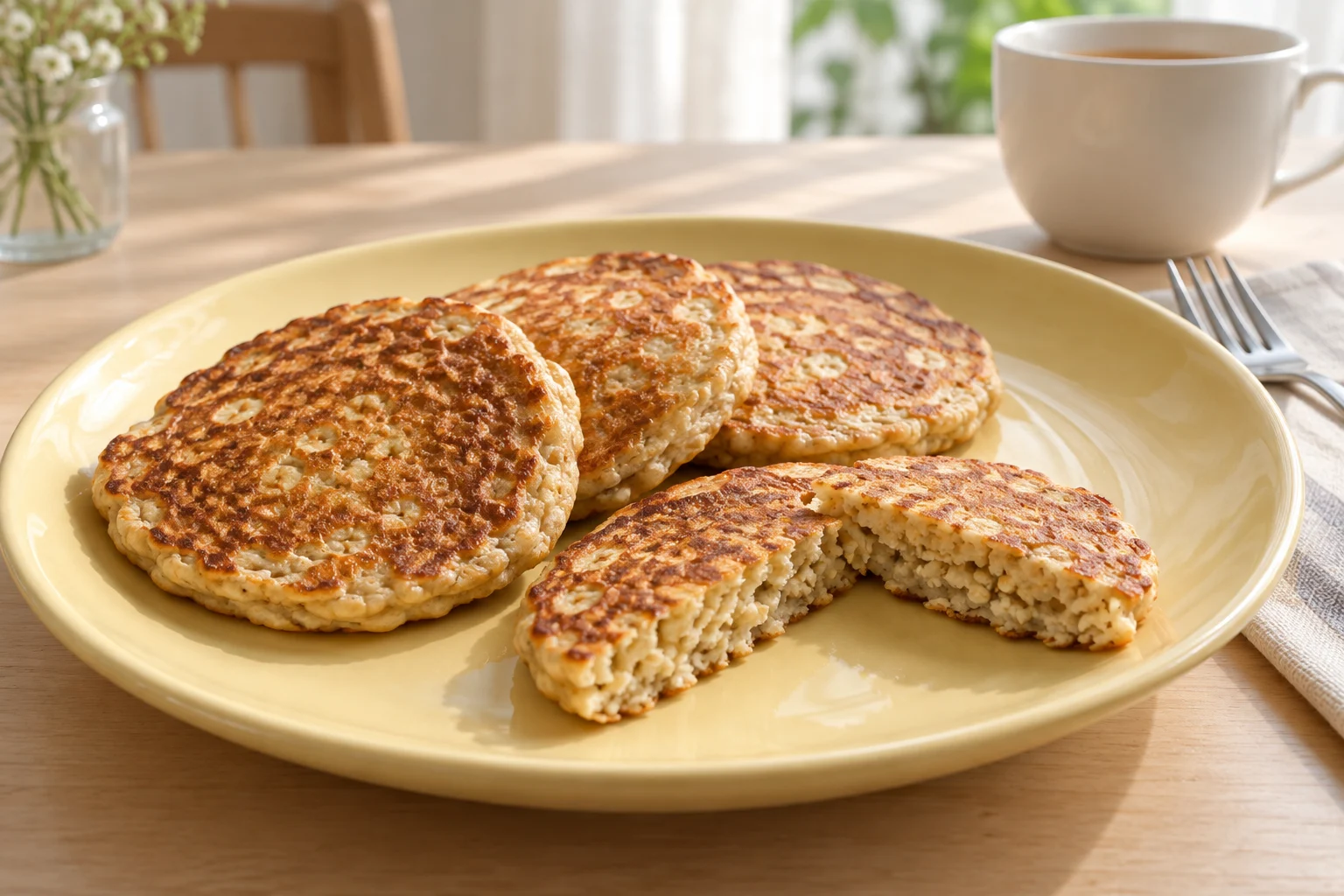
| Breakfast | Protein pancakes: 2 eggs + oats 40 g + quark 100 g | 450 | 35 g |
| Lunch | Leftover lentil stew + 1 slice whole-grain bread | 490 | 25 g |
| Dinner | Beef tenderloin 150 g, roasted potatoes 200 g, béarnaise 1 tbsp, green beans | 720 | 45 g |
| Snack | Quark 150 g + blueberries | 130 | 18 g |
| Total | 1790 | 123 g |
Sunday#
| Meal | Dish | Kcal | Protein |
|---|---|---|---|
| Breakfast | Scrambled eggs (3), smoked salmon 50 g, ¼ avocado | 450 | 30 g |
| Lunch | Chicken noodle soup: chicken 150 g, rice noodles 60 g, vegetables | 500 | 38 g |
| Dinner | Roasted chicken thighs 200 g, bulgur 70 g, cucumber salad with yogurt dressing | 650 | 45 g |
| Snack | Fruit + 10 g dark chocolate 70% | 130 | 2 g |
| Total | 1730 | 115 g |
Shopping list (6 promo staples in focus)#
- Chicken breast 600 g — ~70 SEK (promo)
- Salmon fillet 300 g — ~50 SEK
- Cod loin 180 g — ~35 SEK
- Lean mince 150 g — ~20 SEK
- Eggs 18-pack — ~45 SEK
- Quark 1 kg — ~30 SEK
How to save money with your weekly menu#
Food costs in Sweden are up 23% since 2022 (Statistics Sweden, CPI food). A weekly menu is the only tool proven to shrink the bill while shrinking the waist.
1. Promo week drives the menu#
ICA releases promos Monday, Coop Tuesday. Check the weekly flyer before you plan. If chicken is 69 SEK/kg — plan three chicken meals. If salmon is 149 SEK/kg — plan two fish dinners.
A study from the Swedish Consumer Agency (2023) showed that households planning around promos save an average of 18% on food costs — corresponding to 800–1200 SEK/month for a family.
2. Bulk-buy staples#
| Item | Per unit | In bulk | Savings |
|---|---|---|---|
| Oats (500 g vs 2 kg) | 22 SEK | 14 SEK | −36% |
| Quinoa (500 g vs 1 kg) | 55 SEK | 40 SEK | −27% |
| Chickpeas (canned vs dry) | 12 SEK | 4 SEK | −67% |
| Eggs (6-pack vs 18) | 32 SEK | 22 SEK | −31% |
3. Cut food waste#
Swedish households throw away on average about 16 kg of edible food per person per year (Naturvårdsverket, 2023). Food waste costs around 1,330 SEK per person per year (Swedish Food Agency, 2024). A well-planned weekly menu is one of the most effective ways to reduce it.
Waste-reducing principles:
- Buy for what you'll actually cook, not "just in case"
- Batch cook on Sundays (3 portions × 2 dishes = 6 lunches)
- Learn "best before" vs "use by" — best before is often fine 5–10 days after
Common weight-loss mistakes#
Mistake 1: Too large a calorie deficit#
Deficits >1000 kcal cause metabolic adaptation (Trexler et al., 2014). Your body lowers resting metabolism by up to 15%, and you lose muscle instead of fat. Rule: max 25% below TDEE at a time.
Mistake 2: Too little protein#
The classic "starvation diet" of 1000 kcal salad + fruit gives ~30 g protein/day. Result: 60% of the weight you lose is muscle, not fat. You become "skinny fat" — lighter on the scale, but softer in the mirror.
Mistake 3: Avoiding fat entirely#
Fat-free diets lower testosterone by 10–15% in men (Dorgan et al., 1996) and disrupt the menstrual cycle in women. At least 50 g fat/day, ideally from olive oil, nuts, fatty fish, and eggs.
Mistake 4: No off-ramps#
A 12-week diet with no planned breaks always ends in bingeing. Build in refeed days (1 day/week at maintenance) and diet breaks (1 week at maintenance every 8 weeks).
Mistake 5: No measurement on oil and sauces#
One tablespoon of olive oil = 120 kcal. Two tablespoons of béarnaise = 180 kcal. Restaurant salads often hide 300–500 kcal in dressing. Measure fat with a tablespoon, not a "splash".
When should you break the diet?#
The body isn't a linear machine. After 6–8 weeks in a deficit, leptin (satiety hormone) drops by up to 50% and cortisol rises — causing increased hunger and fatigue.
Refeed (1 day)#
Once a week: eat at TDEE, with extra carbs. Purpose: refill glycogen, stabilize leptin, psychological break.
Diet break (1 week)#
After 6–8 weeks: eat at maintenance for 7–14 days. Studies (Byrne et al., 2018) show intermittent diet breaks yield ~50% better long-term weight loss than constant deficit, because metabolic adaptation is minimized.
Plateaus (>2 weeks no movement)#
If the scale hasn't moved in 2–3 weeks despite following the plan:
- Verify calories (weigh food for 3 days — people underestimate by 20–30%)
- Increase activity (+1000 steps/day)
- Take a 7-day diet break, then restart
- Don't cut calories further first — that makes plateaus worse
Related reading#
- Lose weight without Ozempic — 7 evidence-based strategies, GLP-1-boosting foods, and how to avoid the yo-yo effect.
- Cabbage — nature's own Ozempic? — Why shredded cabbage raises GLP-1 and how to fit fiber into your weekly menu.
- TDEE calculator and macros — Exact formula for your energy needs + how to split macros.
- Cheap filling meals — 20 recipes under 30 SEK/serving when you combine weight goals with savings.
- ICA campaigns: maximize savings — How to plan your weekly menu around store promotions.
- Glossary — Definitions of TDEE, BMR, macros, GLP-1, and other terms.
Next step — let Smaklig automate everything#
Calculating TDEE, checking promos, planning macros, and writing a shopping list takes 3–4 hours per week if done manually. Most people don't last more than 2–3 weeks before planning collapses.
Smaklig automates the whole chain:
- Calculates your exact TDEE based on age, weight, goal, and training
- Pulls the week's promos from your ICA store
- Generates a 7-day menu that hits your macros and leverages weekly sale prices
- Creates a shopping list sorted by store aisle
- Adjusts the week if you swap workouts, eat out, or skip a dinner
You say "I want to lose 5 kg in 10 weeks, I'm gluten intolerant, I love Asian food" — Smaklig delivers a 10-week meal plan in 30 seconds.
Try Smaklig free → · See pricing · Browse the glossary
Important: The content in this article is general information and does not replace medical advice. For caloric deficits below 1200 kcal/day, a history of eating disorders, pregnancy, diabetes, or other medical conditions — always consult a licensed doctor or dietitian before following a diet plan.
Questions about weight loss or weekly planning? Email us at hej@smaklig.app or follow us on Instagram where we share recipes.
Sources
- Livsmedelsverket. Livsmedelsverket — näringsrekommendationer
- PubMed / Br J Sports Med. Morton et al., Protein and resistance training (2018)
- SCB. SCB — hushållens matkostnader
Frequently asked questions
What are the best tips for a weekly menu?
Five tips that make the biggest difference: 1) Plan Sunday evening in 20 min, 2) Build around the week's campaign protein (chicken, salmon or mince at 30–50% off), 3) Cook double portions so dinner becomes lunch the next day, 4) Pick max 1 new recipe per week — the rest from your top-15 list, 5) Write the shopping list from the menu, not the other way around. Saves 150–250 SEK/week and 3–4 hours of stress.
How do I build a weekly menu that actually lasts?
Weekly menus usually fall apart after 2–3 weeks due to 'planning without structure'. Fix it this way: 1) Keep Friday–Sunday flexible (less planning stress), 2) Always have 2 'save-the-evening' recipes (pasta aglio e olio, omelet), 3) Rotate on a 4-week cycle so you don't get bored, 4) Don't measure perfection — 5 of 7 planned dinners is enough.
How many calories should I eat to lose weight?
For sustainable weight loss: reduce your TDEE by 500 kcal for about 0.5 kg/week. Women: minimum 1200 kcal/day. Men: minimum 1400 kcal/day. For more aggressive loss: −750 kcal, but keep this phase under 8 weeks.
What is TDEE and how do I calculate it?
TDEE (Total Daily Energy Expenditure) is your total daily calories. Formula: BMR (Mifflin-St Jeor) × activity factor (1.2–1.9). Example: 30-year-old woman, 70 kg, 170 cm, moderately active → BMR 1459 × 1.55 = TDEE ~2260 kcal.
How much protein do I need during weight loss?
1.6–2.2 grams of protein per kg of target body weight. For a 70 kg person with a target of 65 kg: 104–143 g protein per day. Protein is the most important macro in a calorie deficit because it preserves muscle mass.
How many meals per day should I eat?
The number of meals matters less than your total calories. 3–4 meals work for most people. Research shows no metabolic advantage to 6 small meals vs 3 larger ones. Pick what keeps you fullest.
Can I save money while losing weight?
Yes. Plan around store promotions and use cheap protein sources (eggs, chicken, legumes). Research shows households with a weekly menu save 150–250 SEK/week and cut food waste by 30%.
How quickly can I expect to lose weight?
Safe pace: 0.5–1% of body weight per week. An 80 kg person → 400–800 g/week. First 2 weeks may show more due to water loss. After 8 weeks: take a 1-week refeed to restore leptin.
Want more meal planning tips?
More guides on food, health and saving money — and a sous-chef that plans your week for you.
Get started
Founder, Smaklig
Writer at Smaklig. We write about food, health, and how to eat better without breaking the bank.
Related articles
May 8, 2026 · 14 min
Calorie Deficit: How Much Do You Actually Need? (2026)
Calorie deficit — how big does it need to be, how do you calculate it, and why doesn't it always work? Research-based guide with female-specific factors.
Read moreMay 8, 2026 · 7 min
Maintenance Calories: Calculate Your TDEE
How to calculate your maintenance calories after weight loss. Learn TDEE, Mifflin-St Jeor, and why manual calculations carry a 5–10% margin of error.
Read moreMay 8, 2026 · 7 min
Maintenance Weekly Menu: 5 Days at TDEE
A practical 5-day weekly menu at maintenance calories (TDEE) with no deficit. Swedish staples, supermarket promotion substitutions, and NNR 2023-aligned nutrition.
Read moreReady to plan smarter?
Smaklig creates your weekly menu with AI based on store campaigns. Tailored to your goals and allergies.
Get started free