Lose Weight Without Ozempic: 7 Strategies That Actually Work
Ozempic waitlist, side effects, or just too expensive? Here are 7 evidence-based strategies for losing weight without medication — protein, fiber, sleep, GLP-1 foods, and more.
Download Smaklig – now on the App Store and Google Play The Smaklig app is now on the App Store (iPhone) and Google Play (Android). Download it free.
Download SmakligAdvertisement for Smaklig
How Did I Lose 12 Kilograms in Three Months Without Ozempic?#
Quick answer: I lost 12 kilograms in three months without Ozempic. This is my own experience—not a promise, a typical result, or a recommended pace for you. Weight change and health needs vary from person to person.
In my case, the approach combined my own app, varied food, and a strict no-sugar rule.
My name is Alexander Eriksson, I founded Smaklig, and I used my own app during those three months. That needs to be explicit: this is the founder's account of his own product, not an independent customer testimonial. I did not use Ozempic during the period. I used Smaklig to structure my meals while following my own strict rule of eating without sugar.
The result was 12 kilograms in three months, which works out to roughly 0.9–1.0 kilograms per week for me. I had no control group, and my experience cannot show how much came from the app, the sugar rule, my energy balance, or consistently following the plan. It only shows what happened in my case when I used those parts together.
The biggest surprise was not the number on the scale. I had never eaten such good, varied food during a period of weight loss. After three months, I felt great—my own description of daily life, not a clinical measurement. That combination made the plan easier to continue: the food did not feel like punishment or a temporary project.
This account was published on 1 August 2026 and is based on my own information. It is a first-person case involving one person, not a study. For the energy principles behind weight change, see the separate guide to calorie deficits and individual variation.
Why Did I Consider Ozempic—and What Happened With Primary Care?#
Quick answer: In September, I contacted a primary care centre because I was considering Ozempic. I received no response. In hindsight, I am glad my own approach worked for me, but my experience is not a reason for anyone else to avoid care. If you are considering medication or worried about your weight, contact primary care or 1177 and follow up if you receive no response.
That was the starting point for my decision to try my own food and planning approach instead of Ozempic. I am not naming the clinic, and I do not know why nobody responded. This is not a judgement of the healthcare service, and I am not presenting the lack of contact as positive in itself. What was positive for me was that the approach I subsequently followed worked in my daily life.
As the founder, I could use Smaklig with my own meals and see whether the product made planning easier. That gave me relevant experience of the app, but no medical expertise. I can describe what I chose and the outcome I observed. I cannot decide whether someone else should choose dietary change, Ozempic, or another treatment.
“Instead of Ozempic” means here that I did not use the medicine during my three-month period. It does not mean that food replaces treatment. Ozempic contains semaglutide and is a prescription diabetes medicine according to the European Medicines Agency, EMA. Questions about suitability, medication choice, dosage, side effects, switching, or stopping belong with healthcare professionals.
1177's information about obesity and overweight in adults explains how and when to seek support in Sweden. My contact with primary care is context for the journey, not advice to wait on your own.
Short Answer#
7 evidence-based strategies for weight loss without Ozempic:
- Protein at every meal (25-40g) for satiety and muscle preservation
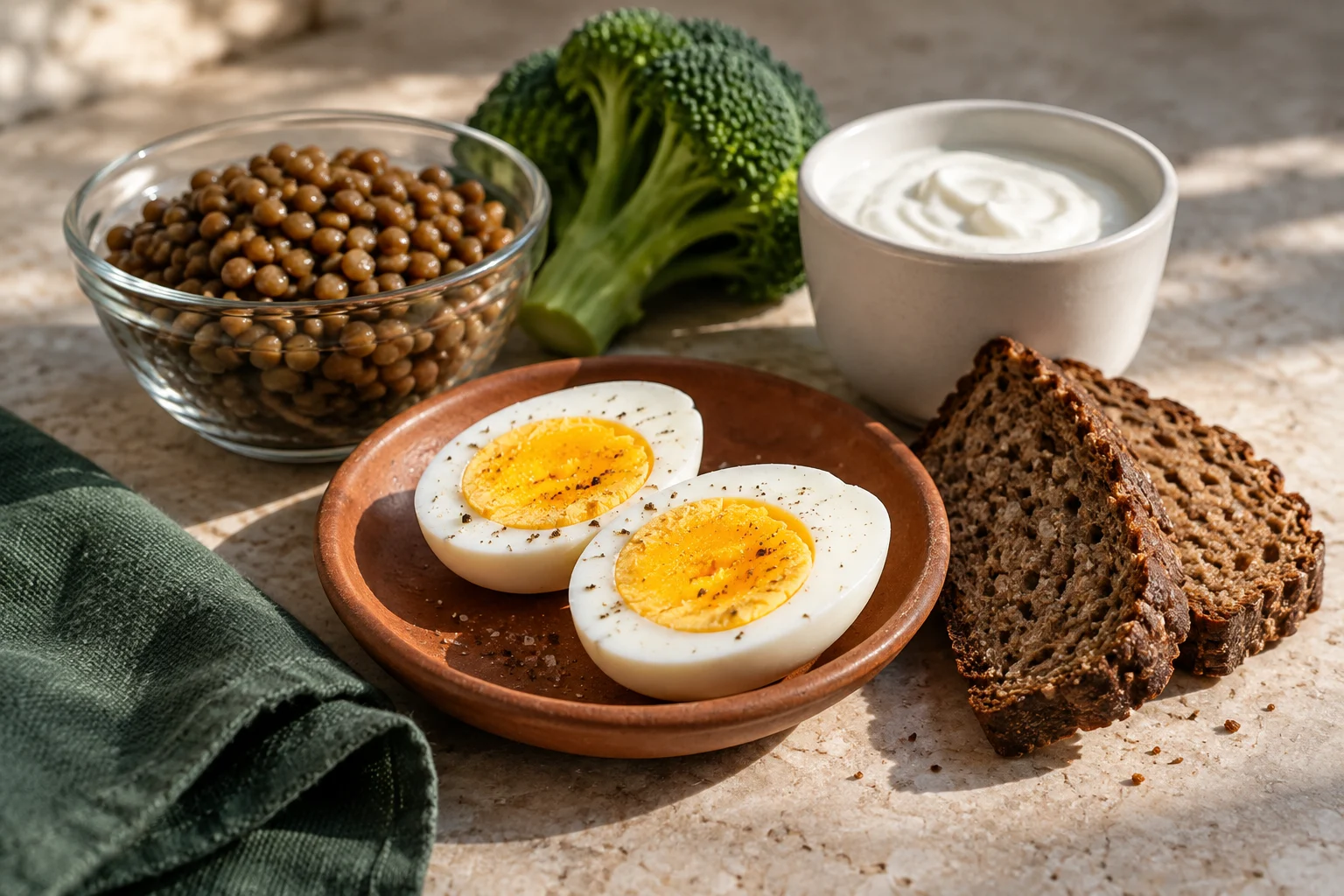
- Fiber and GLP-1-boosting foods — cabbage, broccoli, legumes, fermented
- Meal planning and sale optimization — beats impulse buying and fast food
- At least 7 hours of sleep — sleep deprivation lowers leptin, raises ghrelin
- Strength training 3x/week — preserves muscle, raises BMR
- Mindful eating — no distractions, chew longer
- Caloric deficit without counting — plate model with quality food
Expected results: 5-10% weight loss over 6 months. No prescription waitlist, no side effects, and about €140/month saved compared to Ozempic.
To see how one personal comparison is documented openly, follow Alexander's open weight challenge; it tests several parts at once and is not compared with medical treatment.
Why Are So Many People Looking for Ozempic Alternatives?#
Semaglutide (Ozempic, Wegovy) has exploded in popularity since 2023. But the problems have grown just as fast: months-long prescription waitlists, side effects like nausea and muscle loss, costs around €140/month — and the uncomfortable truth that weight often returns once treatment stops.
Studies and data from European health authorities show that lifestyle interventions yield 5-10% weight loss over 6-12 months for overweight individuals, with no side effects. Ozempic delivers 14.9% over 68 weeks in the STEP trial — but two-thirds of the weight returns within a year of stopping, according to the STEP 4 extension study.
This doesn't mean Ozempic is bad. It means that for many people — especially those with moderate overweight, mild side effects, or limited budgets — natural strategies can match much of the effect.
Here are the seven that research backs up.
Strategy 1 — Protein at Every Meal#
Protein is the most satiating macronutrient. It takes longer to digest, raises energy expenditure by about 20-30% of its calories (thermic effect), and signals satiety hormones like PYY and CCK.
How much?
- Weight loss: 1.6-2.2 g protein per kg of target body weight
- Per meal: 25-40 g for maximum muscle protein synthesis
- Example for 70 kg target: 112-154 g/day across 3-4 meals
Affordable protein sources:
| Food | Protein/100g | Cost efficiency |
|---|---|---|
| Eggs | 13 g | Very high |
| Plain Greek yogurt / Skyr | 10-11 g | High |
| Chicken mince | 20 g | High |
| Dried lentils | 25 g | Extremely high |
| Canned tuna in water | 24 g | High |
Practical rule: Start every meal with protein. Eggs for breakfast, yogurt or skyr as a snack, fish or chicken for lunch and dinner. The rest — carbs, fat, vegetables — goes around it.
Research in American Journal of Clinical Nutrition (2015) shows that high-protein diets spontaneously reduce total caloric intake by 400-500 kcal/day — without people consciously eating less.
Strategy 2 — Fiber and GLP-1-Boosting Foods#
GLP-1 (glucagon-like peptide-1) is the very same hormone Ozempic mimics. Your body produces it naturally — and certain foods trigger its release extremely effectively.
Top foods that naturally raise GLP-1:
- Cabbage, broccoli, Brussels sprouts — high fiber plus glucosinolates
- Legumes (lentils, chickpeas, black beans) — 15-20g fiber per serving
- Oats and oatmeal — beta-glucan, slow-digesting carbs
- Fermented foods — sauerkraut, kimchi, kefir, plain yogurt (probiotics affect GLP-1)
- Avocado and nuts — monounsaturated fats increase satiety
- Eggs — protein plus fat produces a strong GLP-1 response
The chewing effect is underrated. Foods that require chewing (raw vegetables, whole grains, nuts) signal satiety far better than pureed or liquid foods. A smoothie and a salad with identical calories produce entirely different satiety signals.
Want to go deeper, read Cabbage — Nature's Ozempic for the detailed fiber mechanism.
Simple rule: Fill half your plate with vegetables, preferably fiber-rich ones. This alone can cut 200-300 kcal/day with no conscious restriction.
Strategy 3 — Meal Planning and Sale Optimization#
This is the most underrated strategy. Impulse buying and unplanned meals are the biggest threat to weight loss — not Friday night pizza.
Research from Cornell Food & Brand Lab shows people who plan weekly meals:
- Eat 500-700 kcal less per day on average
- Spend 25-30% less on food
- Have significantly lower BMI over time
Why does it work?
- You shop with a list, not while hungry
- You make food decisions when full and rational
- Grocery sales shape the menu — not your blood sugar
- No fast food "because the fridge is empty"
Practical setup:
- Sunday evening: plan 5-7 dinners based on the week's grocery sales
- Shop everything in one go (or order delivery)
- Meal prep 2-3 meals on Monday
- Always keep 1-2 emergency meals at home (eggs, frozen vegetables, pasta)
Smaklig automates this entire flow — read more about how meal planning for weight loss works.
What Did I Eat in Practice During the Three Months?#
Quick answer: I used Smaklig to plan varied meals and strictly followed my own rule of eating without sugar. That was my personal approach, not a recommendation that everyone must exclude sugar. For me, good food, variety, and a ready-made plan made it easier to stay consistent for three months.
“Strictly without sugar” describes what I did, not a universal definition of good food. My rule was simple: the meals I selected and followed had to be without sugar. I used it as a clear yes-or-no decision when planning the week, choosing food, and eating meals. I do not claim that the same boundary is necessary, medically superior, or suitable for everyone.
The app helped me make the meals concrete in advance. Instead of reopening the question “what should I eat?” every day, I had a varied weekly menu and a shopping list to work from. I could choose food that suited my goal and sugar rule before I was hungry. That was planning support—not medicine and not an automatic guarantee of a particular energy intake.
Taste and variety were decisive for my motivation. I felt that I had never eaten such good food during a weight-loss journey. The approach therefore became something I wanted to follow, not merely something to endure. After the period, I also said that I felt great. Both are personal observations; they do not demonstrate a physiological effect from excluding sugar.
Food supplies energy in different forms, and weight change is influenced by energy balance over time according to the Nordic Nutrition Recommendations 2023. My practical lesson was that a clear decision, a planned week, and food I genuinely looked forward to made consistency possible for me. For a concrete planning approach, see the guide to a weekly menu for weight loss.
What Did Smaklig's AI Do—and What Did It Not Do?#
Quick answer: Smaklig's AI gave me structure by creating weekly menus and shopping lists from my choices. It made it easier to plan good, varied food that fitted my approach. The AI treated nothing, replaced no medication, and cannot explain or promise my 12-kilogram result.
Smaklig used AI to create weekly menus and shopping lists based on my selected goals, preferences, and store. The AI planned the food; it did not imitate semaglutide or promise either a particular GLP-1 effect or weight loss.
The workflow was concrete: I entered my choices, received an AI-planned weekly menu, used the shopping list, and bought the food at my store. The plan reduced the number of decisions I needed to make in the moment. But I was still the person who chose the no-sugar rule, assessed the food, shopped, and ate. The AI had neither a hidden hormonal function nor knowledge of how my body would respond.
If you search for “eat like Ozempic,” the boundary matters: food is not semaglutide, and Smaklig is not a medical treatment. Questions about how food may affect the body's own GLP-1 release—and why that is not the same as a medicine—belong in our separate guide to GLP-1, food, and natural release. This page instead owns my decision and practical journey.
The cheapest meal kit in Sweden is the one you pick yourself. That is the model behind planning for your own store, not a claim that the complete meal-kit experience was live or that I used a launched meal-kit feature during the period. We are not comparing price tags. We are comparing what the different models charge for. Read how Smaklig calculates and limits the comparison.
Smaklig's web/PWA is live. The native app is publicly available: iOS on the App Store and Android on Google Play.
Strategy 4 — Prioritize Sleep (At Least 7 Hours)#
If you can only change one thing — make it this.
Sleep deprivation sabotages weight loss mechanically:
- Leptin (satiety hormone) drops ~15% after 5h sleep vs 8h
- Ghrelin (hunger hormone) rises ~15%
- Insulin sensitivity decreases — body stores more fat
- Cortisol rises — increases cravings for sugar and fat
- Muscle is lost faster during caloric deficit without sleep
A study in Annals of Internal Medicine (2010) showed participants who slept 5.5h vs 8.5h on identical diets lost 55% less fat and 60% more muscle. Same calories, dramatically different body composition.
Practical:
- Go to bed at the same time every night (±30 min)
- No screens 60 min before bed (blue light suppresses melatonin)
- Bedroom: cool (16-18°C / 61-65°F), dark, quiet
- Avoid caffeine after 2 PM
- Alcohol destroys deep sleep — even moderate amounts
You can't out-train bad sleep. Sleep first, train after.
Strategy 5 — Strength Training 3x/Week#
Cardio burns calories during the session. Strength training reshapes the body.
Each kg of muscle burns about 13 kcal/day at rest. It sounds small, but 5 kg extra muscle = 65 kcal/day = 2 kg fat per year, doing nothing.
More importantly: strength training preserves muscle mass during weight loss. Without training, up to 25% of weight lost comes from muscle — permanently lowering metabolic rate and setting up yo-yo regain.
Basic template (3x/week, 45-60 min):
- Session A: Squat / deadlift, bench press, row, plank
- Session B: Romanian deadlift, overhead press, pull-ups (or lat pulldown), lunges
- Session C: Repeat A or B, or vary
3-4 sets per exercise, 6-12 reps, RPE 7-8 (2-3 reps in reserve).
You don't need a gym. Bodyweight plus resistance bands work for the first 3-6 months. But gym membership is more cost-effective long term — ~€35/month versus €140 for Ozempic.
See our beginner training routines if you're new.
Strategy 6 — Mindful Eating#
This is the simplest to understand and the hardest to do.
Rules:
- Eat at a table, not in front of a screen
- Put utensils down between bites
- Chew 20-30 times per bite
- No TV, phone, laptop during meals
- Ask yourself at half-plate: "Am I still hungry?"
Why it works:
Satiety hormones take 15-20 minutes to reach the brain. If you eat fast, you can consume twice what you need before the signal arrives. Distraction (TV, work) makes it worse — studies show TV watchers eat 25-30% more during meals without noticing.
A study from Ohio State University (2019) showed mindful eating over 12 weeks produced:
- 4.2 kg weight loss on average
- 42% fewer binge episodes
- Reduced waist circumference with no other interventions
Easy first step: Eat one meal per day at a table, screen-free. For two weeks. Notice the difference.
Strategy 7 — Caloric Deficit Without Counting#
The most sustainable approach doesn't count calories at all. It uses structure to create the deficit automatically.
Plate model for weight loss:
- Half the plate: vegetables (raw or cooked, not fries)
- Quarter: protein (meat, fish, legumes, eggs)
- Quarter: complex carb (whole grain pasta, rice, quinoa, potato)
- Thumb-sized: fat (olive oil, avocado, butter)
Follow this and you'll naturally hit about 400-500 kcal deficit per day for most overweight individuals — without counting anything.
Quality over quantity:
- Processed foods (cookies, chips, sweetened drinks) have low satiety per calorie
- Whole foods (vegetables, protein, whole grains) satiate twice as much per calorie
- Swapping half your calories from processed to whole = automatically 300-500 kcal less/day
3 principles that are enough:
- Don't drink calories (juice, soda, lattes, alcohol). Water, coffee, tea, milk in coffee.
- Follow plate model 80% of meals. 20% flexibility = no guilt.
- No eating after 8 PM. Gives automatic 12-14h overnight fast.
Do People Lose Weight With Ozempic—and What Can't My Journey Show?#
Quick answer: Yes, semaglutide can lead to weight loss for people treated with it, but my journey did not compare Ozempic with diet. I can only say that I lost 12 kilograms in three months without the medicine. I cannot assess who should receive treatment or advise on medication choice, dose, switching, or stopping.
Searches such as “Ozempic lose weight” and “lose weight with Ozempic” are ultimately about treatment, not my product. EMA's product information is a primary source for what Ozempic is and what it is authorised for. It cannot be translated into a personal treatment decision here; that decision needs to be made with a healthcare professional.
My own number may look large beside outcomes discussed for diets or medicines, but similar figures do not mean a similar mechanism, risk, or probability. A diet producing an outcome in the same numerical range for one person is not evidence that it gives the same results as Ozempic for others. My case has no control group and can neither isolate the app's effect nor predict anyone else's weight change.
That is also why the pages have separate jobs. Explanations of “GLP-1 naturally,” “increase GLP-1 naturally,” and whether semaglutide occurs in food belong in the guide to food and the body's own GLP-1 release. Here, I describe the decision to follow a food plan, exactly how I used my own app, and the limits of the result.
If you already use Ozempic, experience side effects, are considering switching, or want to stop, contact your prescriber. Do not change your dose or treatment based on my story. If you are considering care for your weight in Sweden, you can start with 1177's guidance for adults.
Comparison — Natural vs Ozempic#
| Factor | Natural strategy | Ozempic / Wegovy |
|---|---|---|
| Weight loss at 6 months | 5-10% (3-8 kg) | 10-15% (7-15 kg) |
| Weight loss at 12 months | 7-12% | 14-17% |
| Weight maintained after stopping | Yes, if routine kept | No — 2/3 returns within 1 year |
| Muscle loss | Low with strength training | High — 20-40% of weight lost |
| Cost/month | €0-55 (food + optional gym) | €130-170 |
| Side effects | None | Nausea, constipation, fatigue, pancreatitis risk |
| Prescription required | No | Yes (+ shortages 2023-2026) |
| Health benefits beyond weight | Better sleep, fitness, mood | Blood sugar control (great for diabetes) |
| Suitable for BMI 25-30 | Yes | No (off-label) |
| Suitable for BMI >35 | Possible but slower | Yes, strongly recommended |
Bottom line: For BMI 25-32, natural strategies are usually at least as effective long-term. For BMI >35, especially with type 2 diabetes, Ozempic can be medically justified.
When Is Ozempic Actually the Right Choice?#
We're not anti-Ozempic. The medication is a breakthrough for the right patient. Here's when it's medically warranted:
- BMI >30 combined with weight-related disease (type 2 diabetes, sleep apnea, heart issues)
- BMI >35 regardless of other conditions
- Type 2 diabetes — Ozempic is approved as a diabetes drug and improves blood sugar
- Diagnosed PCOS with insulin resistance
- Failed 6-12 months of lifestyle intervention under medical supervision
- Binge eating disorder where GLP-1 can dampen cravings (growing evidence)
Not appropriate for:
- Cosmetic weight loss at normal weight
- Short-term use "before summer"
- People with prior pancreatitis or thyroid cancer
- Pregnancy or breastfeeding
Health Isn't Just About Weight#
Don't forget: weight is one health marker among many. Someone with BMI 27 who sleeps 8h, trains 4x/week, and eats whole foods is metabolically healthier than someone with BMI 22 who smokes, sleeps 5h, and lives on soda.
The strategies above don't just improve weight. They improve:
- Sleep quality and recovery
- Blood sugar regulation and insulin sensitivity
- Mood, energy, focus
- Strength and cardiovascular fitness
- Long-term longevity (all markers improve significantly)
Ozempic gives weight loss. Lifestyle change gives weight loss plus everything else.
Why am I not losing weight on Ozempic?#
Quick answer: Food can be part of the explanation, but it cannot determine whether the treatment is working. Start on the food side by reviewing portion size, energy-dense drinks, cooking fats, and grazing. Keep regular, nutrient-dense meals with a protein source. If your weight trend differs from the treatment plan, contact your prescriber rather than changing treatment based on dietary advice.
Take a neutral look at what you actually eat and drink. Oil, rich sauces, alcohol, sweetened drinks, and small portions eaten frequently can together provide more energy than the main meals suggest; NNR 2023 describes fat, carbohydrates, protein, and alcohol as energy sources. At the same time, the answer is not to make meals so small that protein and other nutrients are displaced.
If you eat small portions, give each meal a clear protein source and something high in fibre: for example eggs and rye bread, fish and vegetables, or lentils and whole grains. NNR 2023 sets 0.83 g protein per kilogram of body weight per day as the adult reference intake and includes both animal and plant foods as protein sources.
Logging food for a limited period can reveal patterns, but it cannot assess a medication's effect. If you cannot eat enough, feel unwell, or do not see the weight trend you planned with your healthcare team, that team needs to assess it. Do not change the dose, product, or treatment on your own.
What Can You Take From My Journey?#
Quick answer: My journey shows that a concrete food and planning system can be possible to follow without making meals boring. I lost 12 kilograms in three months, ate according to my own strict no-sugar rule, and felt very well. This is inspiration from a founder using his own app—not an expected result or medical advice.
These are the questions I would start with, without copying my weight curve or turning my sugar rule into a requirement:
- What rule is clear for me? Mine was strictly no sugar. Yours does not have to be, and changes should be discussed with healthcare professionals if you have an illness, are pregnant, have a history of disordered eating, or have other medical needs.
- Can I plan before I get hungry? A weekly menu and shopping list move decisions to a calmer moment.
- Do I look forward to the food? For me, good and varied meals were the strongest reason to continue. An approach that only feels like deprivation is difficult to carry week after week.
- What am I tracking? I saw my weight change and noticed how daily life felt, but those observations provided no medical assessment and did not isolate the cause.
- Which questions belong with healthcare professionals? Medication, dosage, side effects, switching, and stopping—as well as concern about weight or health—should not be decided by a founder case.
My experience after three months was 12 kilograms less, the best and most varied food I had eaten during a weight-loss journey, and the feeling that I was doing great. The reasonable conclusion is not that you will get the same result. It is that good food and planning can be a practical foundation to explore, framed by your needs and appropriate healthcare support.
Related reading#
- GLP-1-boosting foods naturally — what to eat so your body releases more GLP-1 without medication
- High-protein breakfast for weight loss — how morning protein cuts cravings
- TDEE calculator and macros — complete guide — calculate your exact caloric deficit
- Weekly menu for weight loss — 7-day example with ICA campaigns
- Glossary — GLP-1, BMI, caloric deficit and other terms explained
Important Disclaimer#
Consult a doctor before:
- Stopping Ozempic or other weight medication on your own (can cause rebound)
- Starting caloric deficit if you have an eating disorder history
- Changing diabetes medication while changing diet (blood sugar can crash)
- Significantly increasing protein if you have heart or kidney disease
- Starting intense training after >1 year inactivity, especially over 50
This article is informational, not medical advice. Every body is individual.
Smaklig Automates the Hardest Strategies for You#
Of the 7 strategies, Smaklig handles three directly — the ones hardest to do alone:
- Strategy 1 (Protein): Every recipe is optimized to your protein target based on goal weight
- Strategy 2 (Fiber/GLP-1): The AI prioritizes fiber-rich, GLP-1-boosting foods
- Strategy 3 (Weekly menu + sales): Generates 7 dinners/week based on your store's current sales
Average cost during beta: 0 SEK/month (yes, free for up to 3 recipes/day). A planned Premium tier (29 SEK/month) will offer unlimited use.
Compared to Ozempic's €140/month — and without the waitlist, side effects, or yo-yo risk.
This article is continuously updated. Questions or experiences to share? Reach out at alexander@smak.se.
Sources
- NEJM. STEP-trial: Semaglutide for weight loss (2021)
- PubMed / Br J Sports Med. Morton et al., Protein intake in caloric deficit (2018)
- SBU. SBU: Läkemedel vid fetma
- Nordic Council of Ministers. Nordic Nutrition Recommendations 2023 — Protein
- Nordic Council of Ministers. Nordic Nutrition Recommendations 2023 — Energy
Frequently asked questions
Can I lose as much weight without Ozempic as with it?
Potentially yes, but it takes longer. Ozempic delivers 10-15% weight loss over 68 weeks in clinical trials. Lifestyle interventions typically produce 5-10% in the same period. A combination of diet, sleep, and training can match it for some people.
What Ozempic side effects do you avoid naturally?
Common Ozempic side effects include nausea, constipation, muscle loss, and rebound weight gain after discontinuation. Natural weight loss with protein and resistance training preserves muscle mass much better.
How long does it take to see results?
First 2 weeks: 1-3 kg (mostly water). Months 1-3: 2-4 kg. Months 3-6: another 3-5 kg. Total of 8-12 kg over 6 months is realistic for overweight individuals using a consistent strategy.
Which foods boost GLP-1 most naturally?
Fiber-rich vegetables (cabbage, broccoli, Brussels sprouts), fermented foods (sauerkraut, yogurt), protein (eggs, fish, legumes), and healthy fats (avocado, nuts). Foods that require chewing signal satiety the strongest.
Is changing my diet alone enough?
Diet accounts for 70-80% of weight loss. But sleep (minimum 7h), stress management, and strength training are crucial for durable results. Caloric restriction without training equals muscle loss.
How do I avoid the yo-yo effect?
1) Lose max 0.5-1% of body weight per week, 2) Maintain protein intake (1.6-2.2g/kg target weight), 3) Gradual calorie increase after dieting (reverse dieting), 4) Strength train 3x/week, 5) Keep meal planning after hitting your goal.
Want more meal planning tips?
More guides on food, health and saving money — and a sous-chef that plans your week for you.
Get started
Founder, Smaklig
Writer at Smaklig. We write about food, health, and how to eat better without breaking the bank.
Related articles
August 13, 2026 · 6 min
GLP-1 Recipes: 8 Filling Meals With Fiber & Protein
8 GLP-1 recipes with fiber and protein that support your body's own satiety signals — breakfast, lunch and dinner built on fiber- and protein-rich ingredients.
Read moreAugust 13, 2026 · 6 min
How Much Protein Do You Need Per Day? Full 2026 Guide
How much protein you need per day and per meal — plus a table of protein in common foods like eggs, chicken and quark. Source: the Swedish Food Agency.
Read moreApril 12, 2026 · 12 min
Cabbage — Nature's Own Ozempic? How Fiber and GLP-1 Boost Satiety
Cabbage is going viral on TikTok as 'Ancient Ozempic'. Research shows cabbage raises GLP-1 naturally. Here's how fiber, satiety, and weight loss work through food.
Read moreReady to plan smarter?
Smaklig creates your weekly menu with AI based on store campaigns. Tailored to your goals and allergies.
Get started free