Eating on Mounjaro: Nutrition During Tirzepatide (2026)
What should you eat on Mounjaro? A practical food guide: 7-day meal plan, food noise, protein for muscle mass, and advice for nausea and reduced appetite.
Download Smaklig – now on the App Store and Google Play The Smaklig app is now on the App Store (iPhone) and Google Play (Android). Download it free.
Download SmakligQuick answer: If you're already being treated with Mounjaro (tirzepatide), the food side is about preserving muscle mass and managing common digestive symptoms — not about comparing or replacing medicines. Your treatment is always directed by your doctor.
- Protein first — general advice during medication-assisted weight loss suggests 1.2–1.5 g per kg of body weight/day to preserve muscle mass
- Small, regular meals — easier to get nutrition in when appetite is reduced
- Nausea and diarrhea are very common side effects (more than 1 in 10) according to the product information
- Fiber gradually + adequate fluids — for constipation
- Approved ≠ subsidized — approved by the EMA since 2022, but not included in the high-cost threshold (July 2026)
This article is for you if you have already been prescribed Mounjaro (tirzepatide) by your doctor and are wondering how to eat during treatment. It does not describe how the medicine works, does not compare it to other products, and does not recommend it — that is a matter for your doctor. The focus is strictly the food side: how to get nutrition in, preserve muscle mass, and manage the digestive symptoms that are common.
If instead you want to read about food that supports the body's own satiety signals without medication, see the guide on GLP-1-boosting foods. This article assumes the medication decision has already been made with your healthcare provider.
Is Mounjaro approved in Sweden?#
Yes. Mounjaro (tirzepatide) has held a marketing authorisation from the European Medicines Agency (EMA) since 2022, originally for type 2 diabetes (EMA). The authorisation has since been extended to weight management.
According to the Swedish product information, Mounjaro is indicated as an adjunct to a reduced-calorie diet and increased physical activity for weight management in adults with a BMI of ≥30 kg/m² (obesity), or ≥27 to <30 kg/m² (overweight) in the presence of at least one weight-related comorbid condition (FASS). So it is not a medicine for general dieting, but has specific medical indications that your doctor assesses.
An important point: the fact that a medicine is approved does not mean society subsidizes it.
Does Mounjaro cost money? Approved is not the same as subsidized#
This is a distinction that is often misunderstood. Approved means the medicine may be sold and prescribed. Subsidized means it is part of the pharmaceutical benefits scheme (the high-cost threshold), so that you pay only a portion of the cost.
Mounjaro is currently (July 2026) not included in the high-cost threshold in Sweden. That means you pay the full cost yourself. According to pharmacy price lists it is roughly SEK 2,000–5,000 per month depending on dose strength. The Dental and Pharmaceutical Benefits Agency (TLV) has an application for subsidy under review from the manufacturer, but no decision on a subsidy for Mounjaro exists yet.
For comparison, in February 2026 TLV decided that the closely related weight-loss medicine Wegovy (semaglutide) would not be included in the high-cost threshold (TLV). The cost is therefore a real factor to plan for and a question to discuss with your doctor.
What should you eat when taking Mounjaro?#
Short answer: protein to preserve muscle mass, fiber for digestion, and small regular meals when appetite is low. Below we go through each part. Remember that this is general food information — your individual plan should be checked with your doctor or dietitian.
Protein to preserve muscle mass#
When body weight drops quickly, there is a risk that part of what disappears is muscle mass, not just fat. That's why protein intake is central. A Swedish clinical reference on dietary treatment during medication-assisted weight loss states that an increased protein intake of 1.2–1.5 g per kg of body weight per day is important to preserve muscle mass (Internetmedicin). This advice is general for GLP-1-based medication-assisted weight loss, not specifically formulated for tirzepatide, but the principle of preserving protein applies broadly.
In practice, when appetite is reduced: prioritize protein in every meal, since you are getting less in total.
- High-protein dairy: quark, cottage cheese, Greek yogurt — easy to eat even with low appetite
- Eggs: simple, filling, gentle on the stomach when boiled
- Fish and chicken: lean protein; boil or bake rather than fry in fat when nauseous
- Legumes: lentils and chickpeas provide both protein and fiber
Fiber — but gradually#
Constipation is a common digestive symptom during treatment. The advice during medication-assisted weight loss is to increase fiber intake gradually and ensure adequate fluid intake; flaxseed and oat bran can be good additions (Internetmedicin). Gradually is the key word — a rapid fiber increase can worsen gas symptoms.
Fluids#
With reduced appetite, fluid intake often drops too, since much fluid comes from food. Drink regularly through the day, especially if you have diarrhea, which is also a common side effect.
What should you not eat when taking Mounjaro?#
Short answer: there are no medical bans on specific foods. For medication-assisted weight loss, the general recommendation is small meals, slow eating, cutting back on fatty food, and limiting alcohol and fast carbohydrates (Internetmedicin). In practice, it often feels better to cut back on:
- Very fatty and fried food — empties the stomach more slowly and often worsens nausea
- Large portions — fullness comes quickly, and meals that are too big easily cause discomfort and nausea
- Heavily spiced food on days when your stomach is sensitive
- Alcohol — irritates the stomach and adds empty calories
- A lot of sugar and fast carbohydrates — poor satiety and little nutrition relative to the calories
These are general dietary tips for medication-assisted weight loss, not medical bans. If you have questions about specific foods or about alcohol combined with your treatment, raise it with your doctor or dietitian.
What helps with Mounjaro nausea?#
Nausea and diarrhea are very common side effects — they occur in more than 1 in 10 people being treated, according to the product information (FASS). In terms of food, there are a few tried-and-tested approaches during medication-assisted weight loss: small meals, slow eating, and avoiding fatty food (Internetmedicin).
Concrete strategies many people find help:
- Eat smaller portions more often instead of three large meals
- Eat slowly and stop before you're completely full
- Avoid fatty and heavily spiced food when nausea is at its worst
- Choose neutral, mild foods — boiled rice, potato, boiled chicken, crackers
- Avoid drinking large amounts right with the meal; drink between meals instead
This is food information, not medical advice. For persistent or severe symptoms — contact your doctor, who can adjust the dose or treatment.
Food noise on Mounjaro — what food can and can't do#
"Food noise" is an everyday term for the constant thoughts about food — the cravings, the planning, "what will I eat next." Many people treated with GLP-1-based medications describe food noise quieting down during treatment. If so, that's an effect of the medication on appetite and satiety signals — not of the diet.
Food can't create the same effect — but it can support. Meals built around protein and fiber give longer, steadier satiety than fast carbohydrates, which for many makes it easier not to think about food between meals.
The point is that food is a support on the food-noise side, not a replacement for the treatment's effect. If you find food noise increasing instead, or your appetite changing sharply, that's something to raise with your doctor — this is nutrition information, not medical advice.
Meal size when appetite decreases#
One of the clearest effects many people experience is becoming full faster and eating less. That's part of how the treatment works, but it puts demands on the food you do eat being nutrient-dense — otherwise you risk getting too little protein, vitamins and minerals.
Think quality over quantity: when you can only manage half a portion, make sure that half contains protein and vegetables rather than only carbohydrates. A small plate of quark, berries and a handful of nuts provides more nutrition per bite than a large plate of pasta with a little sauce.
| Situation | Food focus |
|---|---|
| Low appetite | Nutrient-dense small meals: protein + vegetables first |
| Nausea | Mild, neutral foods; small portions; slow eating |
| Constipation | Fiber gradually + plenty of fluids |
| Diarrhea | Regular fluids; avoid fatty food |
Concrete meal examples for sensitive stomach days#
Theory is one thing — but what do you actually put on the plate when appetite is low and your stomach is sensitive? Here are four examples that prioritize protein and nutrition in small portions with mild flavours.
Breakfast (low appetite): A small bowl of quark (150 g ≈ 17 g protein) with a few spoons of oats and a handful of blueberries. Mild, cool and protein-rich without being heavy. If even that feels like too much — start with just the quark.
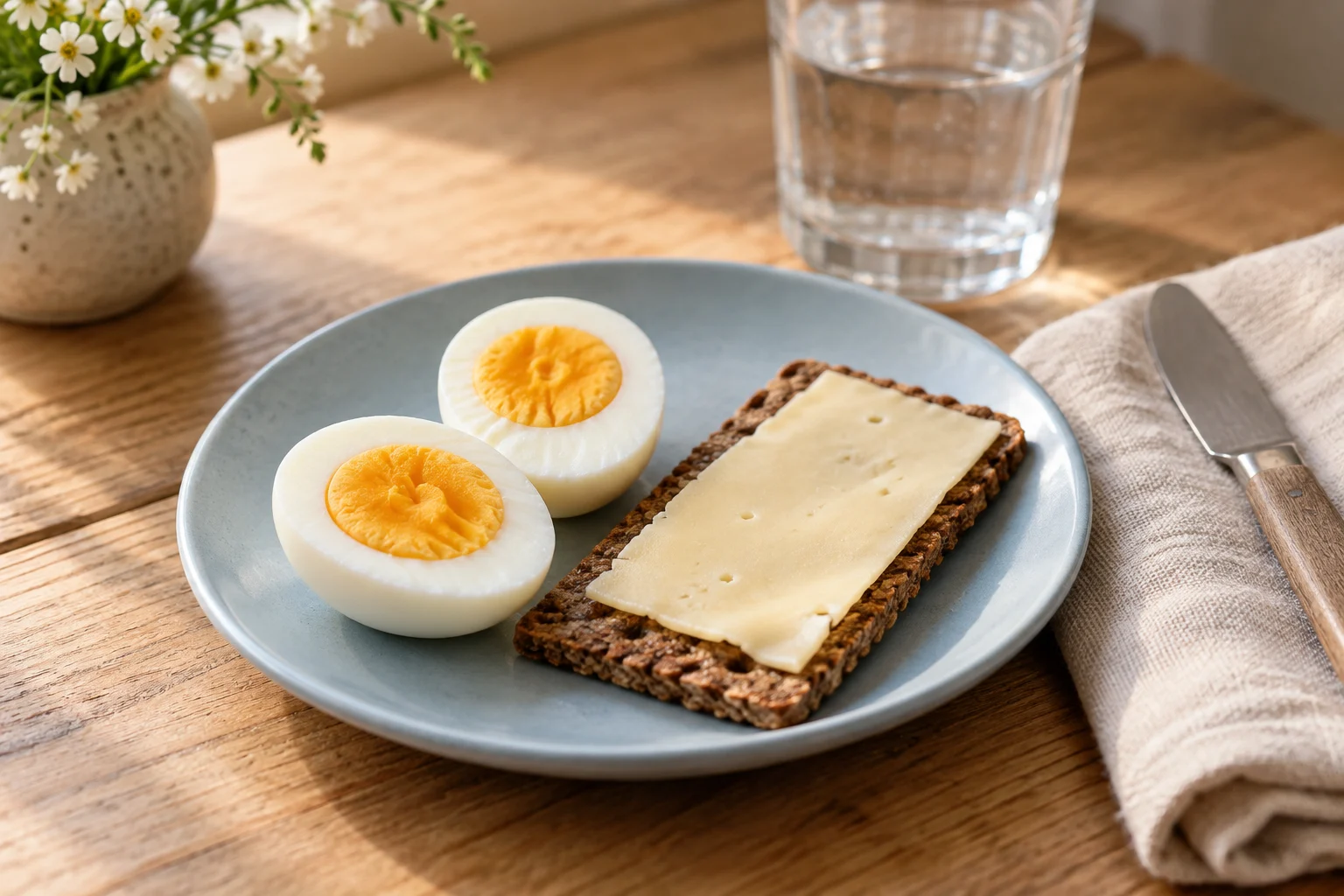
Lunch (nausea): A boiled egg and a piece of crispbread with some mild cheese, or a small portion of boiled potato with a piece of baked, unspiced chicken. Neutral flavours that rarely worsen nausea.
Dinner (a more normal day): Half a portion of salmon fillet (baked, not fried in fat) with boiled potato and steamed broccoli. Protein and vegetables first; the carbohydrates take whatever room is left.
Snack (preserving protein intake): A small portion of Greek yogurt, a handful of almonds, or a slice of turkey. Small protein top-ups between meals help you reach your protein target even when the main meals are small.
The key throughout every example: when the amount is small, let every bite carry nutrition. That's the difference between losing weight with preserved muscle mass and losing both fat and muscle.
Breakfast on Mounjaro#
Breakfast can be tricky when appetite is low in the morning. Aim for protein plus something mild and easy to eat, and keep the portion small. Three examples:
- Quark or cottage cheese with berries and oats — cool, mild, and protein-rich; start with just the quark if even that feels like a lot.
- A boiled egg and a slice of crispbread with mild cheese — neutral and easy to get down.
- Oatmeal with milk — mild and energy-giving; top with a few seeds if your stomach tolerates it.
If nausea is worst in the morning, you can wait a while before breakfast and have something small a little later instead. The key is not to skip protein entirely.
7-day meal plan and menu on Mounjaro (illustrative)#
Short answer: below is an illustrative weekly plan built on protein, fiber, and small portions — not a prescription. Your doctor or dietitian directs your treatment, and you adjust portions to your appetite that day. The meals are mild and protein-rich, so every bite carries nutrition even when you can only manage a small amount.
| Day | Breakfast | Lunch | Dinner | Snack |
|---|---|---|---|---|
| Mon | Quark + oats + berries | Boiled egg + crispbread + cheese | Oven-baked salmon + potato + broccoli | Greek yoghurt |
| Tue | Scrambled eggs + cottage cheese | Chicken soup + bread | Meatloaf + root vegetables | Handful of almonds |
| Wed | Skyr + banana + oats | Lentil soup + crispbread | Boiled cod + mashed potato + peas | Cottage cheese + berries |
| Thu | Omelette + spinach | Tuna salad + bread | Chicken stew + rice | Cheese + crispbread |
| Fri | Oatmeal + milk + nuts | Boiled egg + potato + vegetables | Oven-baked chicken + quinoa | Greek yoghurt |
| Sat | Quark + grated apple | Fish gratin + potato | Steak + potato + green beans | Slice of turkey |
| Sun | Protein pancakes + berries | Chicken wrap | Salmon pasta + spinach | Nuts + fruit |
Adapt to how you feel: on nausea days, switch to the mild, neutral options (boiled rice, potato, boiled chicken, crackers) and eat less, more often. The goal of the plan is to make it easy to reach your protein even when meals are small — not for you to finish everything regardless of appetite.
Smaklig's perspective: structure when appetite is unpredictable#
The practical challenge during treatment is that appetite fluctuates — some days you can barely eat, others feel more normal. That makes spontaneous cooking hard and makes it easy to drift into too-low protein intake without noticing.
Smaklig generates weekly menus based on your profile, and you can ask the sous-chef for high-protein, nutrient-dense dishes in smaller portions with mild flavours on days when your stomach is sensitive. The point is that the structure is already there when your energy isn't — the shopping list and meals are planned, so you don't have to improvise on a bad stomach day.
To build a whole week around this, see the pillar guide weekly menu for weight loss. If you're looking for food that supports satiety without medication, there's GLP-1-boosting foods, and for strategies without prescription medicine, lose weight without Ozempic.
Common mistakes during treatment#
Mistake 1 — Too little protein. When you eat less in total, it's easy for protein to suffer. Prioritize it in every meal.
Mistake 2 — Rapid fiber increase. Piling on large amounts of fiber against constipation can worsen gas symptoms. Increase gradually.
Mistake 3 — Skipping meals entirely. Low appetite is expected, but not eating at all makes nutrient shortfalls worse. Small, nutrient-dense meals are better than nothing.
Mistake 4 — Forgetting fluids. Less food means less fluid from food. Drink actively, especially with diarrhea.
Action checklist: eating on Mounjaro#
- Prioritize protein in every meal (target often 1.2–1.5 g/kg/day per general advice — check with your provider)
- Eat small, regular meals instead of three large ones
- Increase fiber gradually + drink enough against constipation
- Choose mild, neutral foods on nausea days
- Keep an eye on fluid intake, especially with diarrhea
- Raise food and side effects with your doctor or dietitian — this is information, not medical advice
- Try Smaklig for free — high-protein, nutrient-dense weekly menus in portions that work even on bad stomach days
Sources
- European Medicines Agency (EMA) (2022). Mounjaro (tirzepatide) — EPAR, indications + marketing authorisation
- FASS / Swedish Medical Products Agency. Mounjaro — summary of product characteristics (SmPC/FASS)
- Dental and Pharmaceutical Benefits Agency (TLV) (2026). TLV decides that Wegovy will not be included in the high-cost threshold
- Internetmedicin (Sofia Antonsson, RD; reviewed by MD, specialist physician) (2025). Dietary treatment during medication-assisted weight loss
Frequently asked questions
What should you eat when taking Mounjaro?
Focus on protein to preserve muscle mass (general advice for medication-assisted weight loss suggests 1.2–1.5 g per kg of body weight per day), vegetables and whole grains for fiber, and small regular meals when appetite is reduced. This is food information, not medical advice — your treatment is directed by your doctor.
What helps with Mounjaro nausea?
Nausea is a very common side effect (occurring in more than 1 in 10) according to the product information. In terms of food, the usual recommendations during medication-assisted weight loss are small meals, slow eating, and avoiding fatty food when nausea is present. For persistent or severe symptoms: contact your doctor — this is not medical advice.
Is Mounjaro approved in Sweden?
Yes. Mounjaro (tirzepatide) has been approved by the EMA since 2022 for type 2 diabetes, and also for weight management in adults with a BMI ≥30, or BMI ≥27 with at least one weight-related comorbidity — as an adjunct to diet and increased physical activity. Approved does not automatically mean subsidized (see below).
Does Mounjaro cost money — is it covered by the high-cost threshold?
Mounjaro is currently (July 2026) not included in the pharmaceutical benefits scheme / high-cost threshold in Sweden, so you pay the full cost yourself. According to pharmacy price lists it is roughly SEK 2,000–5,000 per month depending on dose strength. TLV has an application for subsidy under review from the manufacturer.
Can food replace Mounjaro?
No. Mounjaro is a prescription medicine and that question is decided with your doctor, not through diet. Food can support your body during treatment — protein for muscle mass, fiber for digestion, small meals for nausea — but this article is about the food side, not about replacing or comparing medicines.
What should you not eat when taking Mounjaro?
There are no medical bans on specific foods, but very fatty and fried food, large portions, heavily spiced dishes, a lot of alcohol, and high sugar intake often worsen the common side effects such as nausea and over-fullness. Cut back on those and prioritize protein instead. These are dietary tips, not medical bans — check with your doctor.
Want more meal planning tips?
More guides on food, health and saving money — and a sous-chef that plans your week for you.
Get started
Founder, Smaklig
Writer at Smaklig. We write about food, health, and how to eat better without breaking the bank.
Related articles
April 12, 2026 · 17 min
GLP-1-boosting foods: 15 natural alternatives to Ozempic (2026)
15 foods that raise GLP-1 naturally: fiber, protein, fermented. Activate the same satiety hormone as Ozempic — without a prescription or drug side effects.
Read moreSeptember 30, 2026 · 9 min
Stress, cortisol and a body that no longer responds as usual
How stress, cortisol, insulin, 'cortisol belly' and muscle fit together, what supplements are good for and when to see a doctor.
Read moreAugust 13, 2026 · 6 min
GLP-1 Recipes: 8 Filling Meals With Fiber & Protein
8 GLP-1 recipes with fiber and protein that support your body's own satiety signals — breakfast, lunch and dinner built on fiber- and protein-rich ingredients.
Read moreReady to plan smarter?
Smaklig creates your weekly menu with AI based on store campaigns. Tailored to your goals and allergies.
Get started free