Everyday exercise – movement that changes your life
Everyday exercise is the movement you get outside of training. Why every walk counts, how much you should move and how to build a habit that lasts over time.
Download Smaklig – now on the App Store and Google Play The Smaklig app is now on the App Store (iPhone) and Google Play (Android). Download it free.
Download SmakligShort answer: Everyday exercise is all the movement you get outside of training — walking, stairs, cycling, play and gardening. It counts: according to WHO, any physical activity is better than none.
- Adults are recommended at least 150–300 minutes of moderate activity a week, and long periods of sitting should be broken up
- More steps a day are linked to a lower risk of premature death
- Walking is one of the most accessible forms of exercise and can help reduce symptoms of anxiety and low mood
- Start small: a five-minute walk after lunch, or the stairs instead of the lift
- Children and young people should be active for at least 60 minutes a day on average, at moderate to vigorous intensity

Why everyday exercise is one of the most underrated investments in health and wellbeing#
Most of us know we should move more. Yet we spend a large part of our lives sitting: at the computer, in the car, on the bus or on the sofa. At the same time, research shows that physical activity is one of the most powerful factors in preventing disease, strengthening mental health and improving quality of life (WHO, 2024; Bull et al., 2020).
It is not just about training. The movement we get during the rest of the day matters at least as much. The World Health Organization, WHO, describes physical activity as any bodily movement that requires energy, whether it happens at the gym, on a walk, in the garden or on the way to work (WHO, 2024).
Many people still believe that health requires hard training sessions several days a week. But reality is far more encouraging. A walk, a few extra flights of stairs, playing with the children or a bike ride to the shop make a bigger difference than many people think. In fact, even small increases in daily activity can produce measurable health effects (Bull et al., 2020).
WHO stresses that all movement counts and that something is better than nothing (WHO, 2024; Bull et al., 2020).
Why is everyday movement so important?#
The human body is built for movement. When we move, blood circulation improves, the muscles are activated and the metabolism is stimulated. Regular physical activity reduces the risk of cardiovascular disease, type 2 diabetes, several cancers and high blood pressure. It also contributes to better sleep, stronger bones and improved mental health (WHO, 2024; CDC, 2025).
At the same time, sitting has become one of the biggest health challenges of our time. People who are insufficiently physically active have an increased risk of premature death compared with those who move regularly (WHO, 2024). Prolonged sitting is also linked to an increased risk of cardiovascular disease, type 2 diabetes and other health problems (Park et al., 2020; Bull et al., 2020).
Perhaps the most fascinating thing is that the effects are not only about preventing disease. Movement affects how we feel here and now. A walk can improve mood, reduce perceived stress and help reduce symptoms of anxiety and low mood (Xu et al., 2024).
Why is it so hard to get motivated?#
If movement is so good, why don't we do it more often?
Part of the answer lies in our biology. For most of evolution, humans lived with limited access to food. Conserving energy was a survival advantage. Our brains are therefore not programmed to seek out physical effort spontaneously when more comfortable alternatives are available.
On top of that, modern societies are designed to minimise movement. We work in front of screens, shop online, use lifts and get around by car and e-scooter. Movement that used to be a natural part of everyday life now often has to be actively planned in.
Another explanation is that many people associate physical activity with performance. If the goal feels like a marathon, an intense gym session or a demanding training routine, the threshold is high. Then it is easy to put off starting until next week.
But the best movement is almost always the movement that actually happens.
Walking – the underrated superpower#
When researchers study physical activity, the same message comes back time and again: walking is one of the most accessible and sustainable forms of exercise.
Walking requires no equipment and no special technique, and it can be adapted to almost every age and ability. It breaks up sitting, can be combined with daylight and often works as a mental break from the demands of everyday life.
Even relatively short walks can be a good start for someone who has been inactive for a long time. Research also shows that a higher number of steps per day is associated with a lower risk of premature death (Paluch et al., 2022).
Many people also find walking easier to stick with over time than more demanding forms of training. It is much easier to motivate yourself for ten minutes than for an hour-long training session.
How do you get started?#
The most common mistake is to start too big.
Someone who goes from zero to five training sessions a week rarely keeps it up for long. It is far better to start so simply that it almost feels silly.
The goal could be:
- A five-minute walk after lunch.
- Taking the stairs instead of the lift.
- Standing up and moving for a few minutes every hour.
- Getting off the bus one stop early.
Once the behaviour is in place, the amount can gradually be increased.
Research on behaviour change shows that regularity matters more than ambition at the start. It is better to walk for 10 minutes every day than for an hour once a week (Howlett et al., 2019).
How to build a habit that lasts#
Many people try to rely on motivation. The problem is that motivation varies.
Successful habits are often built on routines rather than inspiration.
Some effective strategies are:
- Link the movement to something you already do. A walk after breakfast. A quick turn outside after lunch or after dinner, or after both. The stairs when you arrive at work. Or, as a first step, the lift up but always the stairs down.
- Make it easy. Buy a pair of comfortable, good shoes that work for walking. Keep them within reach.
- Lower the bar. Allow yourself a five-minute walk. It often turns into a longer one once you are out.
- Focus on the benefits here and now. More energy, better mood and less stress show up sooner than changes in weight.
Motivation research shows that physical activity becomes more sustainable when it feels self-chosen, meaningful and in line with a person's own values, rather than driven by guilt or outside pressure (Teixeira et al., 2012).
So choose the everyday motivation that suits you. Test and try your way forward. There is no right or wrong. Be as creative as you like and adapt to what works in your life today.
Movement through the different stages of life#
Children#
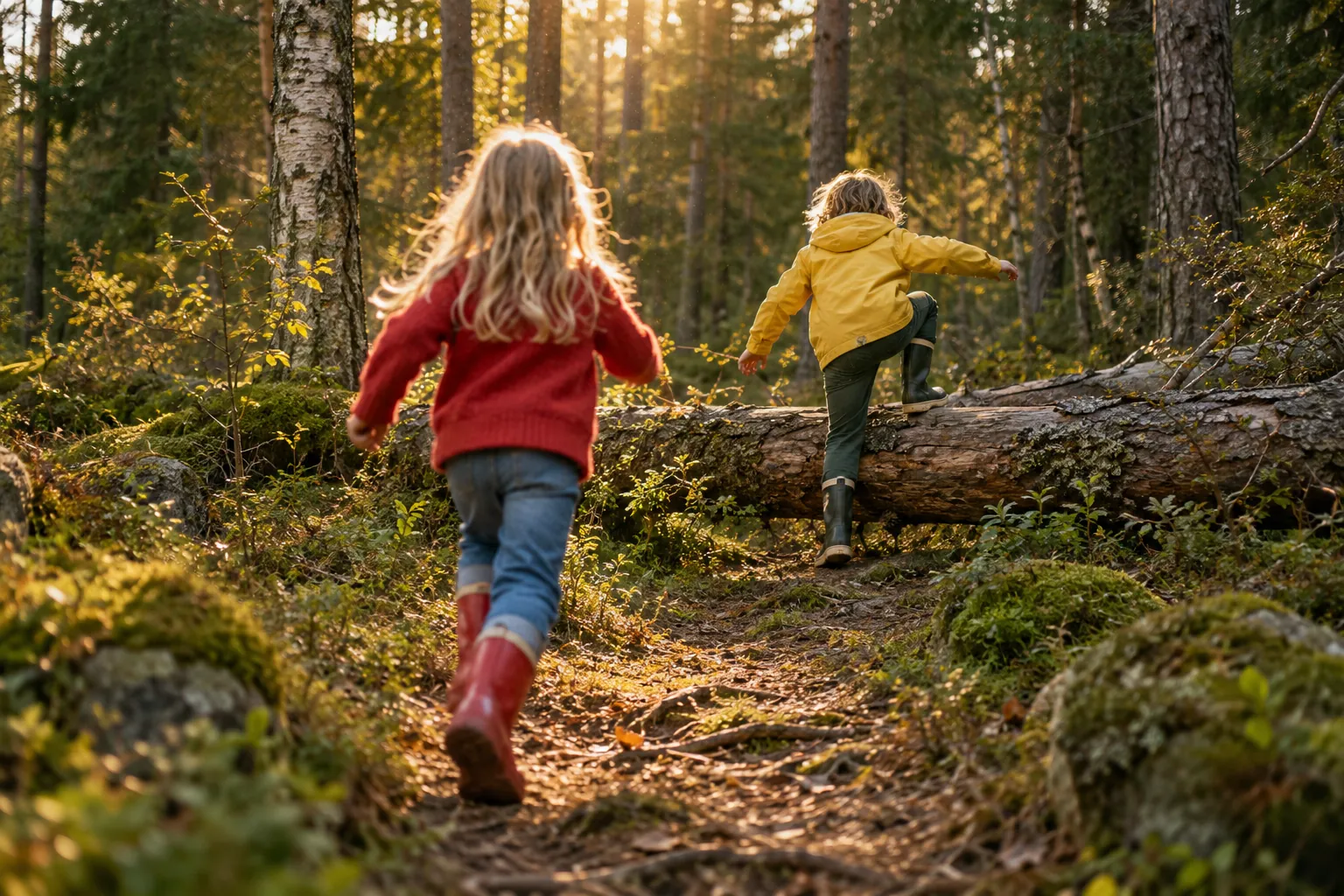
Children need movement for motor development, stronger bones, better concentration and mental wellbeing. WHO recommends plenty of daily physical activity and stresses the importance of play for children's development (WHO, 2024; Bull et al., 2020).
As a parent you rarely need to be a coach. The most important thing is often to create opportunities for movement. Children move naturally when they get the chance. A walk to school, some time at the playground, a bike ride after dinner or free play outdoors can be at least as valuable as organised training.
Research also shows that parents influence their children's movement habits, not only by encouraging activity but also through the habits the family shares (Petersen et al., 2020).
Some simple ways to help children move more are to:
- let movement become a natural part of everyday life by walking or cycling when possible
- prioritise outdoor play over extra screen time
- give children the chance to try different activities without demands to perform
- encourage play with friends, which often leads to a lot of spontaneous movement
- create family activities centred on movement, such as trips to the forest, sledging, swimming, bike rides or walks
- be a role model by showing that movement is a natural and positive part of life
Perhaps most important of all is to avoid turning physical activity into a project or a performance. Children don't need to learn to train. They need the chance to play, run, jump, climb, cycle and discover what their bodies can do. When movement is associated with joy, togetherness and curiosity, the chance increases that the habits will follow them well into adulthood (Brown et al., 2016; Petersen et al., 2020).
Teenagers#
Many teenagers become more sedentary. Globally, more than 80 per cent of the world's adolescents do not reach the recommended activity levels (WHO, 2024).
The key is often to find activities that feel fun rather than worthy. Research also indicates that self-determined motivation is associated with higher activity levels in children and adolescents (Owen et al., 2014).
For parents, this means the focus perhaps should not be on persuading the teenager to train more, but on helping them find a form of movement that feels meaningful. For some it is team sports and competition, for others gym training, dance, horse riding, climbing, skateboarding, martial arts or outdoor life. Some young people are happiest when movement is social, while others prefer to train on their own.
As an adult you can help by:
- showing interest in the young person's activity without taking it over
- encouraging effort and enjoyment rather than performance and results
- helping with practical things such as lifts, equipment and planning
- reminding them that all movement counts and that you don't have to be an elite athlete to get health benefits
- encouraging activities with friends, since the social side is often a strong driving force in the teenage years
- avoiding turning physical activity into a discussion about weight, appearance or calories burned
For many teenagers it works better to choose for themselves than to be told what they ought to do. A family walk, a bike ride with friends or a gym visit with a friend can sometimes be more appealing than organised training. When movement is associated with freedom, togetherness and the feeling of actually wanting to do the activity, the likelihood increases that the habit will carry on into adulthood (Owen et al., 2014; Teixeira et al., 2012).
Parents of young children#
The years with small children are often marked by a lack of time.
Here the solution is to build movement into everyday life rather than trying to create perfect training conditions. Consistency matters more than perfection.
Middle age#
For many people, work and family responsibilities mean that sitting increases at the same time as metabolic health starts to change.
In this phase, everyday movement often does particular good by breaking up long periods of sitting and helping to maintain fitness, muscle mass and health (WHO, 2024; Bull et al., 2020).
Retirees#
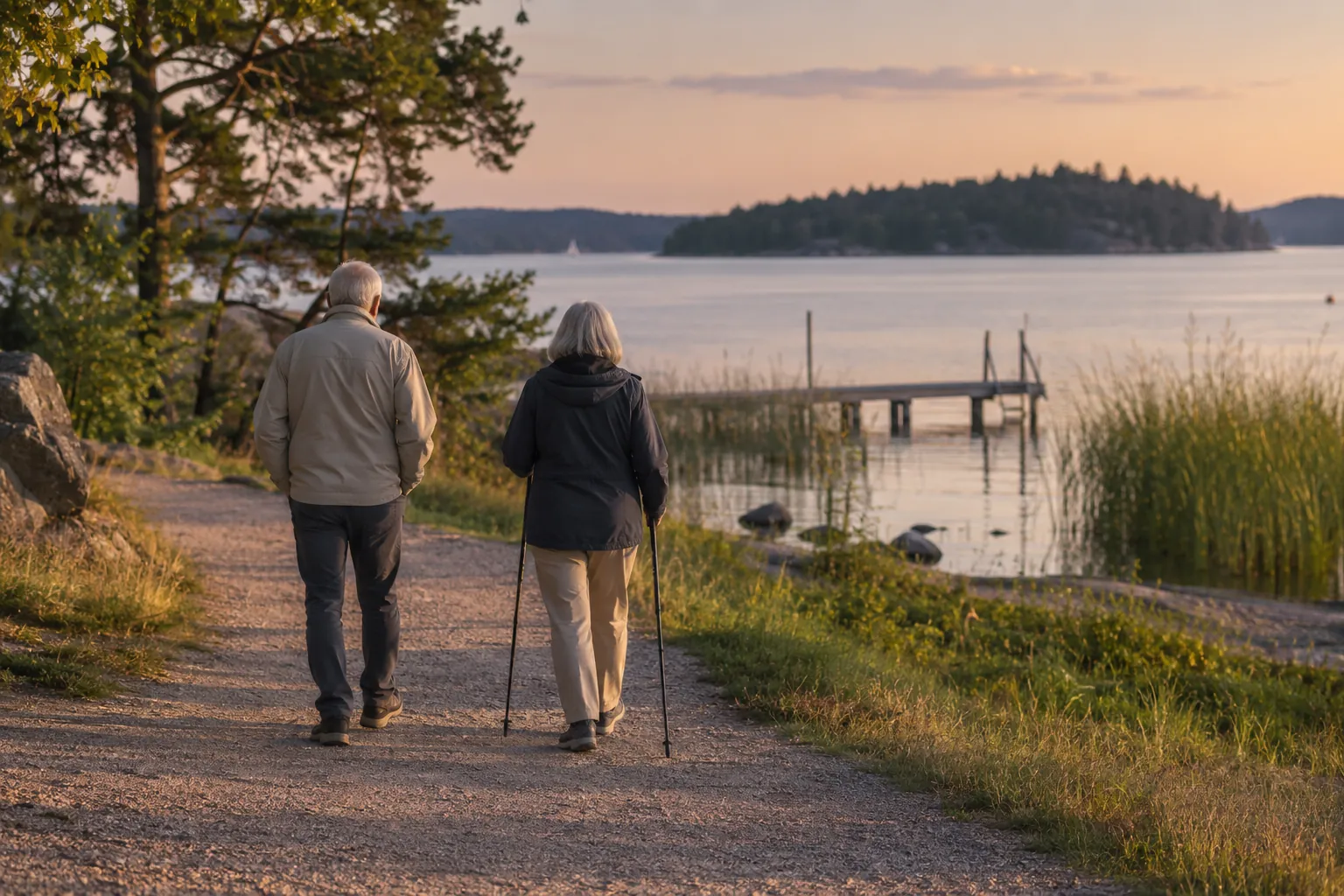
For older people, movement is not only about health but also about independence.
Regular activity helps preserve muscle strength, balance, fitness and mobility. Physical activity is also associated with better cognitive health in older people (Iso-Markku et al., 2024).
Walking, gardening, dancing, Nordic walking and light strength training can make a big difference to quality of life. WHO recommends that older people stay physically active and include balance and strength training regularly (Bull et al., 2020).
How much movement is recommended?#
| Group | Public Health Agency of Sweden recommendation |
|---|---|
| Children and young people aged 6–17 | At least 60 minutes a day on average at moderate to vigorous intensity, and vigorous activity and activities that strengthen muscles and bones at least three days a week |
| Adults aged 18–64 | At least 150–300 minutes a week at moderate intensity, or at least 75–150 minutes at vigorous intensity, plus muscle-strengthening activities on at least two days a week |
| Older adults aged 65 and over | As for adults, plus physical activity that combines balance, strength and mobility on three or more days a week |
| All ages | Long periods of sitting should be broken up and replaced with some form of physical activity |
All movement counts, and a little physical activity is better than none (Public Health Agency of Sweden, 2026).
An evening walk starts with a planned dinner#
One way to build a habit is to link movement to something you already do, such as a turn outside after dinner. That is easier when dinner isn't yet another decision late in the afternoon.
Smaklig plans the week's dinners around your goals and your store, makes a shopping list, matches it against ICA's range and puts the cheapest items in your ICA basket. If you are new to planning your week, there is a beginner's guide. The app does not diagnose anything and does not replace healthcare.
The most important message#
We need to stop seeing movement as something that only happens at the gym.
Health is often created through hundreds of small decisions every week: getting up, going for a walk, choosing the stairs, playing with the children, cycling to the shop or taking an extra turn around the block.
It is easy to think that change requires big sacrifices. But it often starts with something much simpler.
A walk around the block.
Then another one.
And suddenly you have built the lifestyle your body was always made for.
About the sources in this article#
Most of the article's factual claims are based on the sources below: WHO's fact sheet and guidelines, reviews and meta-analyses indexed in PubMed, and the CDC. Smaklig has checked that every citation points to the correct source.
Smaklig added the short answer, the table of recommendations, the section on dinner planning and the frequently asked questions. They also draw on the Public Health Agency of Sweden's guidelines on physical activity and sedentary behaviour and its page on physical activity on prescription.
Sources
- Bull FC et al. (2020). World Health Organization 2020 guidelines on physical activity and sedentary behaviour. Br J Sports Med.
- Howlett N et al. (2019). Are physical activity interventions for healthy inactive adults effective in promoting behavior change and maintenance, and which behavior change techniques are effective? A systematic review and meta-analysis. Transl Behav Med.
- Iso-Markku P et al. (2024). Physical Activity and Cognitive Decline Among Older Adults: A Systematic Review and Meta-Analysis. JAMA Netw Open.
- Owen KB et al. (2014). Self-determined motivation and physical activity in children and adolescents: a systematic review and meta-analysis. Prev Med.
- Paluch AE et al. (2022). Daily steps and all-cause mortality: a meta-analysis of 15 international cohorts. Lancet Public Health.
- Park JH et al. (2020). Sedentary Lifestyle: Overview of Updated Evidence of Potential Health Risks. Korean J Fam Med.
- Teixeira PJ et al. (2012). Exercise, physical activity, and self-determination theory: a systematic review. Int J Behav Nutr Phys Act.
- World Health Organization (WHO) (2024). Physical activity (fact sheet)
- Xu Z et al. (2024). The Effect of Walking on Depressive and Anxiety Symptoms: Systematic Review and Meta-Analysis. JMIR Public Health Surveill.
- Petersen TL et al. (2020). Association between parent and child physical activity: a systematic review. Int J Behav Nutr Phys Act.
- Brown HE et al. (2016). Family-based interventions to increase physical activity in children: a systematic review, meta-analysis and realist synthesis. Obes Rev.
- Centers for Disease Control and Prevention (CDC) (2025). Benefits of Physical Activity
- Folkhälsomyndigheten (Public Health Agency of Sweden) (2026). Riktlinjer och rekommendationer för fysisk aktivitet och stillasittande (guidelines on physical activity and sedentary behaviour)
- Folkhälsomyndigheten (Public Health Agency of Sweden) (2026). Fysisk aktivitet på recept, FaR (physical activity on prescription)
Frequently asked questions
How much should you move each week?
The Public Health Agency of Sweden recommends that adults are physically active at moderate intensity for at least 150–300 minutes a week, or at least 75–150 minutes at vigorous intensity, and do muscle-strengthening activities on at least two days a week. Long periods of sitting should be broken up with some form of movement. The overall message is that all movement counts, and a little physical activity is better than none.
How many steps a day do you need?
A meta-analysis of 15 cohorts with 47,471 adults found that the risk of premature death fell with more steps per day. The benefit levelled off at around 6,000–8,000 steps for people aged 60 and over and at 8,000–10,000 steps for younger adults (Paluch et al., 2022). The largest difference was already seen between the least active and the next group.
Does everyday exercise count as physical activity?
Yes. WHO defines physical activity as any bodily movement that requires energy, including during leisure time, for transport to and from places, or as part of work. Taking the stairs instead of the lift, cycling to the shop or playing with the children all count. WHO and the Public Health Agency of Sweden both stress that all movement counts.
How much should children move?
The Public Health Agency of Sweden recommends that children and young people aged 6–17 are physically active for at least 60 minutes a day on average, at moderate to vigorous intensity that raises the heart rate and breathing, with vigorous activity and activities that strengthen muscles and bones at least three days a week. Play and everyday movement are a good way to get there, for example walking or cycling to school and playing outdoors.
What is physical activity on prescription (FaR)?
Physical activity on prescription is a Swedish method in which healthcare staff prescribe physical activity as an alternative or complement to other treatment. The prescription can cover everyday movement such as walking, gardening and cycling, or organised activities. Any licensed healthcare professional with knowledge of and training in the method can prescribe FaR, according to the Public Health Agency of Sweden.
Want more meal planning tips?
More guides on food, health and saving money — and a sous-chef that plans your week for you.
Get started
Co-founder & CFO, Smaklig
Writer at Smaklig. We write about food, health, and how to eat better without breaking the bank.
Related articles
July 2, 2026 · 10 min
Electrolytes for Training in the Heat — Do You Need Them? (2026)
Do you need electrolytes when you exercise in the heat? When water is enough, when salt matters — sweat losses, homemade rehydration and foods that cover it.
Read moreSeptember 30, 2026 · 9 min
Stress, cortisol and a body that no longer responds as usual
How stress, cortisol, insulin, 'cortisol belly' and muscle fit together, what supplements are good for and when to see a doctor.
Read moreSeptember 23, 2026 · 16 min
Weekly Family Meal Plan: 5 Easy Dinners, One Grocery List
A simple weekly family meal plan with five dinners for four people. Get the recipes, one shared grocery list and tips for different tastes – 25–40 minutes each.
Read moreReady to plan smarter?
Smaklig creates your weekly menu with AI based on store campaigns. Tailored to your goals and allergies.
Get started free