What should we eat this week? Making the dinner decision easier
Decision fatigue meal planning made simple: plan only the hardest nights, start with what is in your fridge and let the plan change. Less 5 pm dinner stress.
Download Smaklig – now on the App Store and Google Play The Smaklig app is now on the App Store (iPhone) and Google Play (Android). Download it free.
Download SmakligShort answer: With decision fatigue, meal planning is less about cooking and more about the decision. Decide a few dinners in advance when you have time to think, start with the hardest days of the week, use what you already have at home and let the plan change when the week does.
- Don't plan everything – two to four dinners for the toughest days is enough to start
- Leave one evening open for leftovers or the unexpected
- Check cupboards, fridge and freezer first – the Swedish Food Agency advises knowing what you have at home before you shop
- Planning goes with a more varied diet – in a French study of 40,554 adults, an association and no proven effect (Ducrot et al., 2017)
- In Smaklig the plan becomes a weekly menu based on the offers where you shop, with a shopping list
It's not just dinner that takes time – it's deciding on it.
It's nearly five o'clock. Someone asks what's for dinner. You open the fridge, look at your phone and try to think of something that's quick, suits everyone and doesn't require yet another trip to the shop. The actual cooking hasn't started. Even so, dinner has already taken time.
That is the part of everyday food we want to make easier with Smaklig.
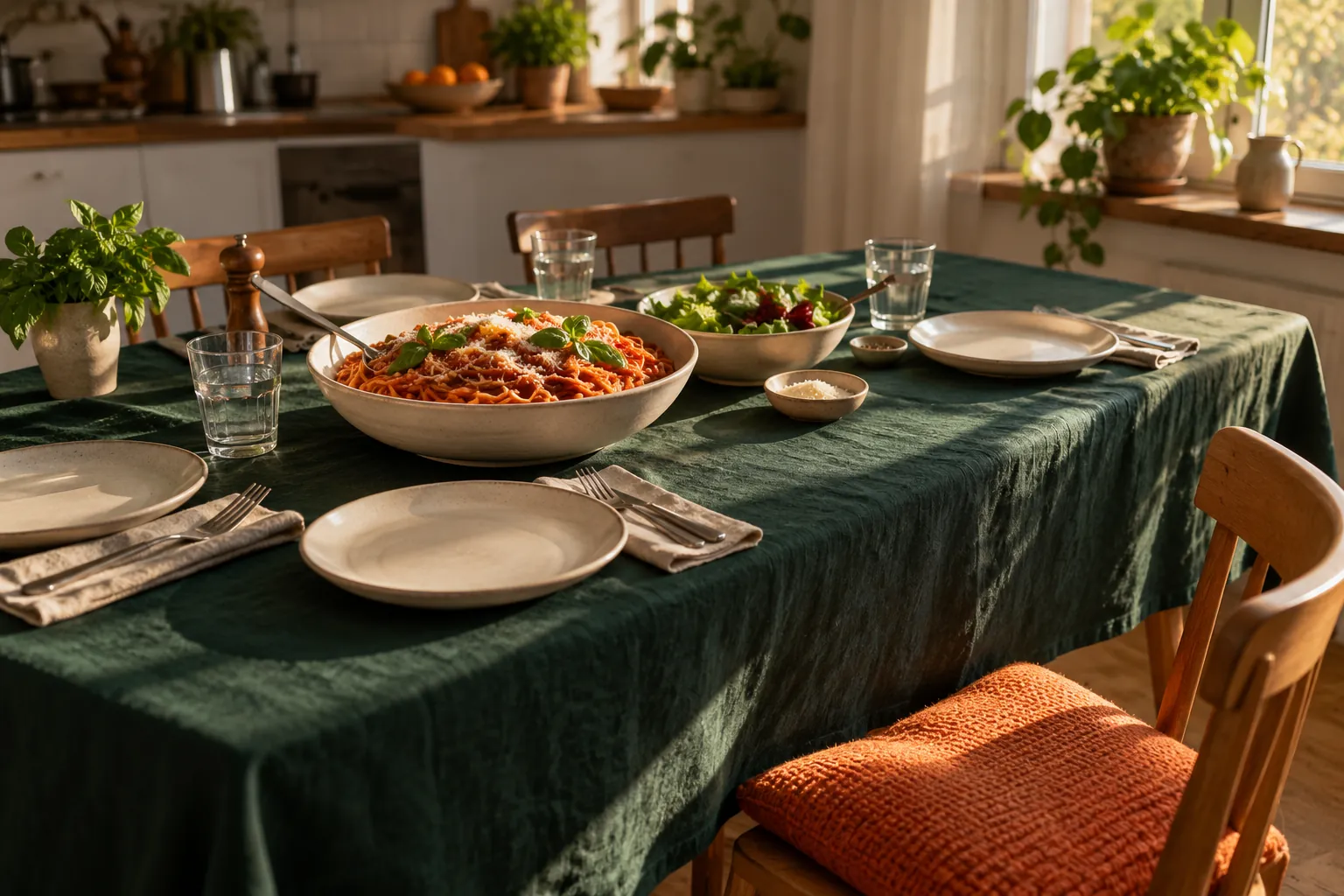
Why is deciding what to eat so exhausting?#
Because dinner is many small decisions at once, and they arrive when the day has already used up most of your energy. What's at home, what does everyone like, how much time is there and what needs buying? The questions often land on the same person. The term decision fatigue is often used for this, but the research is still thin: a review of 84 articles concludes that there are few studies directly linking decision fatigue to what we choose to eat (Brasington et al., 2025, Nutrients).
The work starts long before the stove#
A dinner often begins with several small questions. What's at home? What do the others like? What did we eat yesterday? Do we have time to cook it before the next activity? And what do we need to buy?
Each question is manageable on its own. But when they come back every day, it adds up to a lot to keep in your head. Especially if the same person is usually expected to have the answer.
A collection of recipes can give you inspiration. To make the food week work, the recipes also need to fit with the calendar, the household's wishes and the shopping. That is the reason Smaklig exists: we want to help you all the way from the question about dinner to a plan that works in your home.
How do you meal plan when you're too tired to plan everything?#
Decide only the dinners that are usually hardest and leave the rest open. A short plan is enough to spare you the same question every afternoon. In a French cross-sectional study of 40,554 adults in NutriNet-Santé, 57 percent said they planned meals at least occasionally. Those who planned meals at least occasionally more often had a more varied diet, and a diet closer to the French dietary guidelines, than non-planners at the time of the survey. The researchers themselves write that the associations do not show cause (Ducrot et al., 2017, IJBNPA).
Decide a few dinners when you have time to think#
You don't need to plan every meal to get help from a weekly menu. Start with the days that are usually hardest.
On Tuesday everyone gets home late. That's where a quick pasta fits. On Wednesday there's time to cook a bit more, so that it stretches to Thursday's lunch. Friday is left open because you don't yet know what the evening will look like.
That way the planning can follow the week you actually have. You avoid making the same decision when you're hungry, tired and already on your way home.
Have a look in the fridge and freezer before you decide on the dishes. If you already have potatoes and half a cabbage, they can be the starting point for several dinners. Then write down what needs topping up. The next time someone asks what you're eating, there's a suggestion to start from.
How do you use what's already in the fridge and freezer?#
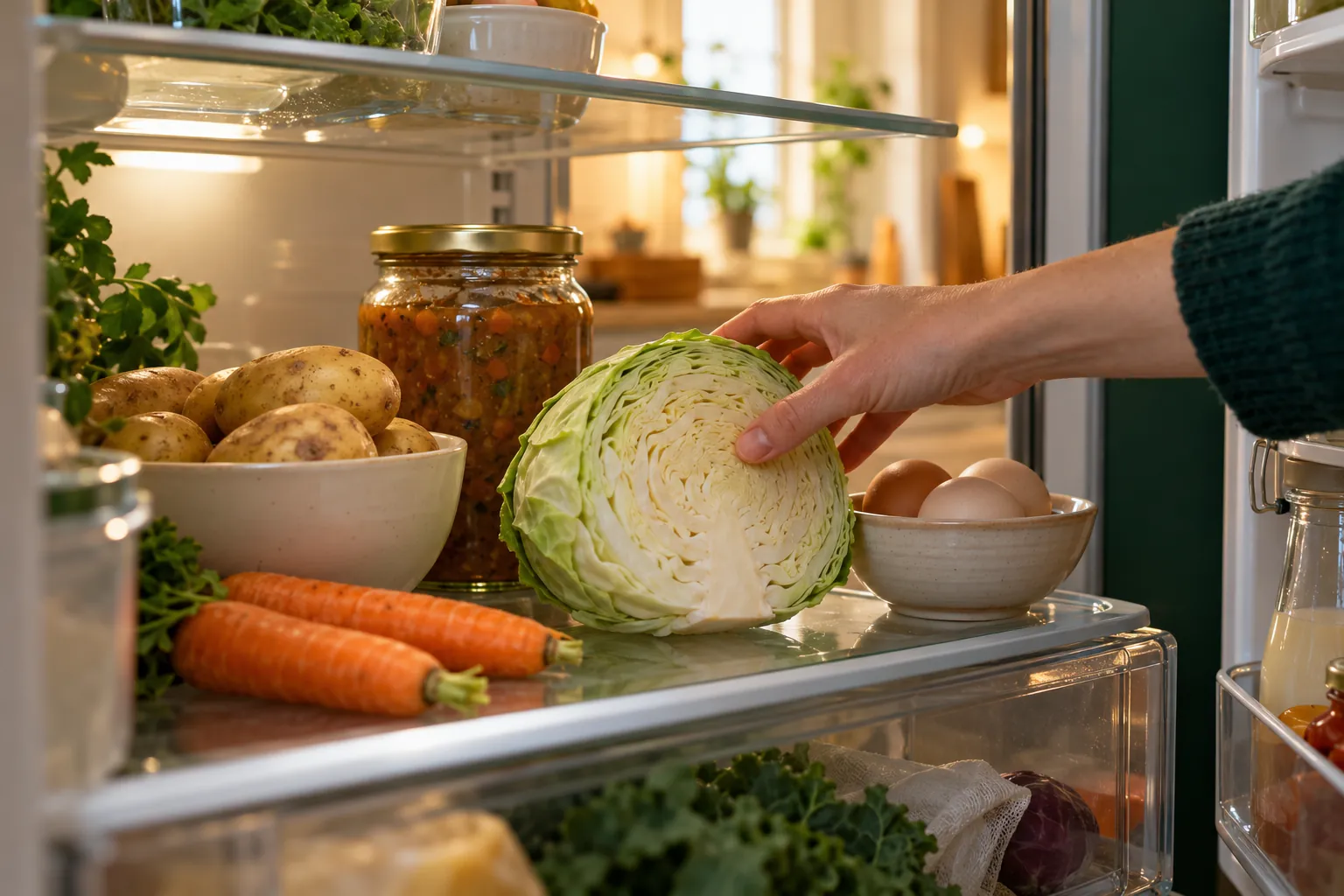
Go through the cupboards, fridge and freezer before you pick dishes, and let what needs eating first decide one or two dinners. The Swedish Food Agency advises keeping regular track of what food is in your cupboards, fridge and freezer, and having a recurring day when you go through your supplies, fridge and freezer, so that you know what's at home before you shop (Livsmedelsverket, 2026).
If you find it hard to see what it could become, there are more ideas in dinner ideas from your fridge and in the guide to dinner from pantry leftovers.
What if the meal plan doesn't hold?#

Change it. A weekly menu is a suggestion to start from, not a contract. Swap two days, turn the leftovers into a dinner of their own or freeze them. The Swedish Food Agency advises freezing leftovers that won't be eaten within the next few days (Livsmedelsverket, 2026). If you cook a double batch, it can become meal boxes for the freezer – see meal prep and freezer meals.
A plan is allowed to change#
Sometimes there are leftovers. Sometimes nobody wants what was next in line. Swap days, move a dish or cook something else. The menu can still help you see which ingredients you have and what needs to be used.
With Smaklig you can get suggestions for a weekly menu based on your preferences. Our ambition is to make the path to dinner shorter, so that less of the evening goes to wondering what to put on the table.
Deciding at 5 pm vs planning a few nights – what's the difference?#
The difference is when the decision is made. Deciding in the moment gives full freedom but moves every question to the time of day when you're most tired. A few dinners in advance removes the hardest decisions and leaves room for the unexpected. A full weekly menu gives the most overview but takes more time at the start and more often needs changing.
| Deciding at 5 pm | A few dinners in advance | Full weekly menu | |
|---|---|---|---|
| Decisions on weekdays | One every day | Only the open days | Few, if the plan holds |
| Shopping | Often several times a week | One bigger shop plus top-ups | One bigger shop |
| Leftovers | Easily left over | Can get an evening of their own | Need to be planned in |
| Flexibility | High | High | Lower |
| Time spent planning | None in advance, more every day | A short while each week | A longer while each week |
If you want to go all the way to a full plan, there's a step-by-step guide to meal planning for beginners. If you have children, there's a ready-made weekly family meal plan with five dinners and a shopping list.
Which mistakes make meal planning harder?#
The most common mistakes make the plan bigger or more rigid than the week needs.
- Planning all seven days in the first week. Start with the hardest days and add more once it works.
- Choosing new recipes every day. Dishes you already know are quicker to cook and easier to shop for.
- Not checking what's at home. Then you buy things you already have, and what's in the fridge is left over.
- Letting one person carry the whole question. Decide together, so the answer doesn't always sit with the same person.
- Seeing a changed plan as a failed plan. Swapping a day is part of planning.
If you need ideas for a single evening, there are more dinner ideas for tonight.
Your first easy weekly plan#
- Pick the two or three weekdays that are usually hardest.
- Go through the cupboards, fridge and freezer and write down what needs eating first.
- Decide on a quick dinner for the latest evening and a dinner that stretches to lunch the next day.
- Leave at least one evening open for leftovers or the unexpected.
- Write down what needs topping up and buy it in one go.
How to make your weekly menu in Smaklig#
Start with a few weekday dinners. Create your weekly menu in Smaklig and adapt it to the week ahead.
- Say which days are hardest. Write in the chat, for example: "Make a weekly menu with dinners for Monday to Thursday. On Tuesday we get home late, so that dinner needs to be quick."
- Let the plan start from your household. Smaklig knows your household, your shop, allergies and diet and what you've added to your pantry, and works from this week's offers where you shop, across all seven chains: ICA, Coop, Willys, Hemköp, Lidl, City Gross and Costco.
- Get the shopping list. The weekly menu becomes a shopping list. If you shop at ICA or Coop, the list is matched against the store's range, the cheapest products are picked and they are added to the basket in the app.
Smaklig is free during the beta and is available for iPhone, Android and on the web.
Sources
- Ducrot P et al. (2017). Meal planning is associated with food variety, diet quality and body weight status in a large sample of French adults. International Journal of Behavioral Nutrition and Physical Activity.
- Brasington N, Beckett EL, Pristijono P, Akanbi TO (2025). The Effect of Decision Fatigue on Food Choices: A Narrative Review. Nutrients.
- Livsmedelsverket (Swedish Food Agency) (2026). Tips för minskat matsvinn (Tips for less food waste). Livsmedelsverket.
Frequently asked questions
What should we eat this week if we don't have time to plan?
Start with two or three dinners for the hardest days of the week and leave the rest open. A half-finished suggestion is better than none when someone asks at five o'clock.
What should we have for dinner this week?
Choose two or three weekday dinners that usually work: a quick dish for the most stressful evening, a dish that makes leftovers and something you already have at home. Leave the rest of the week open.
Why is it so hard to decide on dinner?
The decision needs you to keep several things in your head at once: what's at home, what everyone likes, how much time there is and what needs buying. It is often made when you are tired, and in many households it falls to the same person.
How many dinners should you plan each week?
There is no right number. Start with the weekdays that are usually most stressful and add more once it works.
What should you do when the plan falls apart?
Swap days, move a dish or eat leftovers. The menu still helps by showing which ingredients you have and what needs to be used.
Is there research on decision fatigue and food choices?
A little. A 2025 review in Nutrients that went through 84 articles concludes that there are still few studies directly linking decision fatigue to what we choose to eat.
Want more meal planning tips?
More guides on food, health and saving money — and a sous-chef that plans your week for you.
Get started
Co-founder & Growth, Smaklig
Writer at Smaklig. We write about food, health, and how to eat better without breaking the bank.
Related articles
October 30, 2026 · 11 min
Tired? Are you eating enough vitamin D?
Vitamin D foods for winter in Sweden: which foods give the most, who should take a supplement, and an easy salmon traybake. Tiredness has many causes.
Read moreAugust 3, 2026 · 10 min
High-Protein Dinner for Weight Loss: 7 Recipes (2026)
High-protein dinner for weight loss: 7 recipes with about 30–40 g protein, 25–35 minute cooking times and clear cost ranges. Build a meal-kit shop in Smaklig.
Read moreJuly 31, 2026 · 12 min
Mediterranean Diet: A Practical Weekly Menu (2026)
Mediterranean diet made practical: understand the eating pattern and build a flexible weekly menu with legumes, whole grains, vegetables, fish and nuts.
Read moreReady to plan smarter?
Smaklig creates your weekly menu with AI based on store campaigns. Tailored to your goals and allergies.
Get started free