Tired? Are you eating enough vitamin D?
Vitamin D foods for winter in Sweden: which foods give the most, who should take a supplement, and an easy salmon traybake. Tiredness has many causes.
Download Smaklig – now on the App Store and Google Play The Smaklig app is now on the App Store (iPhone) and Google Play (Android). Download it free.
Download SmakligShort answer: Tiredness can have many causes and does not in itself mean you are low in vitamin D. In the winter half of the year the skin makes hardly any vitamin D in Sweden, so vitamin D foods matter more.
- Oily fish such as salmon, herring and mackerel is the largest source in food (Swedish Food Agency)
- Fortified foods: certain dairy products, plant drinks and spreads, since 2018 – check the packaging
- Eggs contribute some, about 2 micrograms per egg
- 10 micrograms a day is recommended for adults aged 18–74 and 20 micrograms from age 75
- Seek care if the tiredness lasts a couple of weeks, gets worse or limits your daily life (1177)
- In Smaklig the plan becomes a weekly menu with a fish dinner and a shopping list
Do the afternoons feel unusually long and your energy short? As the days get darker, it is easy to start wondering about vitamin D. Tiredness can have many causes, including lack of sleep and stress, and does not in itself mean that you are vitamin D deficient. (1177) But how often do foods with vitamin D end up on your plate? Here you get help reviewing your eating habits, plus an easy salmon recipe for next week's menu.
Is tiredness a symptom of vitamin D deficiency?#
Tiredness is a non-specific complaint with many common causes. 1177, the Swedish national health information service, says a common cause is too little sleep and also lists stress, mental health problems, food, drink, medicines, alcohol and nicotine. Vitamin D is not mentioned on 1177's page about tiredness (1177, Trötthet, updated 2023).
Eating vitamin D foods is good for your body whatever the reason you feel tired, but it does not replace rest or an assessment by a healthcare professional. If stress sounds familiar, read more about cortisol and stress. If you wonder whether you are deficient, healthcare can assess that.
Why food matters in winter#
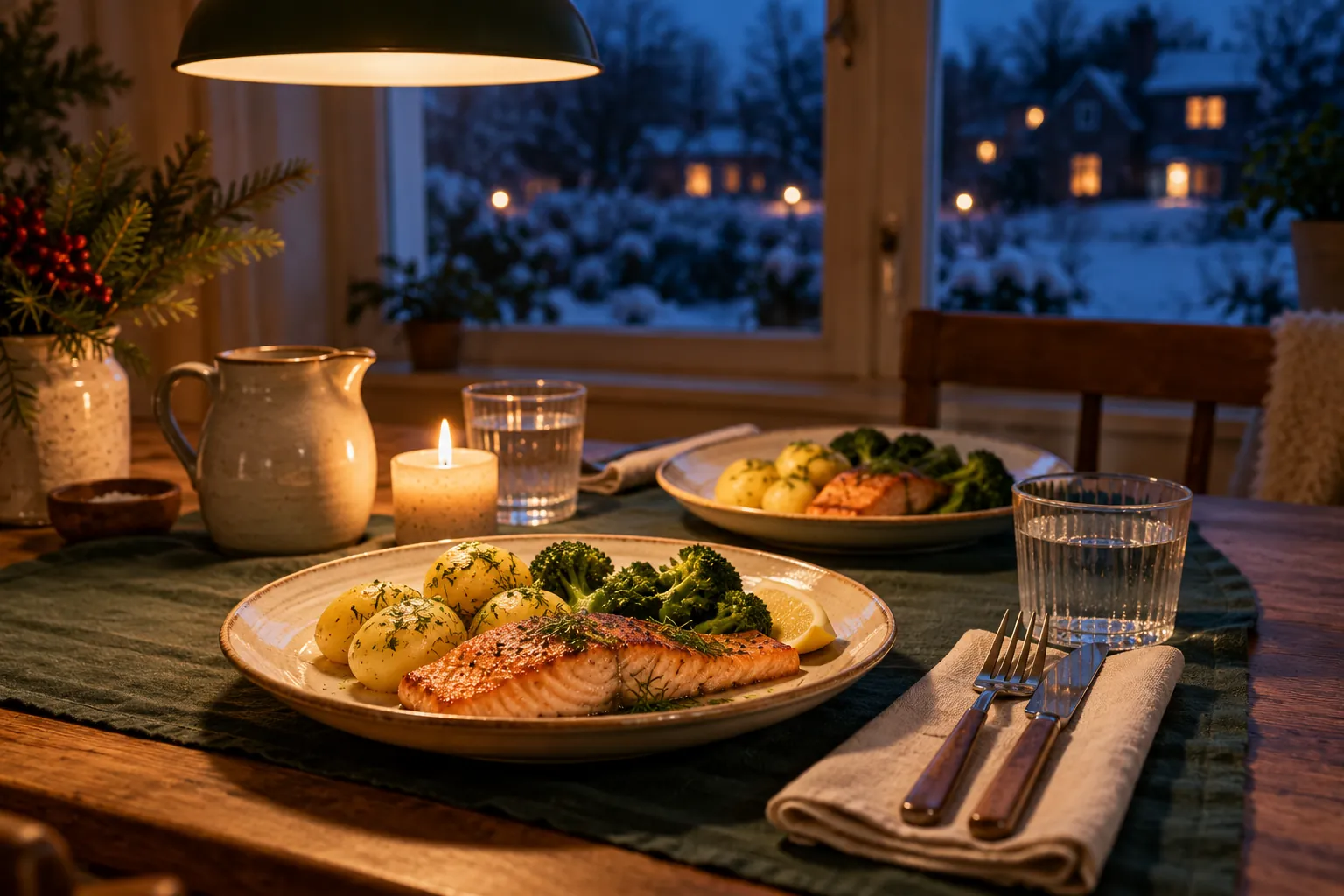
Vitamin D is needed, among other things, for the body to absorb calcium and for bones and teeth to develop and function normally. We get the vitamin from food, and it is also made in the skin when we get enough sun. In the winter half of the year, hardly any vitamin D is made in the skin at our latitudes. That makes food an important source. (Swedish Food Agency, vitamin D for children; Swedish Food Agency, school meal guidelines)
Fish such as salmon, herring and mackerel provide vitamin D. Eggs also contain some. Fortified foods, for example milk, certain plant drinks and spreads, are other sources. Check the packaging to see whether a product is fortified. (Swedish Food Agency, vitamin D for children)
Which vitamin D foods are part of an everyday Swedish diet?#
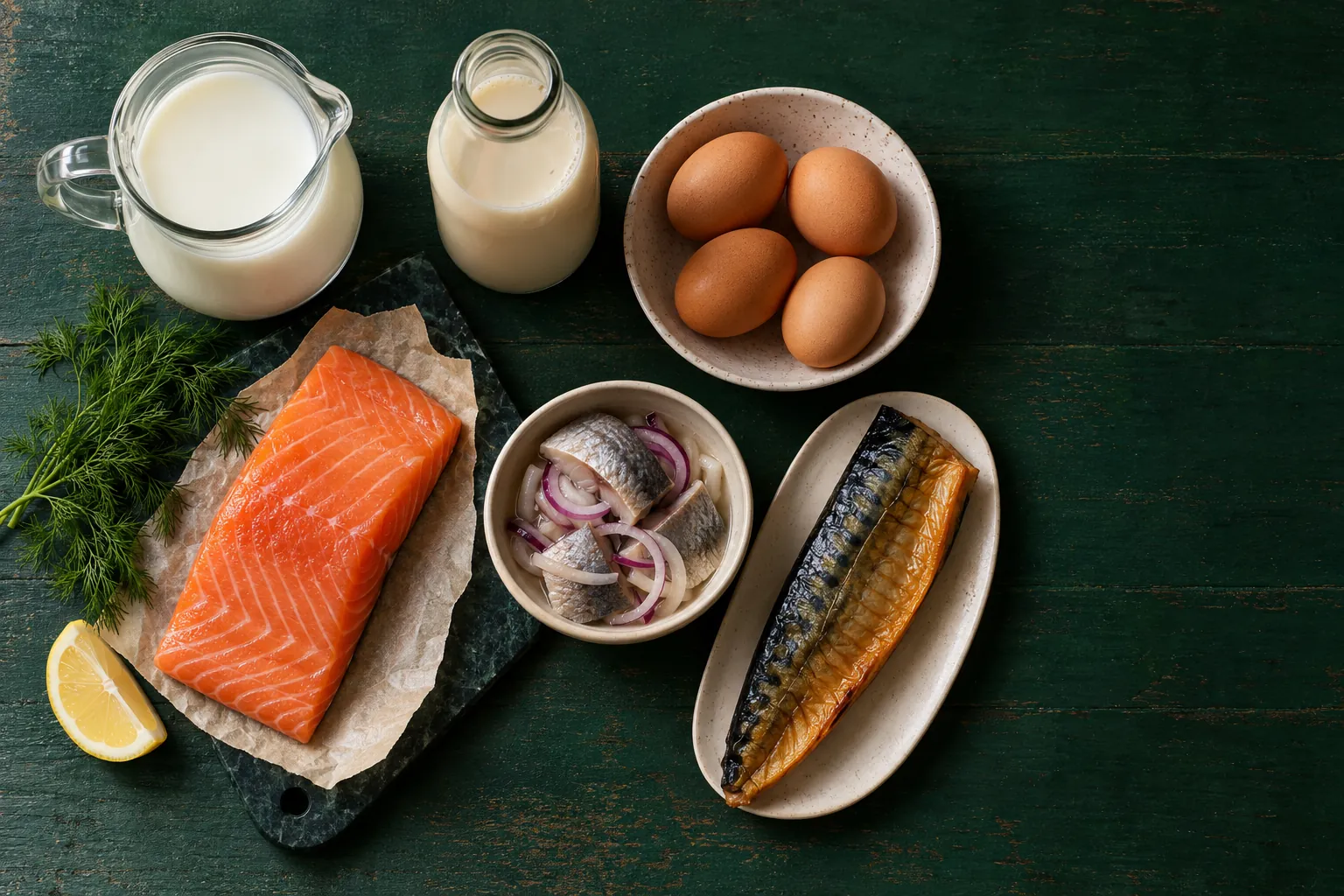
Oily fish such as salmon, herring and mackerel is the largest source in food. Eggs and meat contain some, and mushrooms such as chanterelles and porcini contain vitamin D2. Since 2018, certain milk products, sour milk and yoghurt, their plant-based and lactose-free alternatives and certain spreads must be fortified with vitamin D in Sweden (Swedish Food Agency, vitamin D, reviewed 2025-11-11).
The Swedish Food Agency recommends 10 micrograms of vitamin D a day for children and adults up to age 74, and 20 micrograms a day from age 75 and for people who get little or no sun (Swedish Food Agency). The table shows what some common foods contribute according to the agency's fact sheet. The fortification rules apply to products sold in Sweden.
| Food | Vitamin D | Source |
|---|---|---|
| Oily fish (salmon, pickled herring, mackerel) | "a lot of vitamin D" – the largest source in food | Swedish Food Agency, fact sheet and vitamin D page |
| 1 egg | about 2 micrograms | Swedish Food Agency, fact sheet |
| Fortified milk or plant drink | about 1 microgram per dl | Swedish Food Agency, fact sheet |
| Fortified sour milk or yoghurt | about 1 microgram per dl | Swedish Food Agency, fact sheet |
| Fortified spread | about 2 micrograms per 10 grams | Swedish Food Agency, fact sheet |
| Fortified liquid cooking fat | about 1 microgram per teaspoon | Swedish Food Agency, fact sheet |
| Mushrooms (chanterelles, porcini) | contain vitamin D2 | Swedish Food Agency, vitamin D page |
The fact sheet is written for children, but the amounts per food are the same for adults (Swedish Food Agency, vitamin D for children). Butter and cooking oil do not have to be fortified, but some cooking oils are anyway. It says so in the ingredients list. If you eat vegetarian, there are more ideas in a vegetarian weekly meal plan.
Start with a dinner you want to cook again#
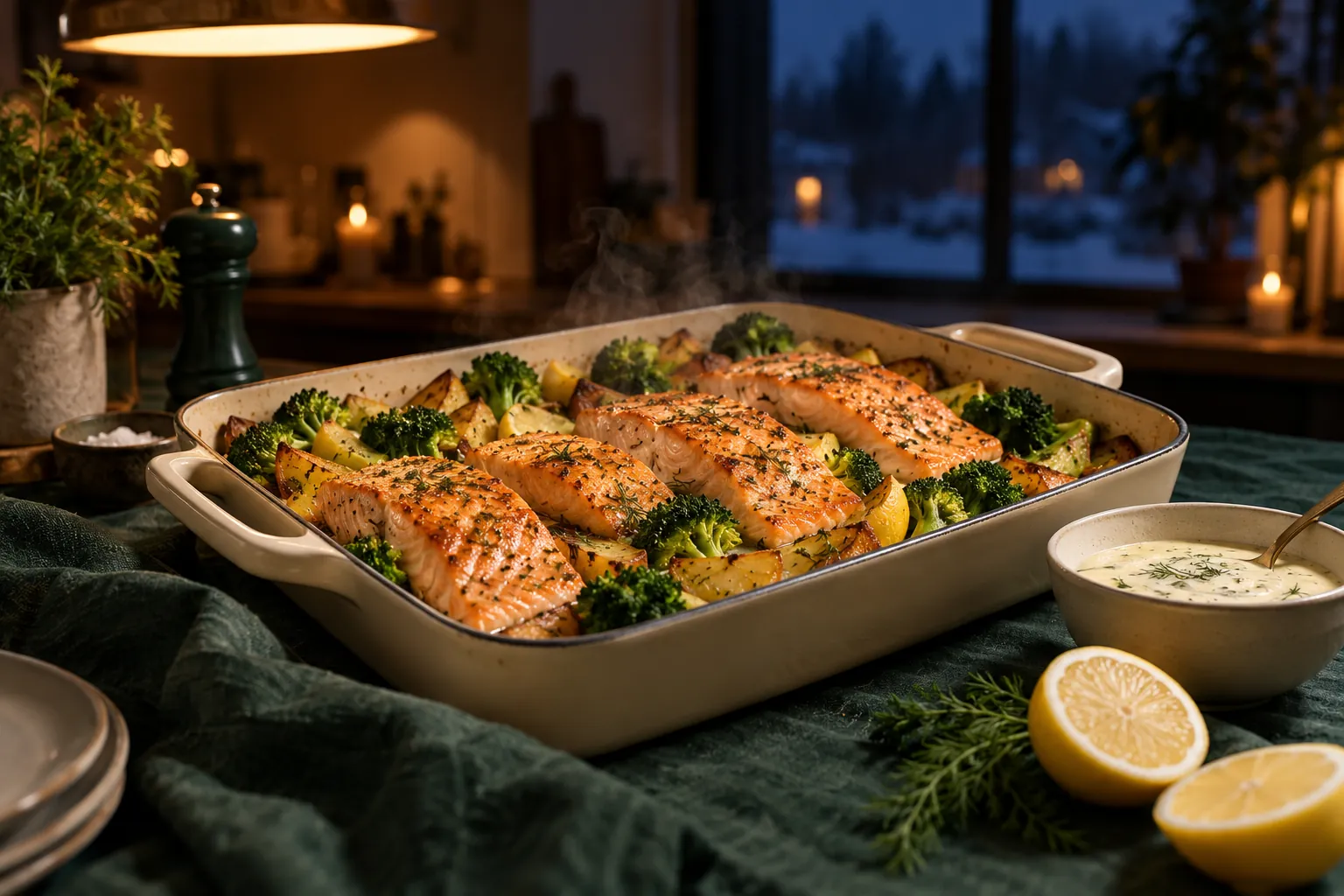
Give a fish dish a fixed place in your weekly menu, and think about which sides work in your home. Frozen broccoli, potatoes and a cold sauce can make a salmon dinner easy to put together. On another day, eggs can be the base of an omelette with vegetables.
You can also look at what you have for breakfast or snacks. If you choose a plant drink, check whether that particular variety contains added vitamin D. Products can differ. (Swedish Food Agency, vitamin D for children)
In Smaklig, we want to make it easier to turn food knowledge into dinners that actually happen. When the dish has a place in the weekly menu and the ingredients are on the shopping list, the step to the dinner table becomes more concrete.
How often should fish be on the weekly menu?#
The Swedish Food Agency says it is good to eat fish two to three times a week and to vary between oily and lean fish (Swedish Food Agency, vitamin D for children). An oily fish such as salmon one evening and a lean fish dish another evening goes a long way.
You will find more fish dinners in a Mediterranean diet weekly menu, and the weekly family meal plan already has an oven-baked fish on Wednesday.
Oven-baked salmon with potatoes, broccoli and lemon sauce#
Four servings. About 40 minutes, depending on your oven and the size of the pieces.
Ingredients#
- 800 g potatoes
- 2 tbsp rapeseed oil
- 500 g broccoli, fresh or frozen
- 600 g salmon fillet without skin and bones, preferably in four even pieces
- 1 lemon
- 2 dl plain yoghurt
- 2 tbsp chopped dill, fresh or frozen
- ½ tsp salt, or to taste
- Black pepper
Method#
- Heat the oven to 225°C, conventional (top and bottom heat). Wash the potatoes and cut them into small wedges. Place in a large ovenproof dish, toss with the oil and some of the salt. Roast for about 20 minutes.
- Cut fresh broccoli into florets. If you use frozen broccoli, follow the instructions on the packet for cooking and any thawing.
- Add the salmon and broccoli to the dish with the potatoes. Season with the rest of the salt and a little pepper. Squeeze over a little lemon. Continue cooking for about 12–18 minutes, until the salmon is cooked through and the potatoes and broccoli are tender. The time depends on how thick the fish pieces are and whether the broccoli is frozen.
- Mix the yoghurt with dill, a little finely grated lemon zest and lemon juice to taste. Serve the sauce with the salmon and vegetables.
The salmon is the dish's main source of vitamin D. The content varies between ingredients; the recipe has no calculated vitamin D value per serving.
Food and supplements meet different needs#
Certain groups are recommended a vitamin D supplement. A recipe does not determine whether you get enough or need a supplement. Follow the Swedish Food Agency's advice for your age and eating habits. (Swedish Food Agency, advice on vitamin D supplements for risk groups) If the tiredness lasts a couple of weeks, gets worse or limits your daily life, you should contact a health centre (vårdcentral). (1177)
Which groups are recommended a vitamin D supplement?#
The Swedish Food Agency recommends supplements for groups who find it hard to get enough from food and sun. The advice applies to groups, not to an assessment of you as an individual (Swedish Food Agency, vitamin D, reviewed 2025-11-11; report 2018 no. 21).
| Group | Recommended supplement per day |
|---|---|
| All children under 2 | 10 micrograms |
| Children and adults who do not eat fish and/or vitamin D-fortified products | 10 micrograms |
| Children and adults who cover their body with clothing or are not out in the sun in summer | 10 micrograms |
| The same group, if they also do not eat fish and fortified products | 20 micrograms |
| Everyone aged 75 and over | 20 micrograms |
The Swedish Food Agency says supplements are particularly important in winter, and that people who take a supplement can pause from May to August if they spend time in the sun, but that taking it all year round is also fine. For older adults, there is more about food in the article on protein for the elderly.
How much vitamin D do you need a day?#
The Swedish Food Agency recommends 10 micrograms of vitamin D a day for children from age 1 and adults up to 74, 20 micrograms for people who get little or no sun, and 20 micrograms a day from age 75. The recommendation covers your intake from food and any supplement; the contribution from the sun is already taken into account (Livsmedelsverket, Vitamin D, reviewed 2025-11-11).
You can also get too much. The upper limit is 100 micrograms a day for adults and children from age 11, and 50 micrograms for children aged 1 to 10. Large amounts of vitamin D are toxic and can raise calcium in the blood, so do not take more supplement than recommended (Livsmedelsverket).
Long-term deficiency can cause rickets in children and bone softening (osteomalacia) in adults. Severe deficiency can cause cramps, but this is very rare in Sweden (Livsmedelsverket). Tiredness on its own does not mean you are deficient.
What are common vitamin D mistakes?#
The most common mistakes are about drawing conclusions that are too big in either direction. Here are four to avoid:
- Reading all tiredness as vitamin D deficiency. Lack of sleep, stress and many other causes are common, and 1177 does not list vitamin D among the causes (1177).
- Assuming all plant drinks and cooking oils are fortified. Butter and cooking oil do not have to be fortified, and the packaging shows whether a product is (Swedish Food Agency, vitamin D for children).
- Taking several vitamin D products at once. The Swedish Food Agency says you cannot get dangerous amounts from food alone, but supplements can give doses that are too high. The upper limit is 100 micrograms a day for adults and children from age 11 (Swedish Food Agency).
- Skipping fish all winter. Oily fish is the largest source in food, and a fixed fish dinner is easier to keep than a vague idea of eating more fish.
Checklist: how to get started this week#
Four steps you can take in your next weekly menu:
- Give a fish dinner a fixed place, for example the salmon traybake above
- Let eggs be the base of another dinner, for example an omelette with vegetables
- Check the packaging to see whether your plant drink and spread are fortified
- Contact a health centre if the tiredness lasts a couple of weeks, gets worse or limits your daily life
How does Smaklig help you get fish on the menu?#
Smaklig makes a weekly menu based on your household, your store and your diet, and gathers the ingredients on a shopping list. The plan starts from this week's offers where you shop, across all seven chains: ICA, Coop, Willys, Hemköp, Lidl, City Gross and Costco. If you shop at ICA or Coop, the list is matched against the store's range, the cheapest products are picked and they go into the basket in the app.
- Open the chat in Smaklig and write, for example: "Make a weekly menu with fish two evenings and an egg dinner."
- Swap out dishes that don't suit you, and let the ingredients land on the shopping list.
Smaklig is free during the beta.
Start by giving a fish dinner a place in next week's plan. Create your weekly menu in Smaklig and choose dishes that work for your household.
Sources#
- Swedish Food Agency (Livsmedelsverket), D-vitamin till barn (vitamin D for children). Fact sheet with information on food sources and fortification: https://www.livsmedelsverket.se/globalassets/publikationsdatabas/faktablad/pdf-d-vitamin-till-barn-utskriftsversion.pdf
- Swedish Food Agency (Livsmedelsverket), national guidelines for school meals, section on vitamin D: https://www.livsmedelsverket.se/globalassets/publikationsdatabas/broschyrer-foldrar/riktlinjer-for-maltider-i-skolan.pdf
- Swedish Food Agency (Livsmedelsverket), advice on vitamin D supplements for risk groups: https://www.livsmedelsverket.se/globalassets/publikationsdatabas/rapporter/2018/2018-nr-21-rad-om-d-vitamintillskott-till-riskgrupper.pdf
- 1177, Trötthet (tiredness): https://www.1177.se/Stockholm/liv--halsa/stresshantering-och-somn/trotthet/
Sources
- Livsmedelsverket. D-vitamin till barn (fact sheet: vitamin D for children). Livsmedelsverket fact sheet.
- Livsmedelsverket. Bra måltider i skolan — national guidelines for school meals. Livsmedelsverket guidelines.
- Åsa Brugård Konde, Swedish Food Agency (Livsmedelsverket) (2018). Råd om D-vitamintillskott till riskgrupper (advice on vitamin D supplements for risk groups, report 2018 no. 21). Livsmedelsverket report series.
- 1177 (2023). Trötthet (tiredness). 1177.
- Swedish Food Agency (Livsmedelsverket) (2025). D-vitamin (vitamin D). Livsmedelsverket.
Frequently asked questions
Is tiredness a symptom of vitamin D deficiency?
Tiredness can have many causes, such as lack of sleep, stress, mental health problems, food and medicines, and does not in itself mean you are low in vitamin D. If the tiredness lasts a couple of weeks, gets worse or limits your daily life, contact a health centre (1177).
Which foods have the most vitamin D?
Oily fish such as salmon, herring and mackerel is the largest source in food, according to the Swedish Food Agency. Eggs, meat and fortified dairy, plant drinks and spreads also contribute. One egg gives about 2 micrograms.
Which foods are fortified with vitamin D in Sweden?
Since 2018, certain milk products, sour milk and yoghurt, their plant-based and lactose-free alternatives and certain spreads must be fortified with vitamin D in Sweden. Butter and cooking oil do not have to be. The packaging shows whether a product is fortified.
Can you get vitamin D from the sun in winter in Sweden?
In the summer half of the year the sun is the main source for most people. In the winter half, the skin makes hardly any vitamin D at Swedish latitudes, but what was made during the summer can cover part of the need.
Do I need a vitamin D supplement in winter?
The Swedish Food Agency recommends supplements for certain groups, including all children under 2, everyone aged 75 and over and people who do not eat fish or fortified foods. Follow their advice for your age and eating habits.
How much vitamin D do you need a day?
The Swedish Food Agency recommends 10 micrograms a day for children from age 1 and adults up to 74, 20 micrograms if you get little or no sun, and 20 micrograms a day from age 75. It covers what you get from food and any supplement; the sun is already taken into account in the recommendation.
What are the symptoms of vitamin D deficiency?
Long-term deficiency can cause rickets in children, with soft and misshapen bones, and bone softening (osteomalacia) in adults. Severe deficiency can cause cramps, but this is very rare in Sweden according to the Swedish Food Agency. If you are worried, contact your health centre or 1177.
Can you get too much vitamin D?
Yes. The Swedish Food Agency gives an upper limit of 100 micrograms a day for adults and children from age 11, and 50 micrograms for children aged 1 to 10. Large amounts are toxic and can raise calcium in the blood. Do not take more supplement than recommended.
Want more meal planning tips?
More guides on food, health and saving money — and a sous-chef that plans your week for you.
Get started
Co-founder & Growth, Smaklig
Writer at Smaklig. We write about food, health, and how to eat better without breaking the bank.
Related articles
October 30, 2026 · 8 min
What should we eat this week? Making the dinner decision easier
Decision fatigue meal planning made simple: plan only the hardest nights, start with what is in your fridge and let the plan change. Less 5 pm dinner stress.
Read moreAugust 3, 2026 · 10 min
High-Protein Dinner for Weight Loss: 7 Recipes (2026)
High-protein dinner for weight loss: 7 recipes with about 30–40 g protein, 25–35 minute cooking times and clear cost ranges. Build a meal-kit shop in Smaklig.
Read moreJuly 31, 2026 · 12 min
Mediterranean Diet: A Practical Weekly Menu (2026)
Mediterranean diet made practical: understand the eating pattern and build a flexible weekly menu with legumes, whole grains, vegetables, fish and nuts.
Read moreReady to plan smarter?
Smaklig creates your weekly menu with AI based on store campaigns. Tailored to your goals and allergies.
Get started free