GLP-1 Recipes: 8 Filling Meals With Fiber & Protein
8 GLP-1 recipes with fiber and protein that support your body's own satiety signals — breakfast, lunch and dinner built on fiber- and protein-rich ingredients.
Download Smaklig – now on the App Store and Google Play The Smaklig app is now on the App Store (iPhone) and Google Play (Android). Download it free.
Download SmakligQuick answer: A GLP-1 recipe is not a medical category — it is ordinary food rich in fiber and protein that supports your body's own release of the satiety hormone GLP-1.
- The formula: a fiber base (oats, legumes, cabbage) + a protein source + vegetables
- Why: fiber ferments into short-chain fatty acids that in studies are linked to GLP-1; protein gives satiety
- 8 recipes below: breakfast, lunch and dinner with protein and fiber per serving
- Scale: food influences your body's own, short-lived GLP-1 signals — not the same as a medicine
- Important: a GLP-1 recipe does not replace prescription weight-loss medicine; treatment is a matter for your doctor
"GLP-1 recipes" has become a popular search term, but it is not a distinct medical prescription category. It is about ordinary meals built on the nutrients that support your body's own release of the satiety hormone GLP-1: fiber and protein. Here you get eight concrete recipes for breakfast, lunch and dinner — plus the formula so you can build your own. To read more about the mechanism and which individual foods raise GLP-1, see the guide to GLP-1-boosting food.
What is a GLP-1 recipe?#
Quick answer: A GLP-1 recipe is an ordinary meal rich in fiber and protein. GLP-1 (glucagon-like peptide-1) is a hormone the gut releases when food arrives and which signals satiety. Two things in food are linked to its own release: soluble fiber — in cell and animal studies, the short-chain fatty acids formed when fiber ferments in the colon stimulate GLP-1 release (Tolhurst et al., 2012, a mechanistic study in cell culture and mice) — and protein, which raises satiety hormones after a meal: in a study of 28 men the hormone levels changed, but energy intake over the following four hours did not (Bowen et al., 2007).
It is important to keep the scale right: food influences your body's own, short-lived GLP-1 signals to a much smaller degree than a medicine does pharmacologically. The recipes below are ordinary, nutrient-dense food — not a replacement for medical treatment.
How to build a GLP-1 recipe#
Quick answer: Start from the formula fiber base + protein + vegetables. The fiber base is oats, legumes (lentils, chickpeas, beans) or fiber-rich cabbage. The protein is eggs, fish, chicken, meat or dairy such as quark and cottage cheese. The vegetables add volume and more fiber. Chew well and eat slowly — the satiety signals then have time to arrive.
The recipes below are built on fiber- and protein-rich ingredients. The number of servings is given per recipe. The exact amount of protein, fiber and calories depends on portion size and brand — see how much protein do you need per day? and the Swedish Food Composition Database for values per food.
GLP-1 recipes: breakfast#
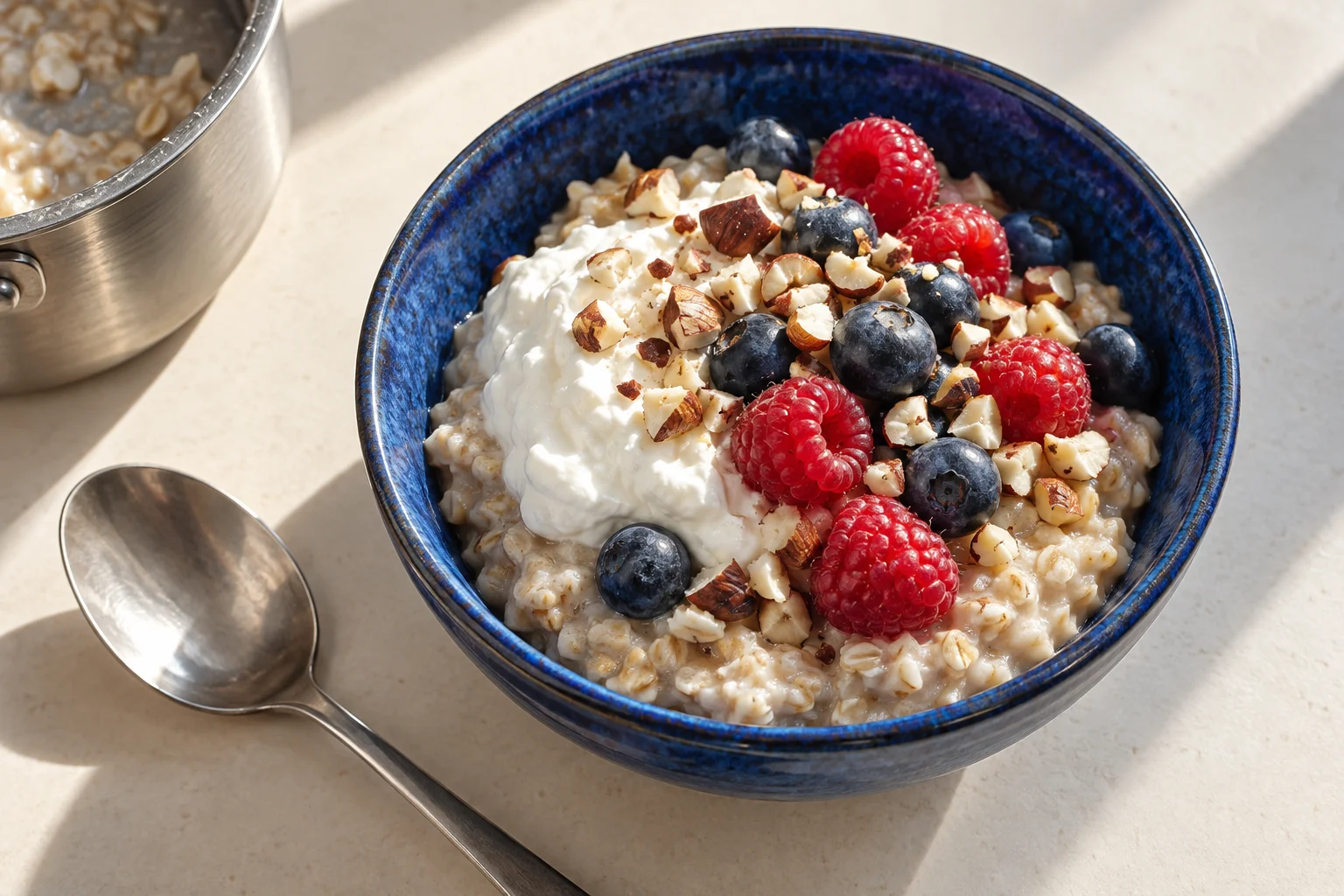
1. Oatmeal with quark, berries and nuts (1 serving)#
- 1 dl oats, 2.5 dl milk or water, 150 g quark, 1 dl berries, 1 tbsp chopped nuts
- Boil the oats in the liquid for 4–5 minutes. Top with quark, berries and nuts.
- GLP-1 angle: the beta-glucan in oats is a soluble fiber; the quark provides protein.
2. Protein omelet with spinach and sauerkraut (1 serving)#
- 3 eggs, a handful of spinach, 2 tbsp sauerkraut, butter, salt
- Whisk the eggs, fry in butter with the spinach, serve with sauerkraut on the side.
- GLP-1 angle: eggs provide protein, sauerkraut adds fermented fiber.
GLP-1 recipes: lunch#
3. Red lentil stew (2 servings)#
- 2 dl red lentils, 1 onion, 2 garlic cloves, 1 can chopped tomatoes, 3 dl water, cumin, salt
- Sauté onion and garlic, add lentils, tomato, water and spices. Simmer 15–20 minutes until the lentils are soft.
- GLP-1 angle: lentils are fiber- and protein-rich legumes — among the cheapest per serving.
4. Chickpea curry with vegetables (2 servings)#
- 1 can chickpeas, 1 onion, 2 dl coconut milk, 1 carrot, 1 bell pepper, curry paste or curry powder
- Sauté onion, add vegetables, chickpeas, coconut milk and curry. Simmer 15 minutes. Serve with wholegrain rice.
- GLP-1 angle: chickpeas + vegetables provide both fiber and slow carbohydrates.
GLP-1 recipes: dinner#
5. Chicken with shredded cabbage and potato (1 serving)#
- 150 g chicken breast, 200 g shredded cabbage, 2 potatoes, olive oil, salt, herbs
- Fry the chicken, boil the potatoes, quickly wok the cabbage in oil. Serve together.
- GLP-1 angle: raw or lightly cooked cabbage keeps its structure — chewing supports satiety.
6. Oven-baked salmon with Brussels sprouts (1 serving)#
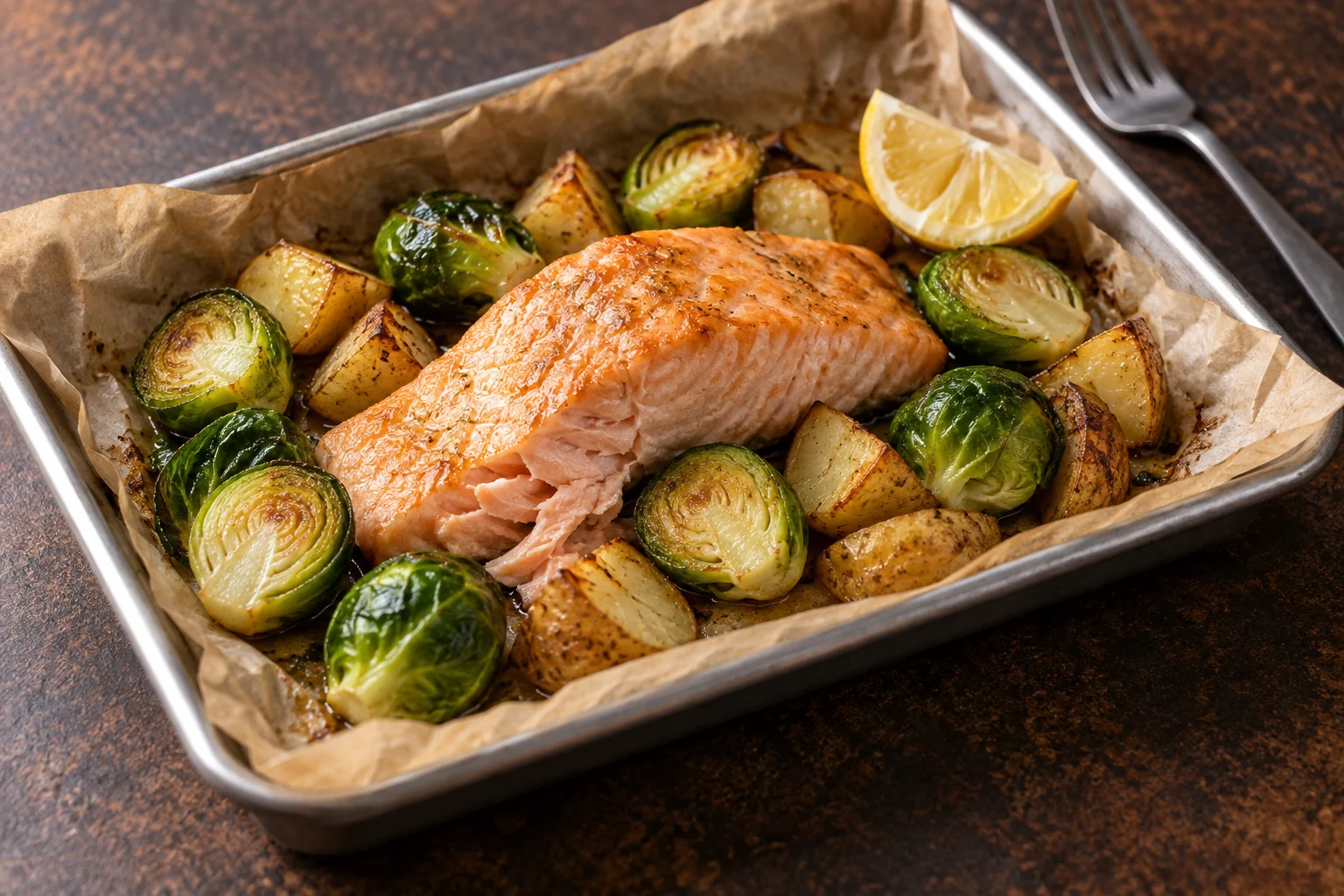
- 125 g salmon fillet, 150 g Brussels sprouts, 1 potato, lemon, olive oil
- Halve the sprouts, oven-roast with potato and salmon at 200 °C for 15–18 minutes. Squeeze lemon over.
- GLP-1 angle: salmon provides protein and omega-3, Brussels sprouts are fiber-rich.
7. Black bean tacos with vegetables (2 servings)#
- 1 can black beans, corn salad, tomato, cucumber, avocado, wholegrain tortilla, lime
- Heat the beans, chop the vegetables, fill the tortillas. Top with avocado and lime.
- GLP-1 angle: black beans are among the most fiber-rich beans.
8. Cod with cauliflower rice and peas (1 serving)#
- 150 g cod fillet, ½ cauliflower head (grated into "rice"), 1 dl peas, butter, dill
- Grate the cauliflower and fry lightly in butter. Poach the cod gently, add peas. Serve with dill.
- GLP-1 angle: cauliflower rice provides volume with few calories; cod is lean protein.
Can you eat GLP-1 recipes with medication?#
Quick answer: Fiber- and protein-rich food is ordinary, nutrient-dense eating and suits most people. If you are treated with a prescription GLP-1 or GIP medicine and wonder how to eat during treatment, that is a question for your doctor or dietitian — see the guide to food on Mounjaro for eating during ongoing treatment. The recipes here support your body's own satiety signals; they do not replace and are not equivalent to a medicine, and you should never change a prescribed treatment based on a food guide (EMA).
Let Smaklig build GLP-1-optimized weeks#
Smaklig automatically adds fiber- and protein-rich meals to your weekly menus, tailored to your goals, allergies and the week's grocery campaigns. You get a ready shopping list and skip planning yourself.
Related reading#
- GLP-1-boosting food: natural alternatives — the mechanism and the individual foods
- Cabbage, fiber and satiety
- Food on Mounjaro — eating during ongoing treatment
- How much protein do you need per day?
- Glossary — GLP-1, beta-glucan, short-chain fatty acids
Sources
- Diabetes 61(2):364-371. Tolhurst G et al. — SCFA → GLP-1 secretion via FFAR2 (2012, mechanistic study in cell culture and mice)
- Int J Obes (Lond) 31(11):1696-1703. Bowen J et al. — Whey protein → postprandial GLP-1 elevation (2007, 28 men; no difference in energy intake after 4 h)
- Livsmedelsverket. Swedish Food Agency (Livsmedelsverket) — Dietary fiber
- Livsmedelsverket. Swedish Food Agency (Livsmedelsverket) — Protein
- European Medicines Agency. European Medicines Agency — Ozempic EPAR
Frequently asked questions
What is a GLP-1 recipe?
A GLP-1 recipe is not a medical prescription category. It is an ordinary meal built on fiber and protein — nutrients linked to your body's own release of the satiety hormone GLP-1. In cell and animal studies, short-chain fatty acids from fiber fermentation stimulate GLP-1, and protein raises satiety hormones after a meal. The recipes here are ordinary food, not medication.
Which recipes increase GLP-1 naturally?
Meals rich in soluble fiber (oats, legumes, cabbage) and protein (eggs, fish, chicken, quark) are linked to your body's own GLP-1 release. The combination of fiber plus protein provides good satiety. All 8 recipes in the article are built on that principle.
Can GLP-1 recipes replace Ozempic?
No. Ozempic is a prescription medicine with semaglutide as the active substance, and that question is decided with your doctor — not through diet. Fiber- and protein-rich meals can support your body's own satiety signals, but they are not equivalent to and do not replace a medicine. Never start, switch or stop treatment because of a food guide.
Can you eat GLP-1 recipes while taking Mounjaro or Ozempic?
Fiber- and protein-rich food is ordinary, nutrient-dense eating and suits most people. If you are treated with a GLP-1 or GIP medicine and have questions about diet during treatment, raise it with your doctor or dietitian. See the guide to food on Mounjaro for eating during ongoing treatment.
Want more meal planning tips?
More guides on food, health and saving money — and a sous-chef that plans your week for you.
Get started
Founder, Smaklig
Writer at Smaklig. We write about food, health, and how to eat better without breaking the bank.
Related articles
April 12, 2026 · 12 min
Cabbage — Nature's Own Ozempic? How Fiber and GLP-1 Boost Satiety
Cabbage is going viral on TikTok as 'Ancient Ozempic'. Research shows cabbage raises GLP-1 naturally. Here's how fiber, satiety, and weight loss work through food.
Read moreApril 12, 2026 · 17 min
GLP-1-boosting foods: 15 natural alternatives to Ozempic (2026)
15 foods that raise GLP-1 naturally: fiber, protein, fermented. Activate the same satiety hormone as Ozempic — without a prescription or drug side effects.
Read moreAugust 13, 2026 · 6 min
How Much Protein Do You Need Per Day? Full 2026 Guide
How much protein you need per day and per meal — plus a table of protein in common foods like eggs, chicken and quark. Source: the Swedish Food Agency.
Read moreReady to plan smarter?
Smaklig creates your weekly menu with AI based on store campaigns. Tailored to your goals and allergies.
Get started free