What Is Ultra-Processed Food? Why 23% and 45% Are Both Right
What is ultra-processed food? A new Swedish study puts it at 45% of adult energy, or 23% under a narrower classification. What counts and what to check.
Download Smaklig – now on the App Store and Google Play The Smaklig app is now on the App Store (iPhone) and Google Play (Android). Download it free.
Download SmakligShort answer: Ultra-processed food is group 4 in the NOVA system: industrial products with ingredients or additives rarely used in a home kitchen, such as fizzy drinks, sweets, crisps and many breakfast cereals. A new Swedish study estimates that it makes up 45 per cent of adults' energy intake, but 23 per cent if uncertain foods such as bread are classified more narrowly.
- 45 per cent of adults' energy in the main estimate, 23–52 per cent depending on classification (Sällström et al., Nutrition Journal, 2026; Riksmaten adults 2010–2011, 1,797 people)
- 52 per cent among adolescents (2016–2017) and 46 per cent among young children (2021–2024) in the same main estimate
- 788 of 2,218 foods and dishes, 35.5 per cent, could not be classified with certainty and were counted in several scenarios
- No robust link to BMI, and the cross-sectional design cannot show cause and effect (same study)
- Not defined in law, and NOVA rarely takes account of how nutritious the food is (Swedish Food Agency, reviewed 2026-06-25)
- In practice: a weekly menu built around the offers where you shop, with more raw ingredients and fewer ready-made sauces, becomes a shopping list, and if you shop at ICA or Coop the items go into the basket in the app
Ultra-processed food is one of the most talked-about terms in nutrition right now, and on 13 October 2026 the first large Swedish estimate of how much of it we eat was published. The figure that spread was 45 per cent, but the same study also gives 23 and 52 per cent. That is not a mistake. It shows how much the answer depends on how everyday foods such as bread, pizza and meatballs are classified. This article explains what ultra-processed food is under NOVA, what the study actually measured, which foods count and what you can look for in the shop instead of a label that is not on the packaging.
What is ultra-processed food under the NOVA system?#
Ultra-processed food is the fourth and last group in NOVA, a classification system that sorts food by the nature, extent and purpose of its industrial processing (Monteiro et al., 2018, Public Health Nutrition). The group consists of industrial formulations, not of whole foods that have been altered.
NOVA was developed by researchers around Carlos Monteiro at the University of São Paulo. According to the group's own description, you recognise an ultra-processed product by its ingredient list: it contains at least one substance never or rarely used in kitchens, or additives intended to make the product tastier or more appealing, such as flavourings, colourings, emulsifiers and sweeteners (Monteiro et al., 2019, Public Health Nutrition).
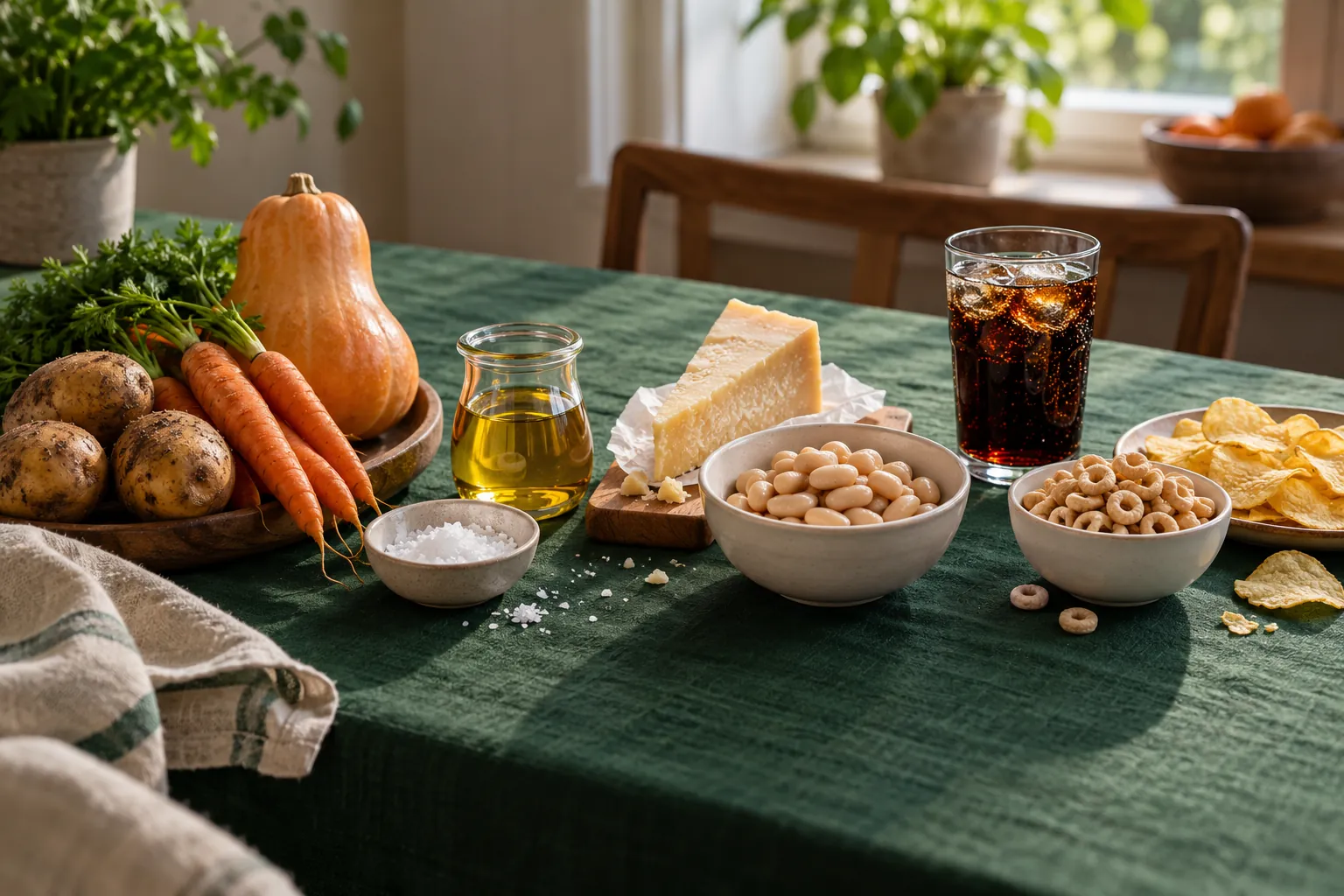
The Swedish Food Agency notes that the definition is not as clear as for processed food in general, and that ultra-processed food is not described in legislation either. As examples of what NOVA puts in the group, the agency lists fizzy drinks, breakfast cereals, processed meats, shop-bought wholemeal bread, sweets and ready-made pasta sauce (Swedish Food Agency, 2026).
How much ultra-processed food do people eat in Sweden?#
According to the study's main estimate, an average of 45 per cent of adults' energy intake comes from ultra-processed food, 52 per cent among adolescents and 46 per cent among young children. The measure is share of energy (calories), not share of food weight or of the number of products. The study reports no share by weight.
The study was published in Nutrition Journal on 13 October 2026 by researchers from institutions including the University of Gothenburg and the Swedish Food Agency (Sällström et al., 2026, Nutrition Journal). It is based on the Swedish Food Agency's three national dietary surveys, Riksmaten, and is a cross-sectional study, meaning a snapshot without follow-up:
| Survey | Years | Participants | Age | Narrower | Main estimate | Broader |
|---|---|---|---|---|---|---|
| Riksmaten adults | 2010–2011 | 1,797 | 18–80 years | 23% | 45% | 52% |
| Riksmaten adolescents | 2016–2017 | 3,099 | school years 5, 8 and 11 | 26% | 52% | 63% |
| Riksmaten young children | 2021–2024 | 1,820 | 18 months and 4 years | 29% | 46% | 53% |
Share of energy intake from ultra-processed food, average. Source: Sällström et al., Nutrition Journal, 2026.
Two things matter when reading the figures. The adult data are from 2010–2011, so they say nothing certain about how adults eat today. And participation was low: 36.6 per cent of the adults invited, 60 per cent of the adolescents and 11 per cent of the families with young children took part, according to the study.
Why does the same data give 23%, 45% or 52%?#
Because a large share of what Swedes eat cannot be classified with certainty from a food diary. Of the 2,218 foods and dishes in the surveys, 788, or 35.5 per cent, were given alternative classifications. The researchers therefore calculated three scenarios: the lowest realistic degree of processing, the most likely and the highest realistic.
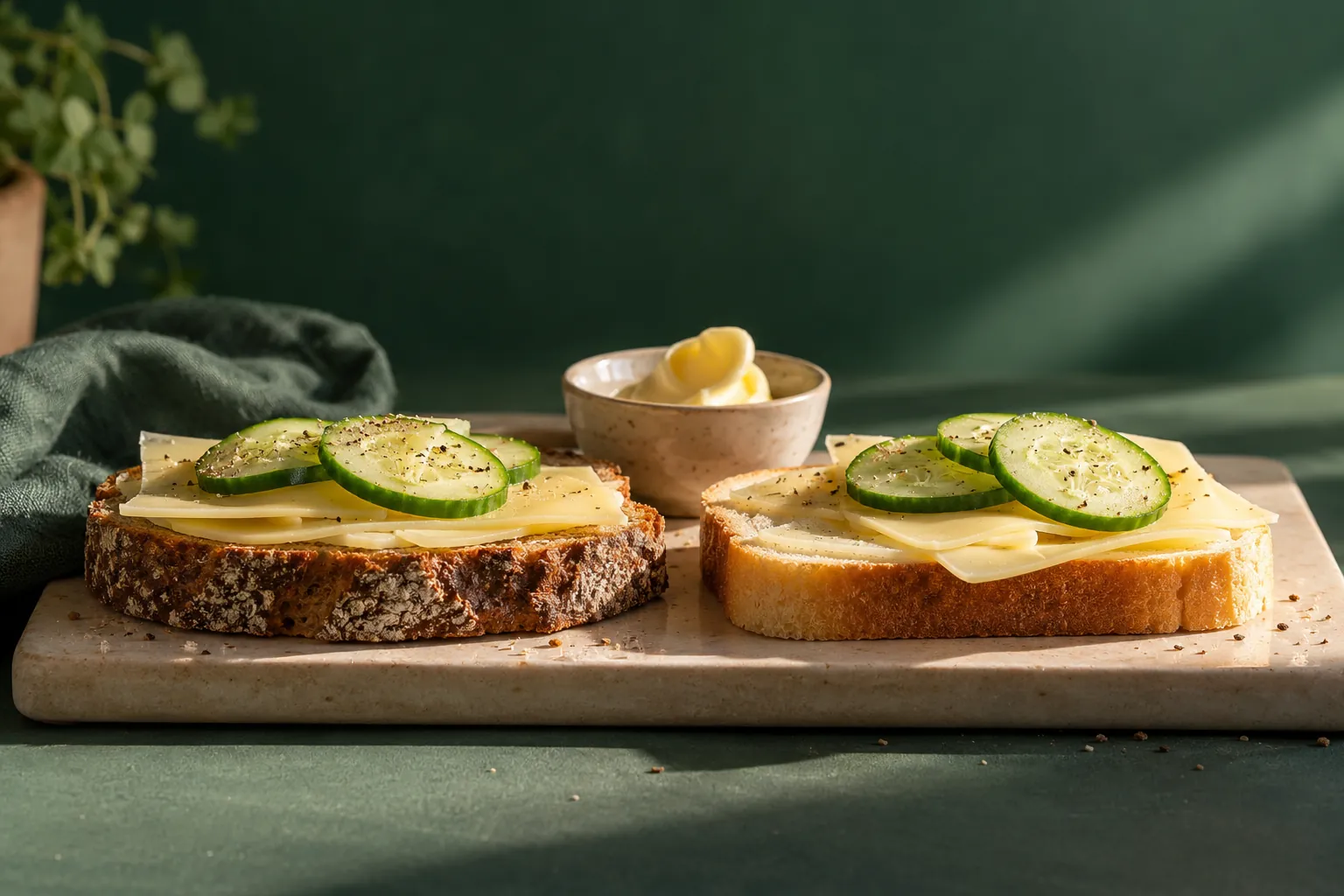
Bread is one example. If the diary just says "rye bread", there is no way to know whether it was baked from flour, water, salt and yeast or made in a factory with emulsifiers. In the main estimate, bread classed as ultra-processed accounted for 9.5 per cent of adults' total energy. In the narrower scenario, where more of the bread counted as not ultra-processed, that share fell to 3.9 per cent. It is the same bread in both cases; only the classification differs. For unspecified minced-meat dishes, such as meatballs and patties, and for unspecified pizza, the researchers split the energy 50/50 between ultra-processed and not ultra-processed (Sällström et al., 2026).
The assessors also sometimes disagreed. Agreement between them was good overall, but weakest for sandwiches, pizza and similar items. That is exactly the group that was the largest source of ultra-processed energy among adolescents, 8.2 per cent of energy in the main estimate. The study's own conclusion is that ultra-processed food contributed a substantial share of energy in all age groups, but that the estimates differed markedly depending on the classification scenario.
Is bread, processed meat, breakfast cereal or pasta ultra-processed?#
The ingredient list decides, not the type of product. The same kind of food can end up in different NOVA groups depending on the recipe. The practical test is to look for ingredients you do not have in your own kitchen, such as emulsifiers, flavourings, colourings or sweeteners (Monteiro et al., 2019).
- Bread: the Swedish Food Agency names shop-bought wholemeal bread as an example of what NOVA classes as ultra-processed, while also calling wholemeal bread a proven healthy food (Swedish Food Agency, 2026). Bread made only from flour, water, salt and yeast lacks the typical ingredients.
- Processed meats: included in the Swedish Food Agency's examples of ultra-processed food under NOVA.
- Breakfast cereals: also included in the Swedish Food Agency's examples. The NHS points out that wholegrain and higher-fibre cereals can still fit into a healthy diet (NHS, 2023).
- Ready-made pasta sauce: ultra-processed according to the Swedish Food Agency's examples. A sauce you make yourself from chopped tomatoes, onion and oil is not.
- Pasta, cheese, tofu and plant-based mince: none of the sources here classifies them in general. Read the ingredient list. If you are looking for protein sources without meat, there are ideas in vegetarian weekly meal plan.
Processed vs ultra-processed food: what is the difference?#
Processed food is any food or drink that has been altered in some way during manufacture or preparation, according to the NHS. Ultra-processed food is a narrower group: products made with ingredients or additives that do not belong in an ordinary kitchen. So everything ultra-processed is processed, but not the other way round.
| Processed food | Ultra-processed food (NOVA 4) | |
|---|---|---|
| What it is | Food altered during manufacture or preparation (NHS) | Industrial formulations with substances rarely used in kitchens (Monteiro et al.) |
| Typical additives | Not necessarily any | Often flavourings, colourings, emulsifiers, sweeteners |
| Examples in the sources | Any food that has been processed, even simply | Fizzy drinks, sweets, crisps, breakfast cereals, processed meats, ready-made pasta sauce, shop-bought wholemeal bread |
| Can it be part of a healthy diet? | Yes | Sometimes: wholemeal bread, higher-fibre cereals and baked beans (NHS) |
| In Swedish law | — | Not defined (Swedish Food Agency) |
Compiled from the NHS (reviewed 2023), the Swedish Food Agency (reviewed 2026) and Monteiro et al. (2019).
What should you look at in the shop instead of the word "ultra-processed"?#
Look at what the study linked to a high share of ultra-processed food: more added sugar, less fibre and less wholegrain. Fibre appears in the nutrition declaration when the manufacturer lists it. The sugar figure in the nutrition declaration covers all sugars, natural and added; whether sugar has been added shows in the ingredient list (Swedish Food Agency, in Swedish). Wholegrain shows in the ingredient list and through the Keyhole label. The Swedish Food Agency itself points to the Keyhole label and to checking sugar, salt and saturated fat on the packaging.
The differences in the study were clear. Among adults with the highest share of ultra-processed food (the fifth who ate the most), a median of 9.3 per cent of energy came from added sugar, against 3.7 per cent in the fifth with the lowest share. The medians for fibre were 8.6 against 11.7 grams per 1,000 kcal and wholegrain 13 against 25 grams per 1,000 kcal (Sällström et al., 2026). One exception was salt, which was lower per calorie the more ultra-processed food people ate.
How Smaklig helps you choose less ultra-processed food#
In Smaklig you can scan the barcode and see the nutrition values, including fibre where the product lists it, and compare two loaves in a few seconds. In the chat, type something like "make a weekly menu with more dinners from scratch and less ready-made sauce". You get a weekly menu built around this week's offers where you shop, in all seven chains (ICA, Coop, Willys, Hemköp, Lidl, City Gross and Costco), and a shopping list. The recipes start from your household, your goals and your allergies, so it becomes easy to cook more basics from scratch. If you shop at ICA or Coop, the items go into your basket without leaving the app. Smaklig is free during the beta.
Is all ultra-processed food bad for you?#
No. Diets high in ultra-processed food have been linked to a higher risk of obesity, type 2 diabetes and heart disease, among other conditions, but according to the NHS it is not known whether this is due to the processing itself or to the calories, fat, salt and sugar (NHS, 2023). The group is also broad.
The Swedish Food Agency writes that the foods in group 4 differ greatly in their content, in how they are made and in how they affect health, and that NOVA rarely takes account of how nutritious a food is. The agency also writes that there is no evidence that additives approved by EFSA need to be avoided (Swedish Food Agency, 2026).
The Swedish study gives the same cautious picture. In adults, 10 percentage points more ultra-processed energy was associated with 0.61 per cent higher BMI in the main estimate. In the other classification scenarios the estimates were similar but not statistically significant, and no associations were seen in adolescents or children. The authors conclude that no robust associations with BMI were observed, and that the cross-sectional design does not allow conclusions about cause (Sällström et al., 2026).
How can you eat less ultra-processed food without spending more?#
Start with the products that give the most sugar and the least fibre, and cook a few basics from scratch when the ingredients are on offer. The NHS advice is that most people would benefit from eating less of the ultra-processed food that is high in saturated fat, salt or sugar. The Swedish Food Agency's dietary guidelines point the same way: more vegetables, fruit, wholegrains and fish, and less processed meat, fizzy drinks, sweets, ice cream, pastries and crisps.
- Swap sugary drinks for water. Fizzy drinks come first in the Swedish Food Agency's examples.
- Keep snacks at home that do not come from the sweets shelf, see healthy snacks.
- Choose bread with wholegrain and a short ingredient list, and compare the fibre on the packaging. If you scan the barcode in Smaklig, you see the fibre before the bread goes into your basket, when the product has that information.
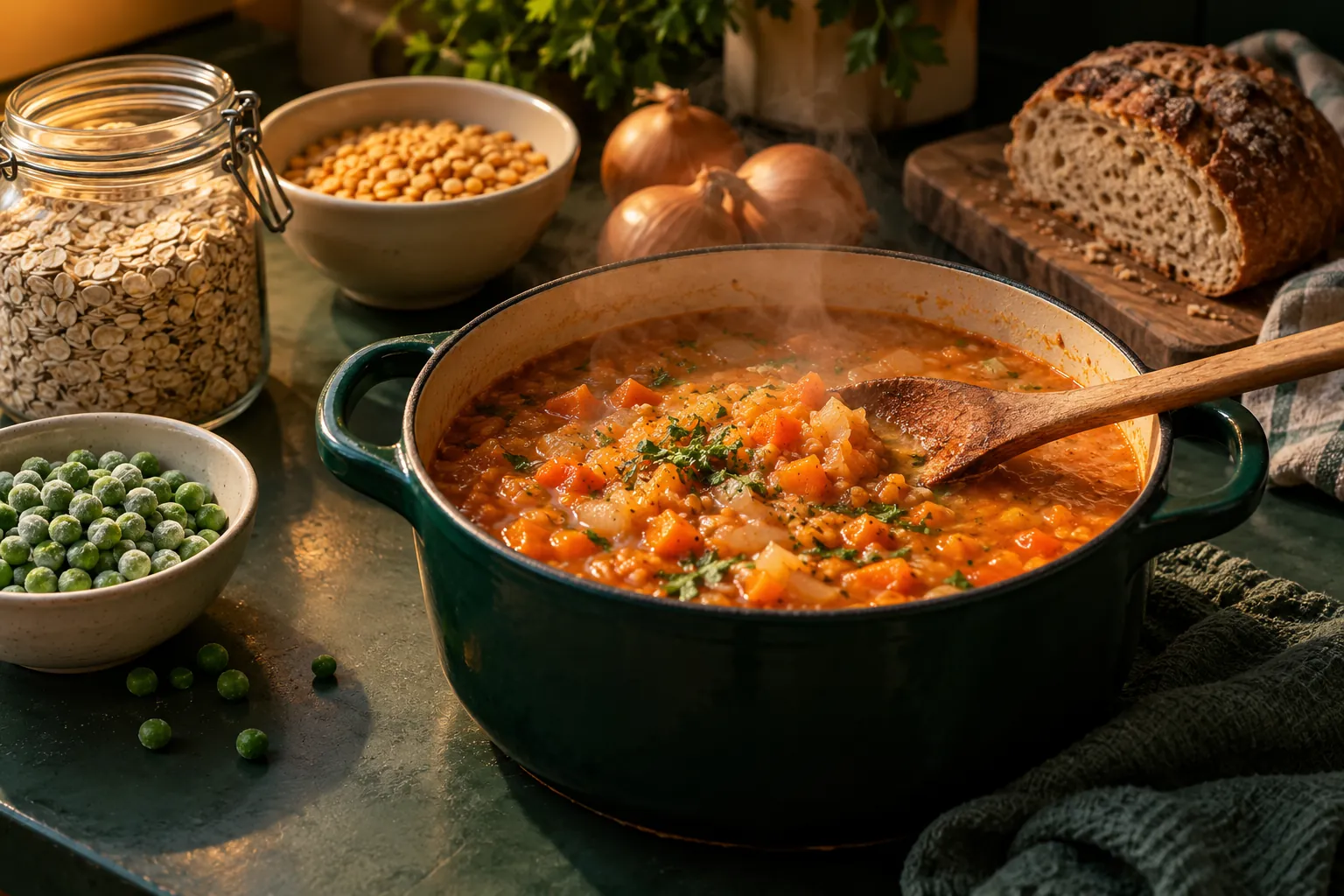
- Make meat sauce, soup and stew from scratch instead of ready-made sauce. There are recipes in cheap filling meals.
- Plan the week around the offers. Put chopped tomatoes, lentils and wholegrain bread into the weekly menu in the weeks they are on offer where you shop, so they end up on the shopping list.
- Try an eating pattern with more whole foods, as in Mediterranean diet with a weekly menu.
- Aim for improvement, not zero. Wholemeal bread and higher-fibre cereals can be included even though they are classed as ultra-processed.
Sources
- Sällström T et al. (2026). Intake of ultra-processed foods in Sweden and its association with diet quality and weight status: cross-sectional analyses from three national dietary surveys. Nutrition Journal.
- Swedish Food Agency (Livsmedelsverket) (2026). Ultraprocessad mat (Ultra-processed food)
- NHS (2023). What are processed foods?
- Monteiro CA et al. (2019). Ultra-processed foods: what they are and how to identify them. Public Health Nutrition.
- Monteiro CA et al. (2018). The UN Decade of Nutrition, the NOVA food classification and the trouble with ultra-processing. Public Health Nutrition.
Frequently asked questions
What is ultra-processed food?
It is group 4 in the NOVA system: industrially made products that contain substances rarely or never used in an ordinary kitchen, or additives such as flavourings, colourings, emulsifiers and sweeteners. Fizzy drinks, sweets, breakfast cereals, processed meats and ready-made pasta sauce are examples. According to the Swedish Food Agency, the term is not defined in legislation.
How much ultra-processed food do people in Sweden eat?
According to a study in Nutrition Journal (October 2026), an average of 45 per cent of adults' energy intake came from ultra-processed food in the main estimate, but 23 per cent under a narrower and 52 per cent under a broader classification. Adult data were collected in 2010–2011. The study measures share of energy, not share of food weight.
Is bread ultra-processed?
It depends on the recipe. According to the Swedish Food Agency, NOVA classes even shop-bought wholemeal bread as ultra-processed if it contains additives. In the Swedish study, bread was the most uncertain item: bread classed as ultra-processed gave 9.5 per cent of adults' energy in the main estimate but 3.9 per cent in the narrower one, with the same bread in both.
Is ultra-processed food bad for you?
Diets high in ultra-processed food have been linked to a higher risk of obesity, type 2 diabetes and heart disease, among other conditions, but according to the NHS it is not known whether this is due to the processing or to the calories, fat, salt and sugar. The Swedish Food Agency points out that the group includes both fizzy drinks and wholemeal bread.
What is the difference between processed and ultra-processed food?
Processed food is any food that has been altered in some way during preparation or manufacture, according to the NHS. Ultra-processed food is a subgroup: products with ingredients or additives you rarely have in your own kitchen.
Are any ultra-processed foods healthy?
Yes. The NHS says some ultra-processed foods can be part of a healthy diet, such as wholemeal bread, higher-fibre breakfast cereals and baked beans. The Swedish Food Agency calls wholemeal bread a proven healthy food that is nevertheless classed as ultra-processed.
Want more meal planning tips?
More guides on food, health and saving money — and a sous-chef that plans your week for you.
Get started
Co-founder & CFO, Smaklig
Writer at Smaklig. We write about food, health, and how to eat better without breaking the bank.
Related articles
October 31, 2026 · 8 min
Gut Health Foods: How to Improve Gut Health, by the Evidence
How do you improve gut health? Fibre, pulses, more plant types and fermented foods, with the studies showing what holds up and what is still uncertain.
Read moreOctober 31, 2026 · 8 min
Vegan Gut Microbiome: Is Meat Better? What the Study Shows
A Danish study led to claims that meat beats plants for gut bacteria. Vegans had slightly lower diversity but better blood markers. How to read the numbers.
Read moreOctober 28, 2026 · 6 min
12 Healthy Snacks That Are Quick, Easy and Filling
Looking for healthy snacks? Here are 12 quick ideas with protein and fibre that work at the office, after training or when a sugar craving hits.
Read moreReady to plan smarter?
Smaklig creates your weekly menu with AI based on store campaigns. Tailored to your goals and allergies.
Get started free