Calorie Chart for Foods: Calories in Eggs, Bread and More
Calorie chart with kcal per 100 g and per portion for 59 common foods, from eggs and pizza to rice, cheese and beer. All values from the Swedish Food Agency.
Download Smaklig – now on the App Store and Google Play The Smaklig app is now on the App Store (iPhone) and Google Play (Android). Download it free.
Download SmakligA calorie chart for foods shows how much energy different foods provide, and here you get 59 common foods with kcal per 100 g, protein and an example portion wherever the weight has a source. Every figure is a Swedish Food Agency (Livsmedelsverket) value from its food composition database. The chart is an everyday reference: you can quickly see why cooked and uncooked rice differ so much, and what a knob of butter actually adds.
Short answer: The calories in a food depend mostly on how much fat and water it contains, and on how big the portion is.
- Egg provides 136 kcal per 100 g, raw or boiled (Swedish Food Agency).
- Pizza provides 246 to 328 kcal per 100 g depending on the type: homemade Margherita, frozen or from a restaurant.
- Boiled rice provides 121 kcal per 100 g against 359 kcal uncooked, because the rice absorbs water.
- Butter provides 766 kcal per 100 g, so a thin 5 g layer gives about 38 kcal.
- Energy needs are roughly 2,200 kcal a day for a moderately active woman and 2,700 kcal for a moderately active man, aged 25 to 50.
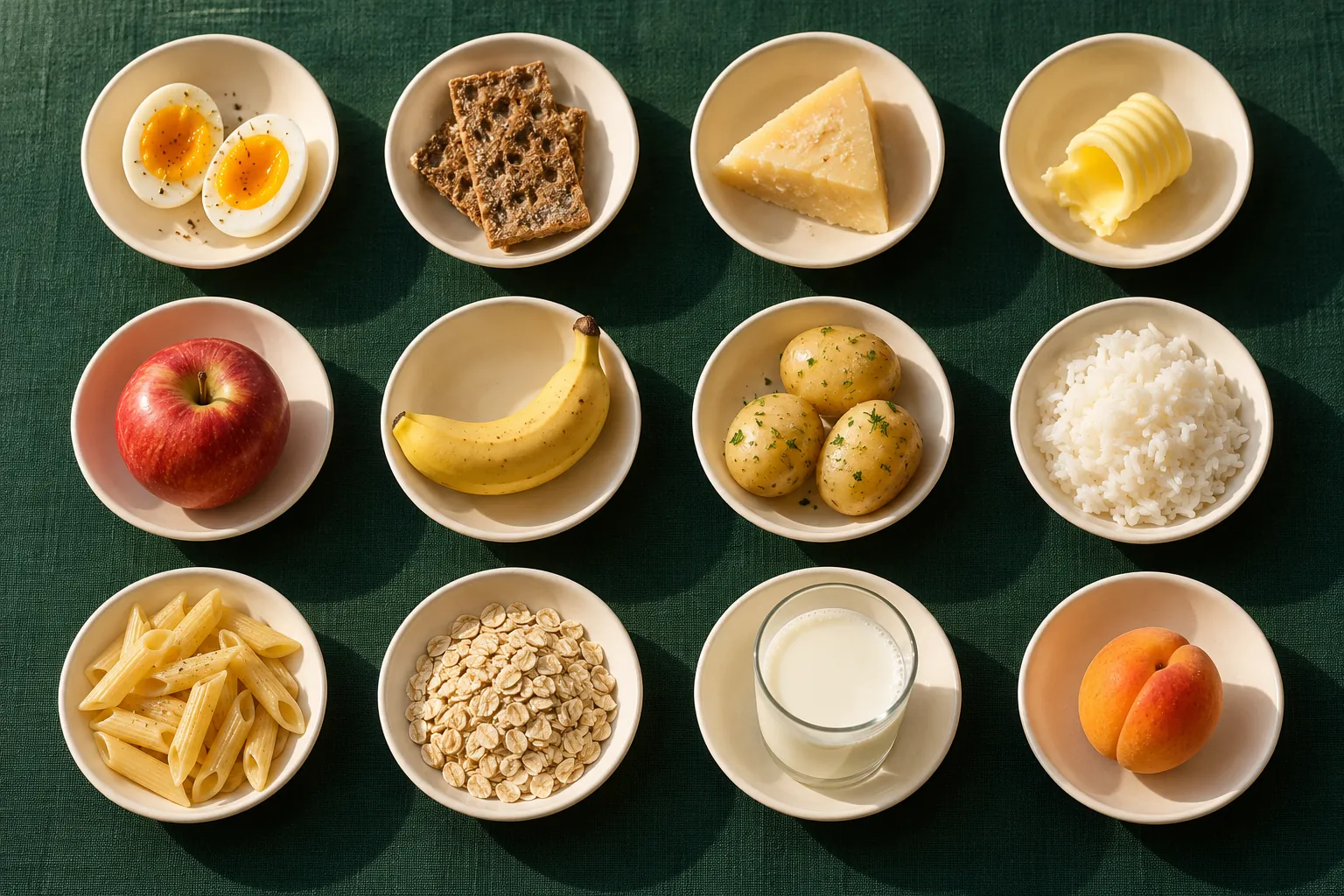
Calorie chart: calories in 59 foods#
The chart is grouped by type of food. The state column shows whether the value applies to raw, boiled or fried food, because that is often where the big differences lie. An example portion is only given where the weight has a source in the Swedish Food Agency's portion guide or PM 2024. It is a worked example, not a standard portion; the other rows show a dash, and then the simplest option is to work it out from what you weigh.
Dairy and eggs#
| Food | State | kcal per 100 g | Example portion (g) | kcal per portion | Protein g/100 g |
|---|---|---|---|---|---|
| Egg | raw | 136 | – | – | 12.1 |
| Egg | boiled | 136 | – | – | 12.1 |
| Hard cheese, 28% fat | – | 358 | 10 | 36 | 26.2 |
| Quark, natural, 0.2% fat | – | 64 | – | – | 10.0 |
| Cottage cheese, 4% fat | – | 100 | – | – | 13.4 |
| Natural yoghurt, 3% fat | – | 56 | – | – | 3.4 |
Bread, oats, pasta, rice and potatoes#
| Food | State | kcal per 100 g | Example portion (g) | kcal per portion | Protein g/100 g |
|---|---|---|---|---|---|
| White bread, sandwich loaf type | – | 249 | – | – | 8.6 |
| Rye bread, wholegrain, unsweetened | – | 239 | – | – | 7.1 |
| Crispbread, wholegrain rye | – | 354 | 13 | 46 | 9.1 |
| Rolled oats, wholegrain | uncooked | 375 | – | – | 9.5 |
| Porridge made with milk | cooked | 89 | – | – | 4.1 |
| Pasta, wholewheat | uncooked | 345 | – | – | 11.0 |
| Pasta | boiled without salt | 128 | – | – | 4.2 |
| Basmati rice | uncooked | 359 | – | – | 9.2 |
| Basmati rice | boiled with salt | 121 | – | – | 3.1 |
| Potatoes | raw | 59 | – | – | 1.1 |
| Potatoes | boiled with salt | 71 | 70 | 50 | 1.4 |
Meat and fish#
| Food | State | kcal per 100 g | Example portion (g) | kcal per portion | Protein g/100 g |
|---|---|---|---|---|---|
| Chicken breast fillet, skinless | raw | 104 | – | – | 23.1 |
| Chicken breast fillet, skinless | fried | 116 | – | – | 23.0 |
| Salmon, farmed | raw | 210 | – | – | 20.2 |
| Salmon | fried with salt | 221 | – | – | 24.1 |
| Minced beef, 10% fat | raw | 182 | – | – | 20.1 |
| Minced beef, 10% fat | fried with salt | 226 | – | – | 25.0 |
| Swedish falu sausage | – | 254 | – | – | 12.7 |
| Bacon | raw | 344 | – | – | 13.4 |
| Bacon | fried | 412 | – | – | 17.0 |
Pulses#
| Food | State | kcal per 100 g | Example portion (g) | kcal per portion | Protein g/100 g |
|---|---|---|---|---|---|
| Chickpeas, canned, drained | – | 128 | – | – | 7.5 |
| Lentils | dried | 339 | – | – | 24.4 |
| Green lentils | boiled with salt | 127 | – | – | 9.4 |
| Hummus | – | 306 | – | – | 5.8 |
Fruit and vegetables#
| Food | State | kcal per 100 g | Example portion (g) | kcal per portion | Protein g/100 g |
|---|---|---|---|---|---|
| Apple with skin | raw | 48 | 103 | 49 | 0.0 |
| Banana | raw | 95 | – | – | 1.1 |
| Strawberries | raw | 41 | – | – | 0.5 |
| Avocado | raw | 197 | – | – | 1.9 |
| Broccoli | raw | 36 | – | – | 2.9 |
| Carrot | raw | 36 | – | – | 0.7 |
| Tomato | raw | 18 | – | – | 0.8 |
Fats, nuts and spreads#
| Food | State | kcal per 100 g | Example portion (g) | kcal per portion | Protein g/100 g |
|---|---|---|---|---|---|
| Butter, 80% fat | – | 766 | 5 | 38 | 0.6 |
| Rapeseed oil | – | 884 | – | – | 0.0 |
| Olive oil | – | 884 | – | – | 0.0 |
| Peanut butter | – | 615 | 10 | 62 | 22.6 |
| Cashew nuts, roasted, unsalted | – | 597 | – | – | 18.0 |
Baked goods and chocolate#
| Food | State | kcal per 100 g | Example portion (g) | kcal per portion | Protein g/100 g |
|---|---|---|---|---|---|
| Cinnamon bun, shop-bought | baked | 345 | 65 | 224 | 6.7 |
| Cinnamon bun, homemade | baked | 324 | 65 | 211 | 5.8 |
| Swedish cream bun (semla), bakery | – | 333 | – | – | 5.4 |
| Swedish cream bun (semla), homemade | – | 295 | – | – | 6.1 |
| Milk chocolate | – | 535 | – | – | 5.2 |
Ready meals and takeaway#
| Food | State | kcal per 100 g | Example portion (g) | kcal per portion | Protein g/100 g |
|---|---|---|---|---|---|
| Pizza with tomato sauce and cheese, restaurant | – | 328 | – | – | 16.5 |
| Pizza with tomato and mozzarella, frozen | – | 269 | – | – | 11.0 |
| Pizza Margherita, homemade | – | 246 | – | – | 9.0 |
| Sushi, salmon nigiri | – | 184 | – | – | 9.8 |
| Sushi, vegetarian | – | 158 | – | – | 2.6 |
Drinks#
| Food | State | kcal per 100 g | Example portion (g) | kcal per portion | Protein g/100 g |
|---|---|---|---|---|---|
| Semi-skimmed milk, 1.5% fat | – | 47 | 99 (100 ml) | 47 | 3.6 |
| Whole milk, 3% fat | – | 60 | 99 (100 ml) | 59 | 3.6 |
| Beer, 5.4% | – | 42 | – | – | 0.0 |
| Beer, 3.5% (Swedish folköl) | – | 40 | – | – | 0.4 |
| Alcohol-free beer | – | 15 | – | – | 0.4 |
| Red wine, 14% | – | 79 | – | – | 0.0 |
| White wine, 12% | – | 70 | – | – | 0.0 |
Source: Swedish Food Agency (Livsmedelsverket) food database, version 20260701 (CC BY 4.0). The values are averages per 100 g edible portion; labelled products may differ. Portion weights: the Swedish Food Agency's portion guide and PM 2024. kcal per portion = kcal per 100 g × portion weight / 100, rounded to whole kcal.
How many calories are in an egg?#
An egg provides 136 kcal per 100 g, whether it is raw or boiled, according to the Swedish Food Agency database. An egg weighing 60 g without the shell therefore gives about 82 kcal. Eggs are sold in different sizes, so weigh yours if you want to count per egg. Egg also provides 12.1 g of protein per 100 g.
If you fry the egg, the energy from the fat in the pan is added. Butter provides 766 kcal per 100 g, so even 5 g of butter in the pan adds about 38 kcal.
How many calories are in a pizza?#
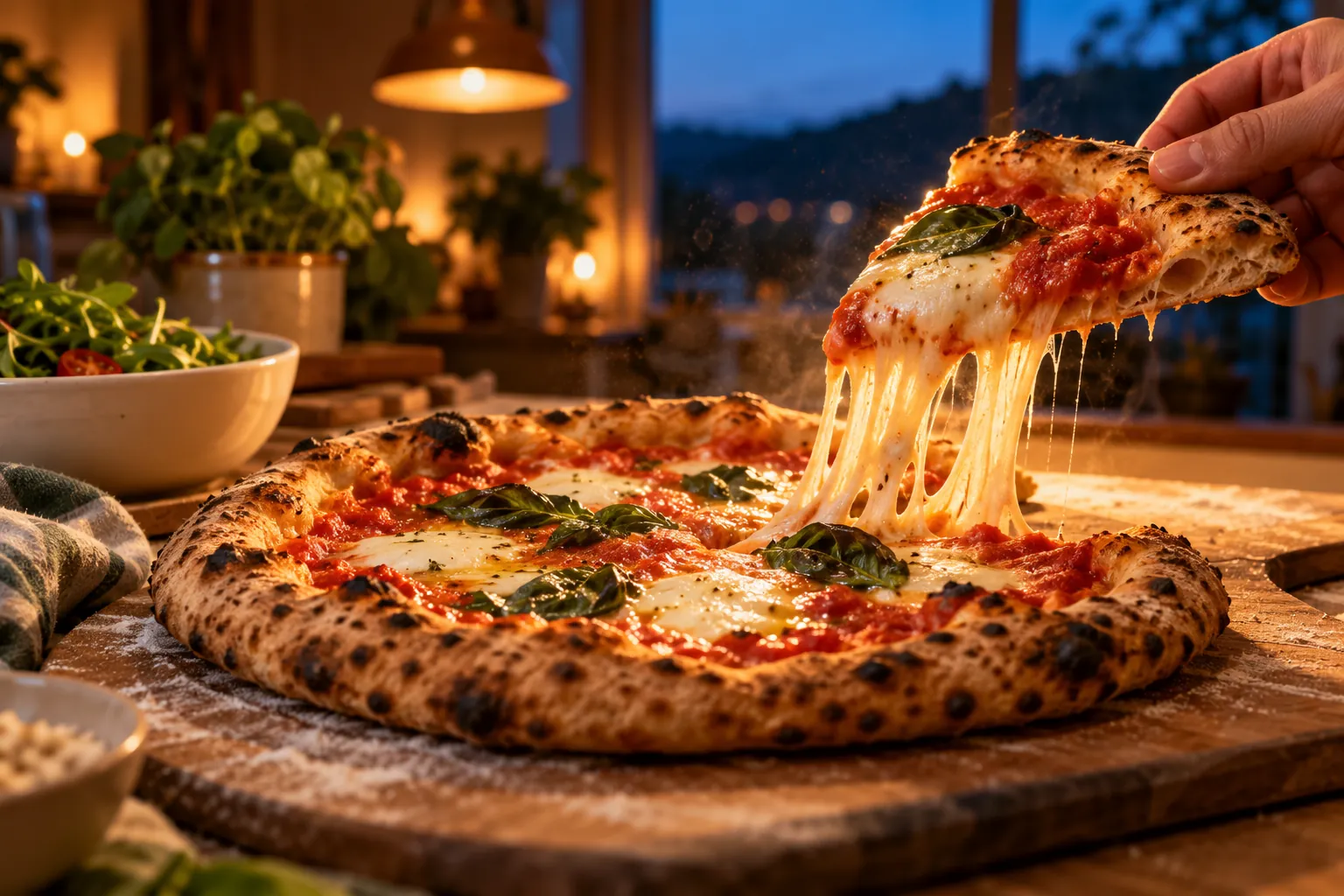
A pizza provides between 246 and 328 kcal per 100 g depending on the type. The Swedish Food Agency gives 328 kcal for a restaurant pizza with tomato sauce and cheese, 269 kcal for a frozen pizza with tomato and mozzarella and 246 kcal for a homemade Margherita. A 400 g restaurant pizza then gives about 1,310 kcal (400 × 3.28), and a homemade Margherita of the same weight about 980 kcal.
Pizzas vary a lot in size and toppings, so the weight tells you more than the number of slices. The same goes for other takeaway food: salmon nigiri provides 184 kcal per 100 g and vegetarian sushi 158 kcal per 100 g.
How many calories are in bread, rice, pasta and potatoes?#
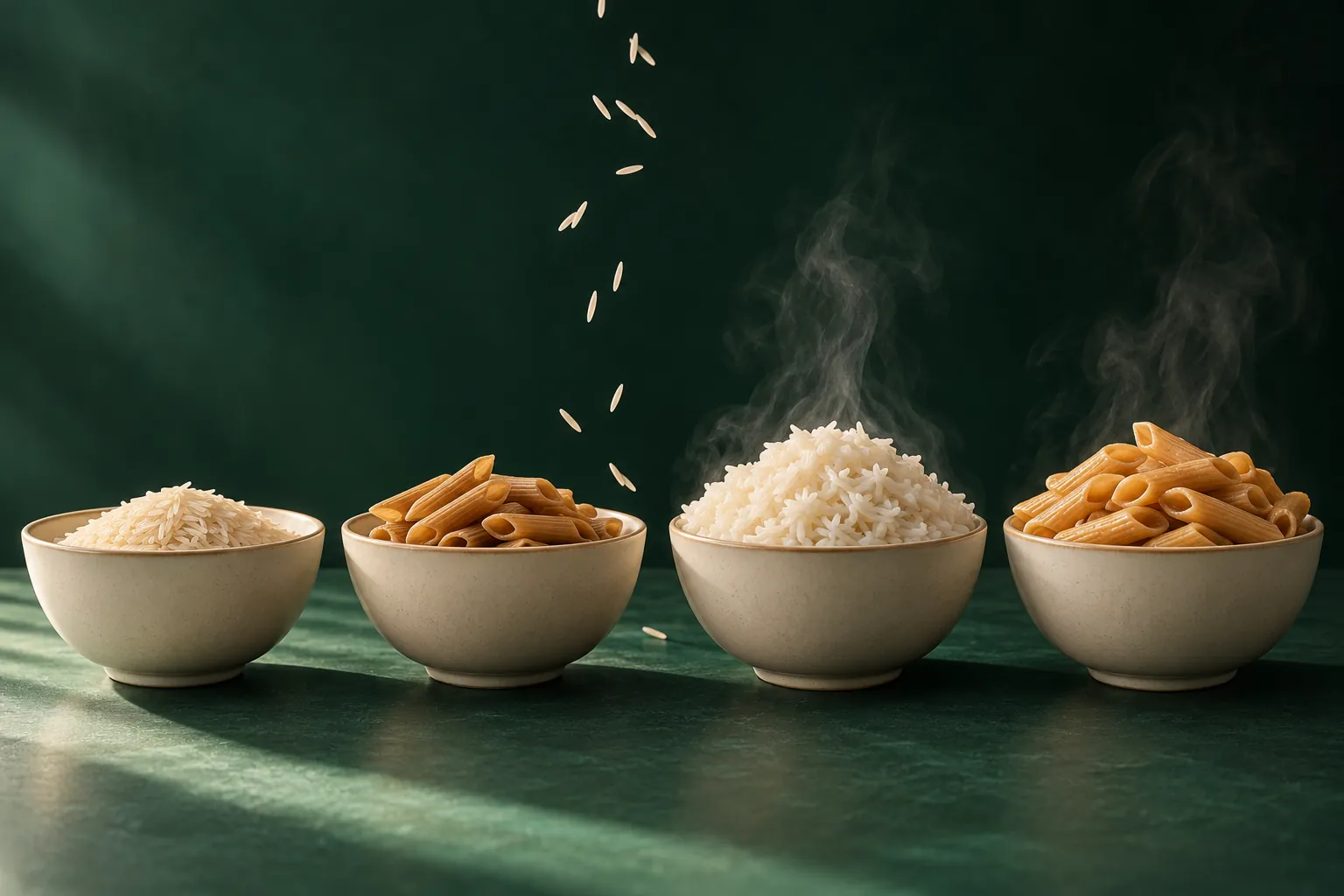
It depends on whether you count them dry or cooked. Uncooked basmati rice provides 359 kcal per 100 g and boiled 121 kcal, because the rice absorbs water as it cooks. Uncooked wholewheat pasta provides 345 kcal per 100 g and boiled pasta 128 kcal. A 70 g boiled potato gives about 50 kcal (71 kcal per 100 g).
Bread has no cooking difference in the same way: a white sandwich loaf provides 249 kcal per 100 g and unsweetened rye bread 239 kcal. Crispbread provides 354 kcal per 100 g, but a rectangular slice weighs only 13 g according to the Swedish Food Agency and so gives about 46 kcal. Rolled oats provide 375 kcal per 100 g dry, while finished porridge made with milk provides 89 kcal per 100 g.
How many calories are in cheese, butter and milk?#
Hard cheese with 28% fat provides 358 kcal per 100 g, so a 10 g slice gives about 36 kcal. Butter with 80% fat provides 766 kcal per 100 g and a thin 5 g layer about 38 kcal. Semi-skimmed milk provides 47 kcal per 100 g; 100 ml (one Swedish decilitre) weighs 99 g and so gives about 47 kcal. Whole milk with 3% fat provides 60 kcal per 100 g, or about 59 kcal per 100 ml.
Quark and cottage cheese give a lot of protein relative to their energy: natural quark provides 64 kcal and 10.0 g of protein per 100 g, cottage cheese 100 kcal and 13.4 g of protein.
How many calories are in beer and wine?#
Beer at 5.4% provides 42 kcal per 100 g, beer at 3.5% 40 kcal and alcohol-free beer 15 kcal, according to the Swedish Food Agency. Red wine at 14% provides 79 kcal per 100 g and white wine at 12% provides 70 kcal. In stronger beer and in wine, most of the energy comes from the alcohol, which provides 7 kcal per gram.
Based on the alcohol content in the database, alcohol accounts for about 30 of the 42 kcal in the 5.4% beer (4.3 g × 7) and about 75 of the 79 kcal in the red wine (10.77 g × 7). That explains a large part of the difference from alcohol-free beer.
How many calories are in a Swedish cream bun and a cinnamon bun?#
A bakery semla, the Swedish cream bun, provides 333 kcal per 100 g and a homemade one 295 kcal per 100 g. A shop-bought cinnamon bun provides 345 kcal per 100 g and a homemade one 324 kcal. A 65 g bun, one of the sizes in the Swedish Food Agency's portion guide, therefore gives about 224 kcal shop-bought and 211 kcal homemade.
Semlor vary more in size than cinnamon buns, and the Swedish Food Agency has no per-bun weight for them. If you want to count per semla, the scales are the most reliable way.
How are the calories calculated?#
The Swedish Food Agency calculates the energy from the composition: protein and available carbohydrates provide 4 kcal per gram, fibre 2 kcal, fat 9 kcal and alcohol 7 kcal per gram. One kilocalorie is 4.184 kilojoules. That is why butter sits at 766 kcal and oil at 884 kcal per 100 g, while tomato sits at 18 kcal.
The values in the database are averages. Some are analysed in a laboratory, others are calculated, and a labelled product in the shop may have a different value. If the pack states a value, that value applies to that particular product.
How many calories should I eat per day?#
The Swedish Food Agency gives roughly 2,200 kcal per day for a moderately active woman aged 25 to 50 and roughly 2,700 kcal for a moderately active man of the same age. For people who move less, the reference value is 1,900 and 2,400 kcal respectively, and for people who move more 2,400 and 3,000 kcal. The agency itself writes that no formula can calculate a person's exact energy needs.
If you want to work out your own approximate figure from age, height, weight and activity, our guide on how many calories to eat and how to calculate your macros explains how. How the day's calories can be spread across meals is covered in calorie budgeting to maintain your weight, and if your goal is weight loss, calorie deficit: how big does it need to be explains what the research says. If counting starts to feel stressful or food is causing you worry, support is available through your healthcare provider or a dietitian.
Calories per portion without looking up every food#
The chart shows that the calories in a meal are decided by the portion and the cooking, not just by the ingredient. Smaklig plans the week's meals around the offers where you shop, shows calories and macros per portion in every recipe and writes the shopping list for you. If you shop at ICA or Coop, you can add the items to your basket directly in the app.
The app also works out a daily target for calories and protein from your weight, your goal and how active you are. If more or fewer people eat one evening, you change the number of portions, and if a recipe doesn't suit you, you replace it with another.
For what you eat outside the plan, you can count calories with a photo of your plate, or scan the barcode on packaged foods and log the nutrition values from the pack.
Common mistakes#
- Mixing raw and cooked weights. If you weigh boiled rice but log the uncooked value, the figure ends up roughly three times too high (359 against 121 kcal per 100 g). The same applies to pasta. Meat also differs between raw and cooked: raw chicken breast fillet provides 104 kcal per 100 g and fried 116 kcal. The values come from separate analyses, and the cooking method and any added fat affect the figure.
- Forgetting the fat. Oil provides 884 kcal per 100 g and butter 766 kcal. The fat in the pan and on your bread does not show on the plate, but it is part of the meal.
- Reading kcal per 100 g as kcal per item. A 65 g cinnamon bun gives about 224 kcal, not 345 kcal.
- Treating stated values as exact. A small US pilot study measured, in a laboratory, a specially selected sample of foods with a low stated energy content. It found on average 18% more energy than stated in 29 restaurant dishes and 8% more in 10 frozen ready meals, but the differences were not statistically significant (Urban et al., 2010, J Am Diet Assoc). All figures are estimates.
Checklist#
- Weigh a portion now and then to learn what it looks like, for example rice, pasta and cheese.
- Choose the value for the right state: raw, boiled or fried.
- Include the cooking fat in the pan and on your bread.
- Use a database with clear sources, such as the Swedish Food Agency's food database, or the value on the pack.
- Follow the overall picture over weeks rather than exact figures per meal.
- Let Smaklig show calories and macros per portion in the week's recipes, so you don't have to look up every food.
Sources
- Swedish Food Agency (Livsmedelsverket). Swedish Food Composition Database, nutrient values per food (API, version 20260701)
- Swedish Food Agency (Livsmedelsverket). Updates to the Swedish Food Composition Database (in Swedish)
- Swedish Food Agency (Livsmedelsverket). Energy, calories (in Swedish)
- Swedish Food Agency (Livsmedelsverket). Swedish Food Composition Database, open data and API (in Swedish)
- Swedish Food Agency (Livsmedelsverket). PM 2024: Volume weights, weight change factors and waste (in Swedish)
- Swedish Food Agency (Livsmedelsverket). Key to the Portion Guide (2009, in Swedish)
- Journal of the American Dietetic Association 110(1):116-123. Urban LE et al.: The accuracy of stated energy contents of reduced-energy, commercially prepared foods (2010)
Frequently asked questions
How many calories are in an egg?
Egg provides 136 kcal per 100 g, both raw and boiled, according to the Swedish Food Agency (Livsmedelsverket) food database. An egg weighing 60 g without the shell therefore gives about 82 kcal (60 × 1.36). Eggs vary in size, so weigh yours without the shell for a better estimate. If you fry the egg, the energy from the fat in the pan is added, and egg also provides 12.1 g of protein per 100 g.
How many calories are in a pizza?
It depends on the type. The Swedish Food Agency gives 328 kcal per 100 g for a restaurant pizza with tomato sauce and cheese, 269 kcal for a frozen pizza with tomato and mozzarella and 246 kcal for a homemade Margherita. A 400 g restaurant pizza therefore gives about 1,310 kcal, while a homemade Margherita of the same weight gives about 980 kcal.
Should I count calories for cooked or uncooked rice?
Count it in the state you weighed it in. Uncooked basmati rice provides 359 kcal per 100 g and boiled basmati rice 121 kcal per 100 g, because the rice absorbs water as it cooks. The same applies to pasta: 345 kcal for uncooked wholewheat pasta and 128 kcal for boiled pasta. If you weigh it cooked but log the uncooked value, the figure ends up roughly three times too high.
How many calories are in a cinnamon bun and a Swedish cream bun?
A shop-bought cinnamon bun provides 345 kcal per 100 g and a homemade one 324 kcal, according to the Swedish Food Agency. A 65 g bun then gives about 224 and 211 kcal respectively. A bakery semla (Swedish cream bun) provides 333 kcal per 100 g and a homemade one 295 kcal per 100 g. Semlor vary a lot in size, so weigh yours if you want to count per bun.
How many calories should I eat per day?
The Swedish Food Agency gives roughly 2,200 kcal per day for a moderately active woman aged 25 to 50 and roughly 2,700 kcal for a moderately active man of the same age. The figures are approximate: the agency writes that no formula can calculate a person's exact energy needs. Age, height, weight and how much you move all affect your own needs.
Where do the figures in the calorie chart come from?
All energy values come from the Swedish Food Agency (Livsmedelsverket) food database, version 20260701, which is free to use under the CC BY 4.0 licence. The values are per 100 g edible portion and are averages, so a labelled product in the shop may differ. The portion weights come from the agency's portion guide and its 2024 memo on volume weights and waste.
Want more meal planning tips?
More guides on food, health and saving money — and a sous-chef that plans your week for you.
Get started
Founder, Smaklig
Writer at Smaklig. We write about food, health, and how to eat better without breaking the bank.
Related articles
October 22, 2026 · 14 min
Gluten-Free Meal Plan: 7 Easy Dinners and a Shopping List
Gluten free meal plan with 7 weeknight dinners and a shopping list. What is naturally gluten free, where gluten hides and what the gluten-free label means.
Read moreOctober 22, 2026 · 13 min
Vegetarian Meal Plan: 7 Easy Dinners and a Shopping List
A vegetarian meal plan with seven easy dinners, protein per portion and a shopping list for four. How to get B12 and iron without meat, per Swedish guidance.
Read moreSeptember 17, 2026 · 12 min
Air fryer vegetables: times, temperature and 3 staples
Air fryer vegetables: times and temperatures for root veg, cabbage and more — plus three cheap, long-lasting everyday staples and how to avoid acrylamide.
Read moreReady to plan smarter?
Smaklig creates your weekly menu with AI based on store campaigns. Tailored to your goals and allergies.
Get started free