Menopause Diet: Foods for Weight, Sleep and Hot Flushes
Menopause diet: what the evidence says about weight gain, protein, sleep and hot flushes, what doesn't help, and what 1177, the NHS and Livsmedelsverket advise.
Download Smaklig – now on the App Store and Google Play The Smaklig app is now on the App Store (iPhone) and Google Play (Android). Download it free.
Download SmakligShort answer: There is no special menopause diet. The same basics apply as always: varied food with vegetables, wholegrains, legumes, fish and protein, plus calcium and vitamin D for your bones. Your weight depends on how much you eat overall and whether you keep your muscle. Weight loss is linked to fewer hot flushes, but no food or supplement has been shown to replace treatment. In everyday life, that means a weekly menu planned around the offers where you shop, a shopping list from the menu and the items in your ICA or Coop basket in the app if you shop there.
- The rate of fat gain doubled at the start of the transition, while total weight rose at the same pace as before (SWAN, 1,246 women, 2019)
- Losing at least 10% of body weight during the first year was linked to a better chance of hot flushes stopping (WHI, 17,473 postmenopausal women, 2012)
- 950 mg calcium and 10 micrograms vitamin D a day for most adults (calcium from age 25, vitamin D at 18–74 and more with little sun; Swedish Food Agency)
- Soya and supplements are not recommended for hot flushes (The Menopause Society, 2023)
- Less coffee, tea and energy drinks in the afternoon and evening, and a cool bedroom, for sleep (1177)
The menopause diet is a question many women start asking when their weight, sleep and body temperature begin to change. The advice out there is all over the place: soya, fasting, low-carb, pills that promise to "balance your hormones". This guide is written for English speakers living in Sweden, and goes through what research and healthcare actually say, symptom by symptom, and what has no support. The aim is not a stricter diet but habits that work in everyday life. You'll also find an example week showing what it can look like on the plate.
Why do you gain weight during menopause?#
Mostly, it's your body composition that changes rather than your weight as such. The US SWAN study followed 1,246 women with an average age of 47 at the start, measuring their bodies with DXA scans. When the menopause transition began, the rate of fat gain doubled, and lean mass (muscle, organs and water) went from increasing to decreasing. Weight, on the other hand, kept rising at the same steady pace as before the transition (Greendale et al., 2019).
In numbers, fat mass rose by about 1.0% a year before the transition and 1.7% a year during it. Lean mass went from about +0.2% to −0.2% a year. So the scales can show roughly the same as before while your body loses lean mass, which includes muscle, and gains fat. That's why a menopause diet is largely about protecting your muscles.
Everyday life plays a part too. Poor sleep and hot flushes make it harder to exercise and eat regularly. 1177, the Swedish healthcare guide, notes that muscle mass and bone strength can decline as oestrogen falls (1177). Weight gain is sometimes blamed on the stress hormone cortisol; what the research says about that is covered in our article on cortisol and stress.
What is the best menopause diet for weight loss?#
A moderate calorie deficit, protein at every meal and strength training to keep your muscle. No diet has been shown to work better specifically during menopause. 1177 describes the route to a healthy weight as everyday habits: regular meals, sensible portions and exercise you enjoy (1177).
Protein at every meal#
Because muscle mass starts to decline during the transition, protein matters more, especially when you're eating a bit less. 1177 mentions eggs, tofu, oily fish, legumes and dairy as good choices. Plan them into your weekly menu in the weeks they're on offer where you shop, so they end up on your shopping list. How much protein you need a day, and how that changes with age and training, is covered in our guide to how much protein you need. If breakfast tends to be the weak spot, there are ideas in high-protein breakfast.
Strength training goes with the food#
Protein doesn't build muscle on its own. Both 1177 and the NHS highlight strength exercise as a way to keep muscles and bones strong (NHS, 2026). Food and training work best together: protein provides the building blocks, training gives the signal to use them.
Fasting and low-carb#
Intermittent fasting and low-carb diets are often marketed to women in menopause. Research on this specific group is thin, and there's no evidence that fasting relieves menopause symptoms. Read more in the section on intermittent fasting during the menopause. For weight, what counts is your total intake over the week, whatever time of day you eat.
Can food help with hot flushes?#
Not reliably. The best-supported step is weight loss for those carrying extra weight. An analysis of the WHI study followed 17,473 postmenopausal women aged 50–79 who were not taking hormone therapy. Among those with hot flushes at the start, the chance of them stopping was higher in women who lost at least 10% of their body weight during the first year (odds ratio 1.56) (Kroenke et al., 2012). This is a secondary analysis of a randomised trial, so the link isn't proven as cause and effect.
In 2023, The Menopause Society reviewed the research on non-hormone treatments. Weight loss and CBT were among the recommended options. Soya products, supplements and herbal remedies, dietary changes and avoiding triggers were not recommended as treatments (The Menopause Society, 2023).
Many women still notice that certain things set off a flush. The NHS lists spicy food, caffeine, hot drinks, smoking and alcohol as potential triggers (NHS, 2026). Keeping track of your own patterns can make daily life easier, even if it doesn't count as treatment. If your flushes are troublesome, there is treatment available, and that's for your doctor to assess.
Can diet help you sleep better in menopause?#

Indirectly, yes. 1177 advises cutting back on coffee, tea and energy drinks in the afternoon and evening, keeping regular sleep times, winding down before bed and keeping the bedroom cool (1177). 1177 also says alcohol can make some menopause symptoms worse.
A glass of wine may feel relaxing, but it isn't a sleep aid. A lighter evening meal and a cup of decaf tea are a better way to wind down. If sleep problems persist, CBT can help with both sleep problems and hot flushes, according to the NHS (NHS, 2026). In Sweden, raise it with your vårdcentral (health centre) or barnmorskemottagning (midwife clinic).
How much calcium and vitamin D do you need during menopause?#
The same as other adults. The Swedish Food Agency recommends 950 mg of calcium a day from age 25 (Livsmedelsverket). Dairy products, leafy greens and nuts contain the most calcium, and plant-based milk alternatives are often fortified.
For vitamin D the recommendation is 10 micrograms a day for adults aged 18–74, and 20 micrograms from age 75 or for those who get little sun. Oily fish such as salmon, herring and mackerel provide the most vitamin D from food, and fortified dairy, plant drinks and spreads are important sources in Sweden (Livsmedelsverket). People who don't eat fish or fortified foods are advised to take a 10 microgram supplement a day.
Which menopause diet advice is backed by evidence?#
The table sums up the advice in this article and how strong the evidence is. "Not recommended" means research hasn't shown an effect as treatment, not that the food is harmful.
| Advice | What it's for | Evidence | Source |
|---|---|---|---|
| Varied food with protein, calcium and vitamin D | Muscles and bones | Standard health advice | 1177; Livsmedelsverket |
| Strength training | Muscles and bones | Standard health advice | 1177; NHS 2026 |
| Weight loss if carrying extra weight | Hot flushes | Recommended; link in a large study | The Menopause Society 2023; WHI 2012 |
| Less caffeine in the evening, cool bedroom | Sleep | Health advice | 1177 |
| CBT | Sleep and hot flushes | Recommended | NHS 2026; The Menopause Society 2023 |
| Avoiding spicy food, caffeine and alcohol | Hot flushes | Possible triggers, not a treatment | NHS 2026; The Menopause Society 2023 |
| Soya and isoflavones | Hot flushes | Not recommended | The Menopause Society 2023 |
| Supplements and herbal remedies | Hot flushes | Not recommended | The Menopause Society 2023; 1177 |
| Creatine with strength training | Lean mass and strength | Small effect; no effect on bone density | Naddafha et al. 2026 |
On creatine: the meta-analysis included seven randomised, placebo-controlled trials with 608 postmenopausal women, average age around 62. The trials lasted 12–104 weeks (median 38). Lean mass rose on average 0.37 kg more with creatine (five trials, 338 women), and leg-press strength 7.5 kg more (three trials, 111 women). The effect was seen together with strength training. Bone density did not change (Naddafha et al., 2026). There's more on creatine in creatine: facts and myths.
What does a week of menopause-friendly meals look like?#
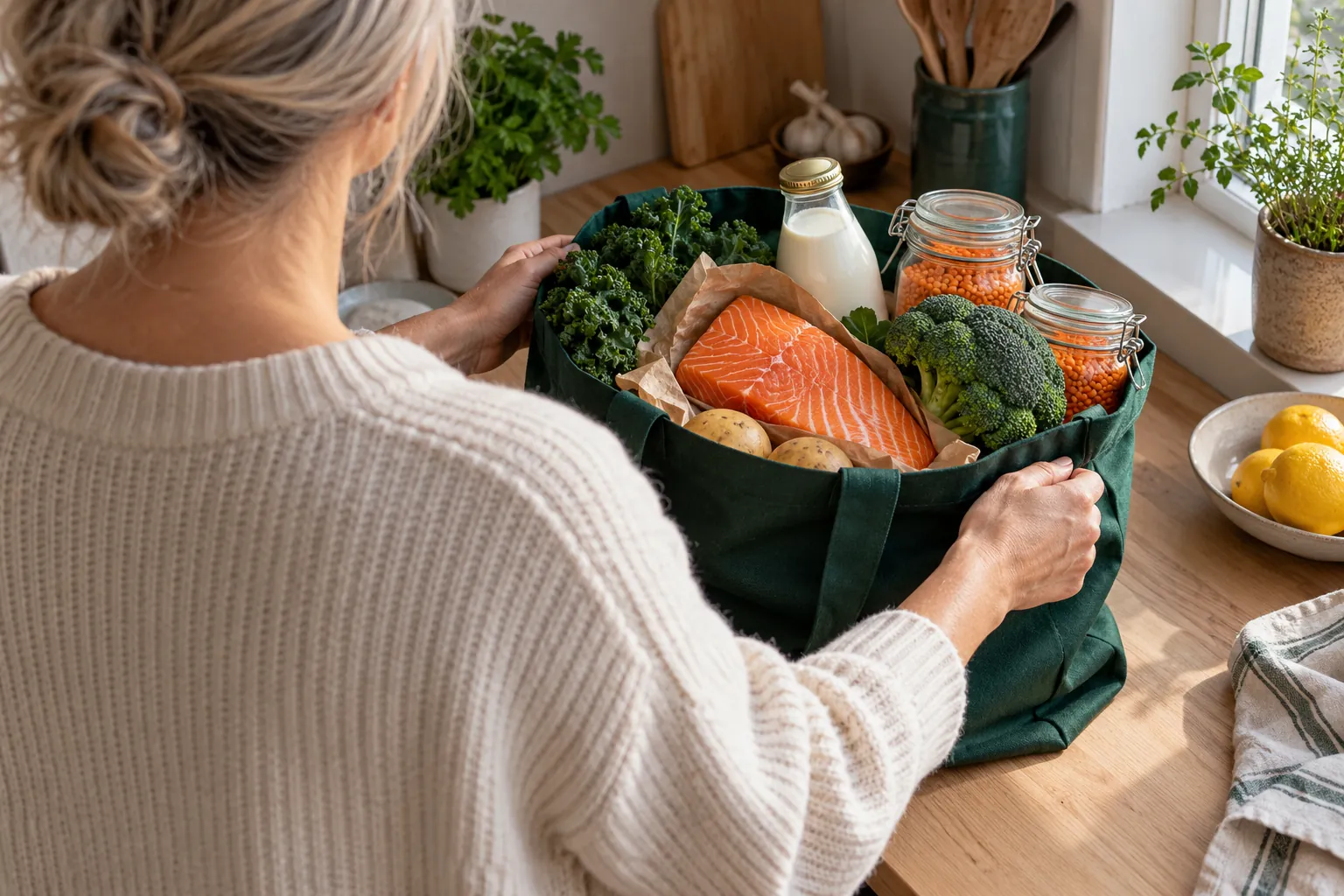
Like a normal week, with a bit more focus on protein, fish and calcium. This is an example, not a plan to follow to the letter. Swap freely to suit your taste, allergies and what's in the shop. It helps to start from this week's offers where you shop when you pick the fish and legumes, so the shopping list is easy to make from the menu.
| Day | Breakfast | Lunch | Dinner |
|---|---|---|---|
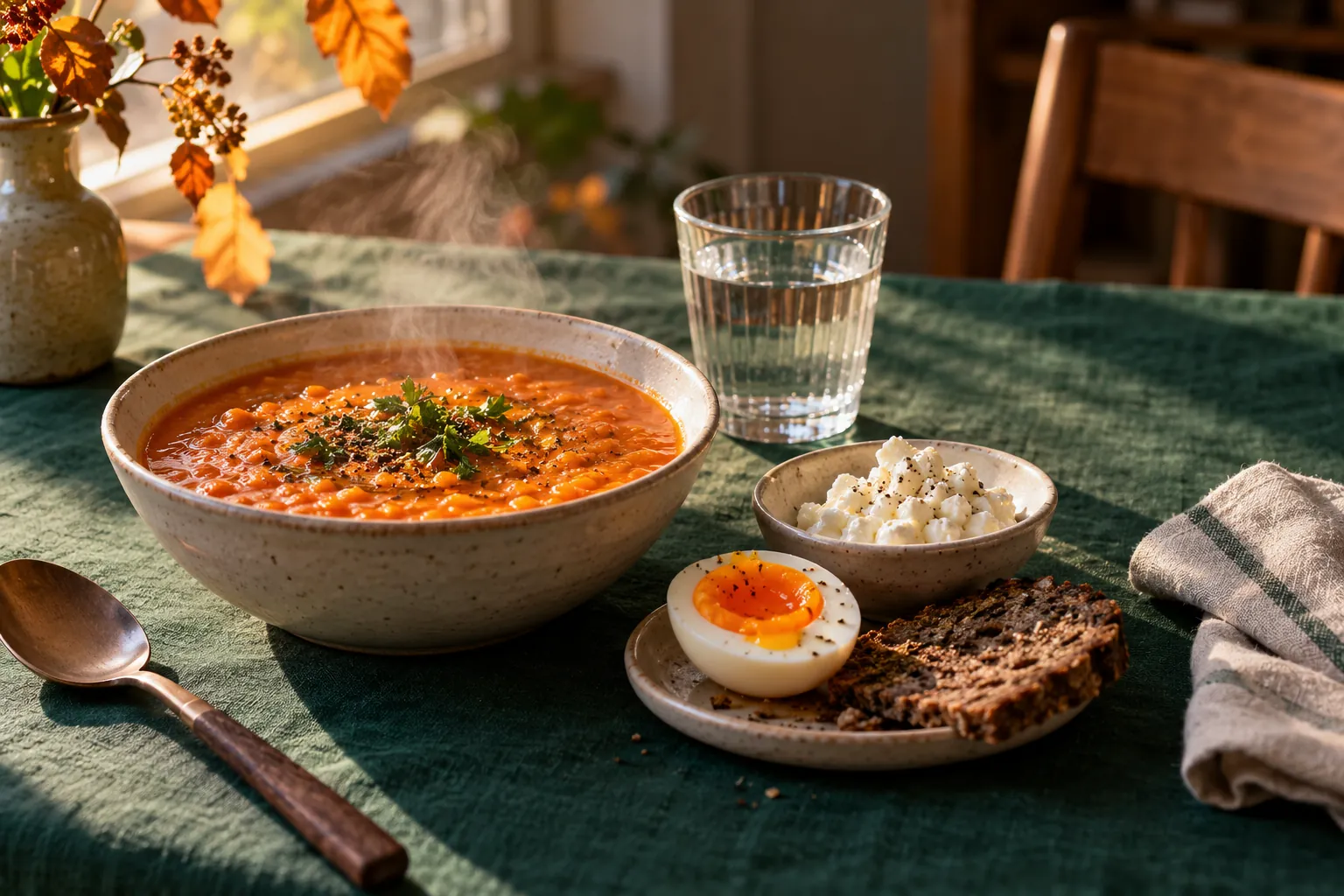
| Monday | Filmjölk (soured milk) with oats and berries | Lentil soup with rye bread and cottage cheese | Oven-baked salmon, potatoes and broccoli |
| Tuesday | Eggs on wholegrain bread, tomato | Leftover salmon in a bean salad | Chicken stew with vegetables and brown rice |
| Wednesday | Yoghurt with nuts and apple | Yesterday's chicken stew | Oven-baked tofu with root vegetables and kale |
| Thursday | Porridge with milk and lingonberries | Lunchbox with tofu and root vegetables | Herring or mackerel, boiled potatoes, beetroot |
| Friday | Cottage cheese on crispbread, pepper | Wholegrain pasta with tuna and spinach | Chickpea stew with spinach and yoghurt sauce |
| Saturday | Spinach omelette | Chickpea stew in pitta bread | Fish gratin with salad |
| Sunday | Quark with berries and seeds | Root vegetable soup, egg | Mince and bean sauce, wholegrain pasta, salad |
If you like Mediterranean food, there are more ideas in Mediterranean diet: weekly menu. For more on protein and muscle as you get older, see protein for older adults.
How Smaklig helps you get the week sorted#
Smaklig does the planning for you. You set your goal, such as weight loss, maintaining your weight or building muscle, along with your household and any allergies. Smaklig's chat knows your profile and builds your weekly menu around it, with recipes adapted to what you already have at home. For example, type "make a weekly menu with protein at every dinner, fish twice and plenty of legumes" in the chat.
You can set your own nutrition goals for calories and protein and follow them in the food log. With Smakblick you photograph your food instead of typing it in, and barcode scanning shows a product's nutrition values, including fibre. The week is planned around the offers where you shop, at ICA, Coop, Willys, Hemköp, Lidl, City Gross or Costco, and the app makes your shopping list. You get back a weekly menu built around this week's offers, a shopping list from it and, if you shop at ICA or Coop, the items in your basket without leaving the app. Smaklig is free during the beta and available on the App Store, Google Play and the web.
What are the most common mistakes?#
The most common mistake is eating less without thinking about protein. Then part of the weight you lose can be muscle, which is exactly what's already starting to decline during the transition.
- Too little protein when eating less. Make sure every meal has a protein source.
- Supplements before food. The Menopause Society does not recommend supplements for hot flushes, and 1177 says herbal remedies shouldn't be used for more than a few months without discussing it with your doctor.
- A strict diet as the only way. Fasting and low-carb have no special support in menopause. What works is what you can keep up.
- Alcohol as a sleep aid. According to 1177, alcohol can make some menopause symptoms worse.
- Waiting it out. If hot flushes or lack of sleep affect your daily life, help is available from healthcare.
Checklist: menopause diet#
Small steps that make a difference, without changing everything at once.
- Include a protein source at every meal: eggs, fish, chicken, legumes, tofu or dairy.
- Eat oily fish a few times a week, and choose fortified dairy or plant drinks.
- Fill your plate with vegetables, wholegrains and legumes.
- Do strength training regularly, in a way you can keep up.
- Cut back on coffee, tea and energy drinks after lunch.
- Have a lighter evening meal and keep your bedroom cool.
- Note what tends to trigger your hot flushes.
- Talk to healthcare if symptoms affect your life, and before starting supplements.
Sources
- 1177. Råd för att må bra under klimakteriet (Advice for feeling well during menopause)
- Livsmedelsverket (Swedish Food Agency). D-vitamin (Vitamin D)
- Livsmedelsverket (Swedish Food Agency). Kalcium (Calcium)
- NHS (2026). Menopause – things you can do
- NHS (2023). Side effects of hormone replacement therapy (HRT)
- JCI Insight (2019). Greendale et al. Changes in body composition and weight during the menopause transition (SWAN)
- Menopause (2012). Kroenke et al. Effects of a dietary intervention and weight change on vasomotor symptoms in the Women's Health Initiative
- The Menopause Society (2023). The Menopause Society: 2023 Nonhormone Therapy Position Statement (press release)
- Journal of the International Society of Sports Nutrition (2026). Naddafha et al. Creatine monohydrate for lean mass, strength, and bone density in postmenopausal women: a systematic review and meta-analysis
Frequently asked questions
What is the menopause diet?
There is no special menopause diet. Swedish health advice (1177) is varied, regular meals with vegetables, wholegrains, legumes, eggs, oily fish, nuts and dairy or fortified alternatives. Protein, calcium and vitamin D matter more because muscles and bones are affected as oestrogen falls.
How much calcium and vitamin D do you need during menopause?
The Swedish Food Agency (Livsmedelsverket) recommends 950 mg of calcium a day for adults from age 25 and 10 micrograms of vitamin D a day for adults aged 18–74 (20 micrograms from 75 or with little sun). There are no separate values for menopause.
What foods help with hot flushes?
No food has been shown to stop hot flushes. The Menopause Society (2023) does not recommend soya products, supplements or dietary changes as treatment, but does recommend weight loss. In the WHI study, losing at least 10% of body weight during the first year was linked to a better chance of hot flushes stopping.
Does HRT cause weight gain?
According to the NHS, there's little evidence that most types of HRT make you put on weight. Weight can rise during menopause and with age whether or not you take HRT. Questions about treatment are for your doctor.
Does creatine help in perimenopause or menopause?
A 2026 meta-analysis of seven randomised trials with 608 postmenopausal women found a small increase in lean mass (which includes muscle) and strength over 12–104 weeks when creatine was combined with strength training. Bone density did not change.
Want more meal planning tips?
More guides on food, health and saving money — and a sous-chef that plans your week for you.
Get started
Co-founder & Growth, Smaklig
Writer at Smaklig. We write about food, health, and how to eat better without breaking the bank.
Related articles
August 13, 2026 · 6 min
How Much Protein Do You Need Per Day? Full 2026 Guide
How much protein you need per day and per meal — plus a table of protein in common foods like eggs, chicken and quark. Source: the Swedish Food Agency.
Read moreAugust 13, 2026 · 6 min
GLP-1 Recipes: 8 Filling Meals With Fiber & Protein
8 GLP-1 recipes with fiber and protein that support your body's own satiety signals — breakfast, lunch and dinner built on fiber- and protein-rich ingredients.
Read moreApril 12, 2026 · 22 min
Lose Weight Without Ozempic: 7 Strategies That Actually Work
Ozempic waitlist, side effects, or just too expensive? Here are 7 evidence-based strategies for losing weight without medication — protein, fiber, sleep, GLP-1 foods, and more.
Read moreReady to plan smarter?
Smaklig creates your weekly menu with AI based on store campaigns. Tailored to your goals and allergies.
Get started free